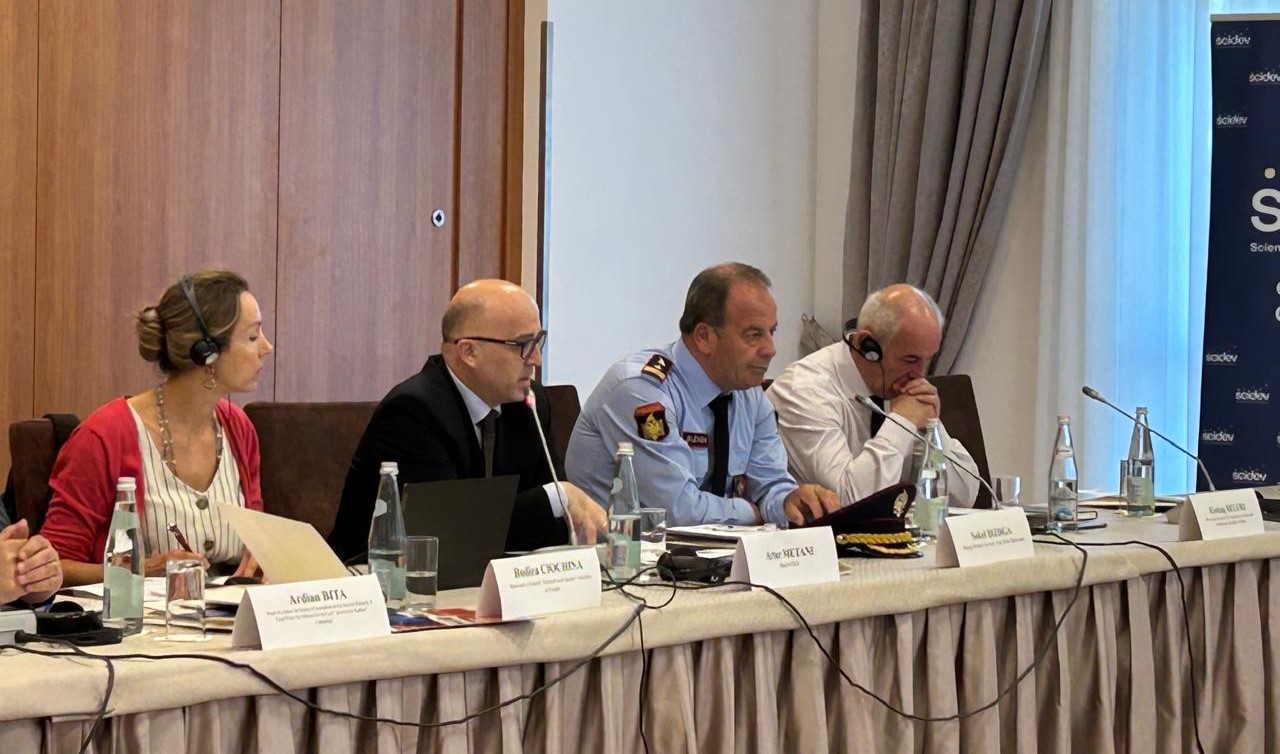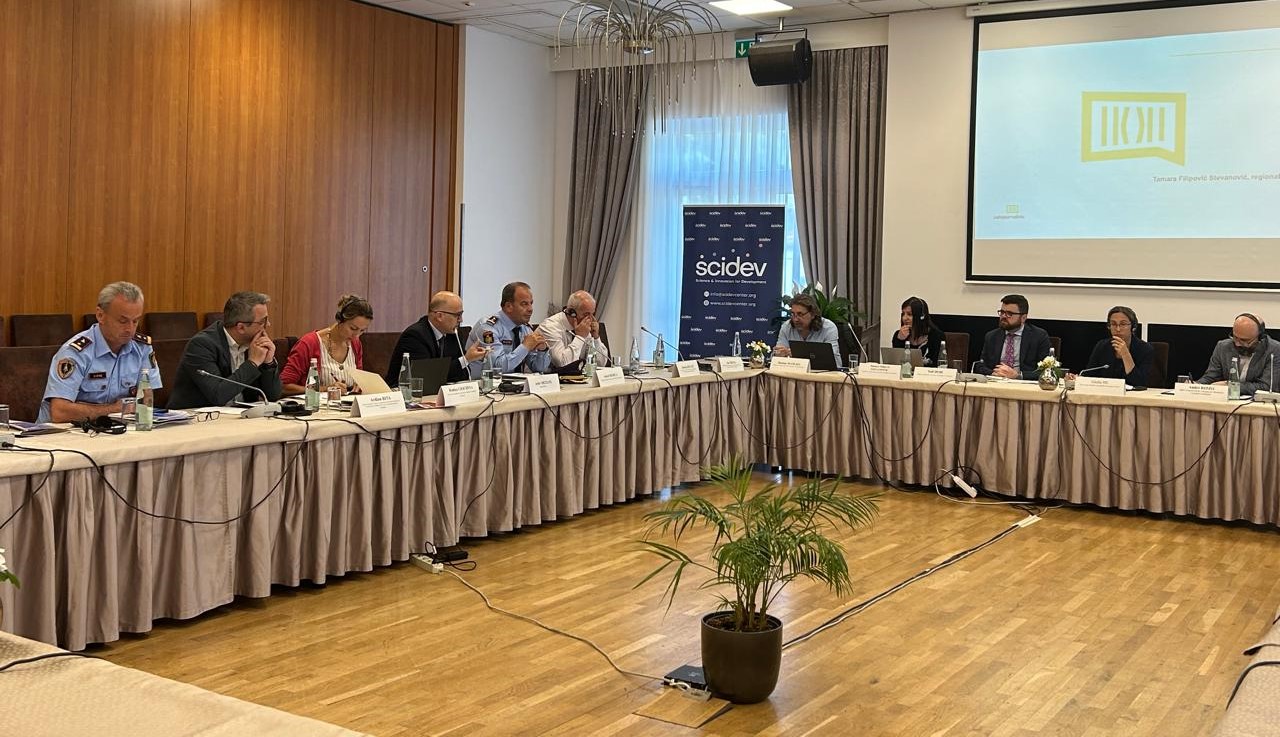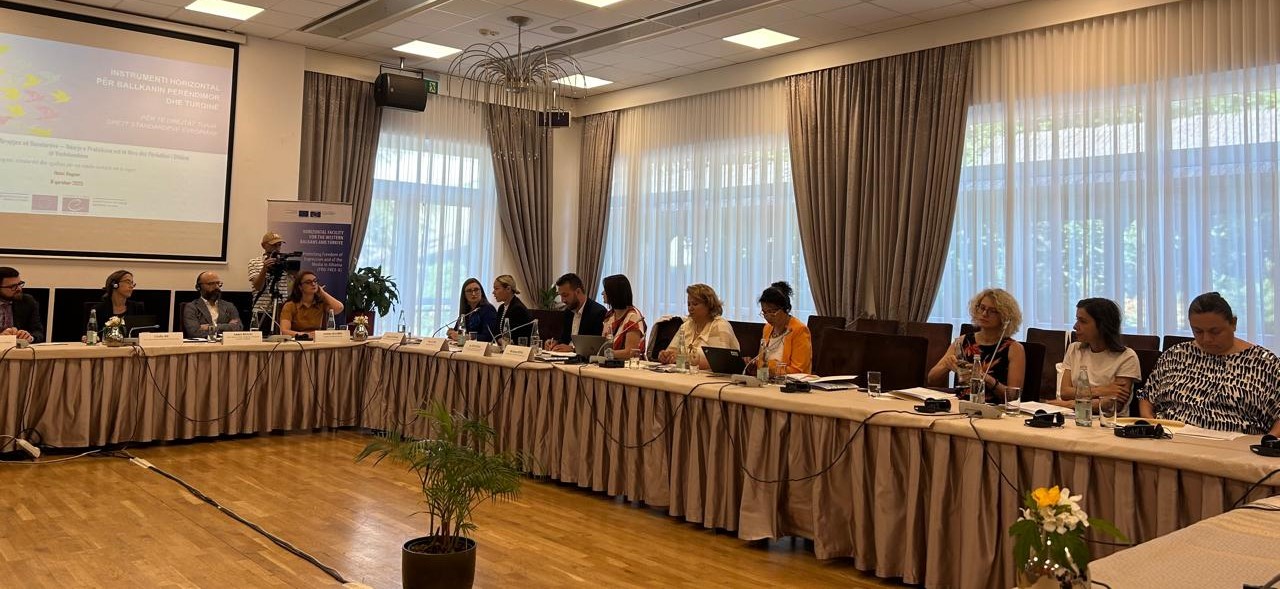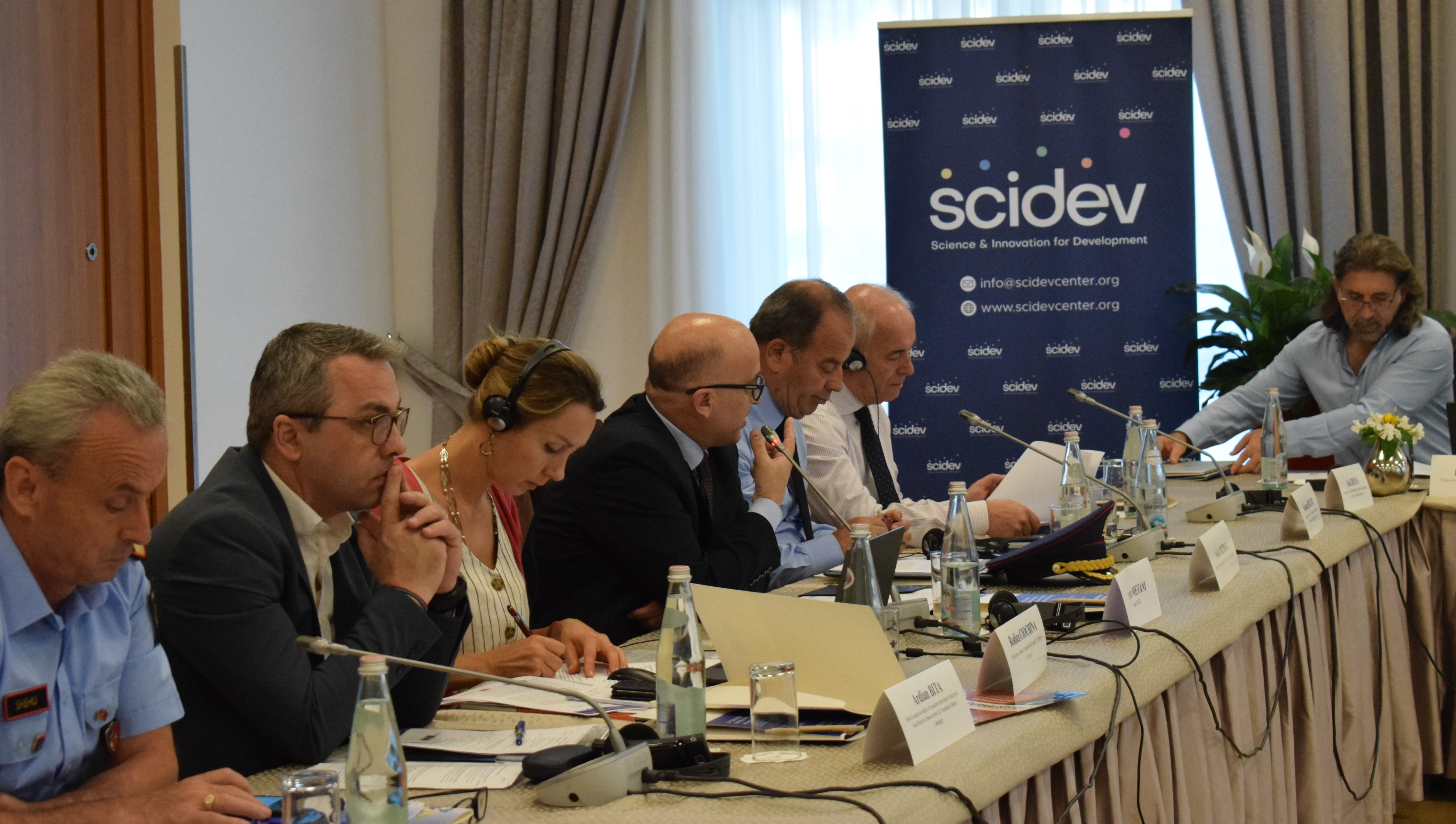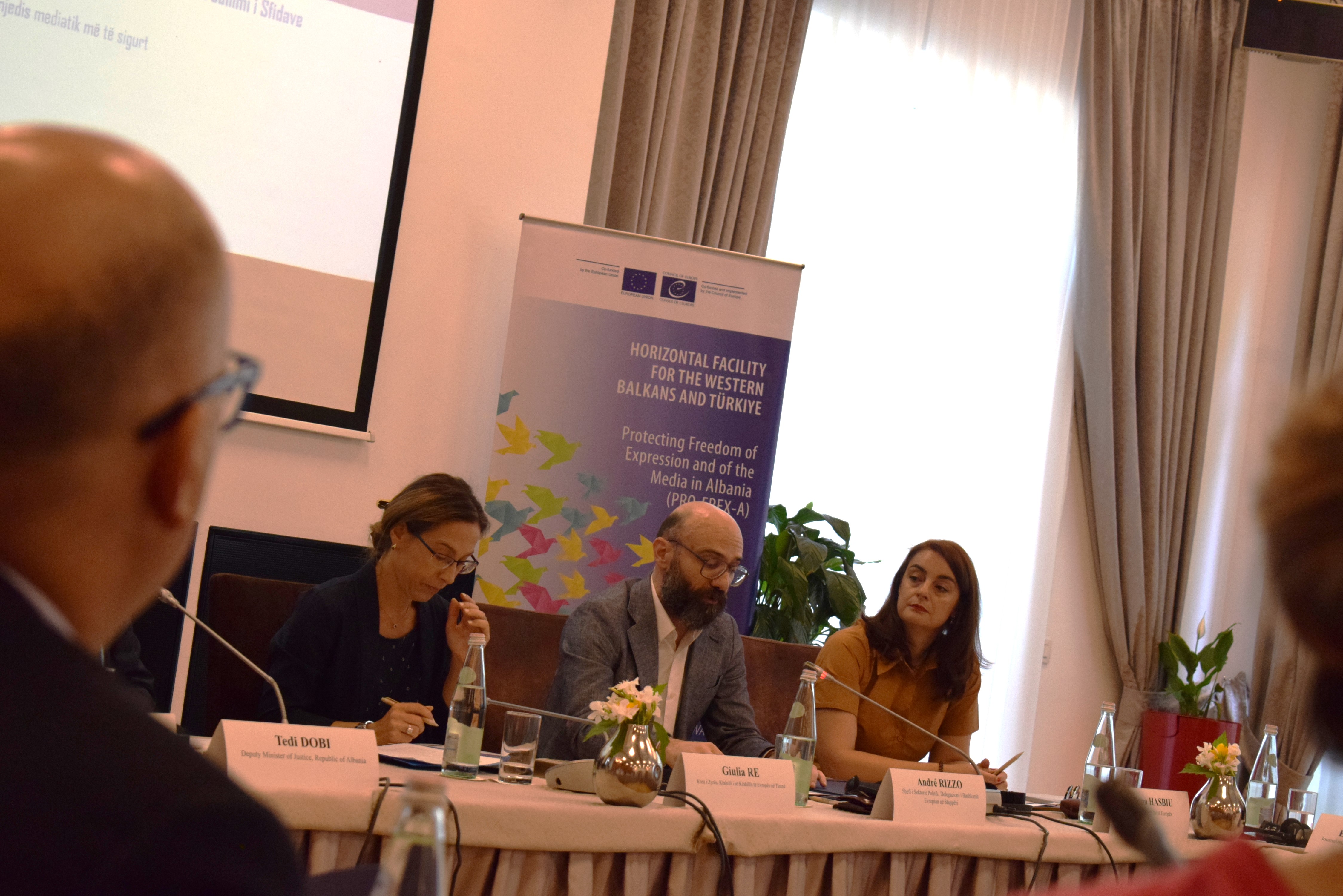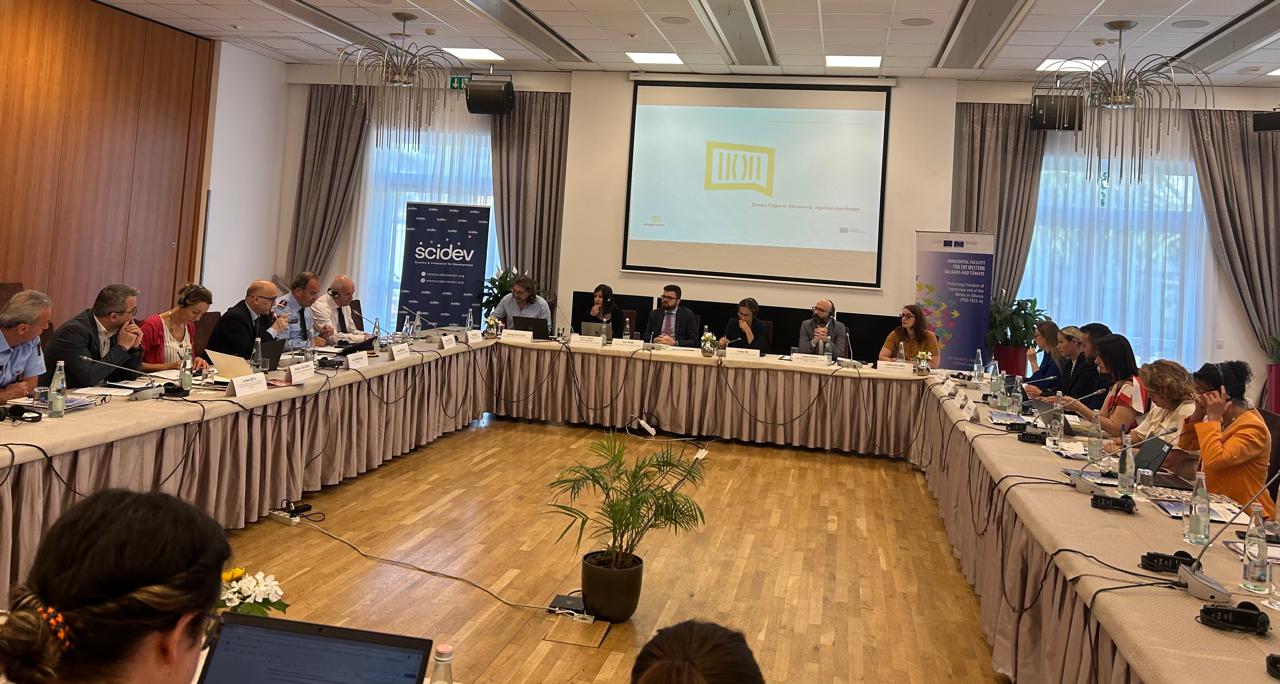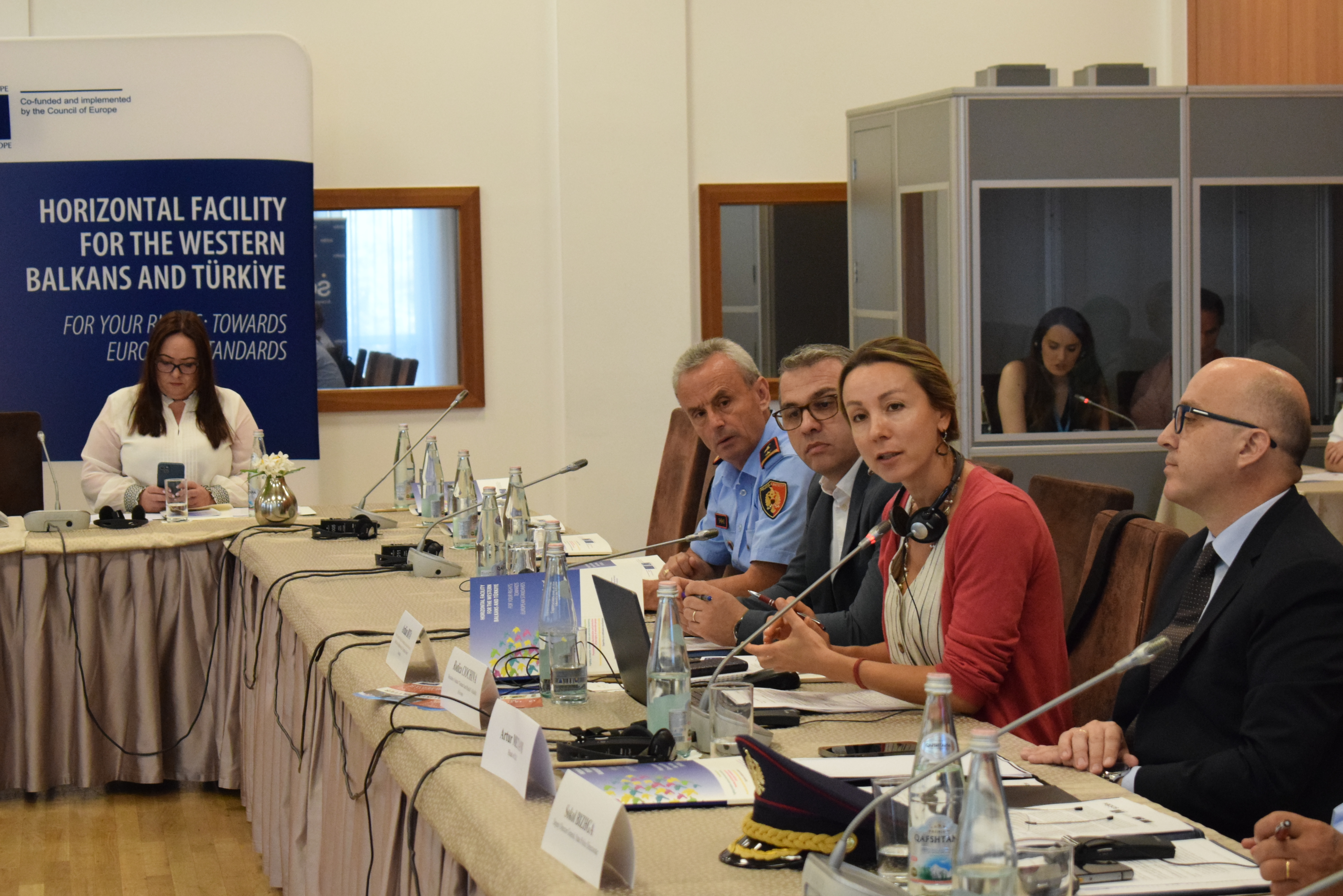

The High Inspector of Justice, Mr. Artur Metani, participated in the roundtable “Advancing the Safety and Protection of Journalists — Sharing Best Practices and Tackling Ongoing Challenges”, organized by the Council of Europe and the European Union within the framework of the project on freedom of expression and media freedom in Albania.
Mr. Metani was part of the panel with the institutions to discuss “Challenges and Solutions for domestic authorities to meet international standards on the protection of journalists”
In his remarks, Mr. Metani praised the organization of the meeting, which brought together the media and institutions with communication and public interest as the common denominator. “Of course, not everyone may agree on every issue, but communication remains essential, through addressing concerns within institutions as well as through meetings and roundtables that foster mutual understanding of specific challenges. By remembering the constitutional principles that guide our professional and public lives, I believe we can find quicker and more effective solutions.”
In his speech, Mr. Metani referenced statistics on how the media interacted with HIJ during the institution’s first five years. The media primarily took on the roles of initiators of verifications, complainants, and informers of public opinion. “Over the past five years, there have also been accurate indications from the media that led the HIJ to initiate ex officio 12 disciplinary investigations concerning 13 individuals: 6 judges, 6 prosecutors, and 1 member of the Council. Eleven magistrates were referred by the HIJ for disciplinary proceedings to the High Judicial Council or the High Prosecutorial Council. In two other cases, the investigation was closed. In 7 of those 11 cases, the HIJ requested the disciplinary measure of “Dismissal from Office.” The Councils accepted the request in 5 cases. In one case, the Council decided on “Suspension from Office for a period of 6 months,” and in another, proceedings were suspended pending a decision by the Special Appeals Chamber. In 4 cases, the HIJ requested the disciplinary measure of “Public Reprimand.” One of these was accepted, while three were rejected.
During these five years of HIJ’s functioning, the media itself has submitted 17 complaints alleging disciplinary violations. The HIJ issued 11 final decisions: 2 were archived following initial review, 7 after verification, and 2 following disciplinary investigation. Six other complaints are currently under review.
Considering that access to information plays a vital role in supporting journalistic work, and based on our data, the media has submitted 46 information requests to HIJ. In only 6 cases the information was restricted in accordance with the law, and the reasons were clearly explained. I am pleased to note that, in relation to the HIJ, media outlets generally respect the legal principle of confidentiality regarding investigative actions, including preliminary review and early-stage disciplinary proceedings. This confidentiality serves to protect both the integrity of the process and the reputation of magistrates, particularly when allegations prove unfounded, “said Mr. Metani.
FULL SPEECH OF THE HIGH INSPECTOR OF JUSTICE, MR. ARTUR METANI
Dear participants,
First, I would like to thank you for the invitation to this event, and I would like to begin my remarks by expressing my strong appreciation for discussion roundtables on such important topics. Not merely because freedom of expression, the press, and the media are the foundation of a free society, but also because the current state of societal values, both globally and in Albania, requires continuous discussion and sincere reflection from each of us, seeing this as a contribution to the democratic consolidation of our society in the years ahead, and not just as a topic of the day. In this context, I see engagements between journalists and institutions as an important opportunity to exchange ideas on what more we can do to improve and enhance the safety and protection of journalists.
Of course, not everyone may agree on every issue, but communication remains essential, through addressing concerns within institutions as well as through meetings and roundtables that foster mutual understanding of specific challenges. By remembering the constitutional principles that guide our professional and public lives, I believe we can find quicker and more effective solutions.
I followed with great interest the presentations of the first panel regarding the situation of journalists and the conditions in which they perform their duties. I want to commend each speaker for the overview they provided. This is primary information, sensitive and personal in nature, which cannot easily be found in the everyday public debate and, as such, holds particular value.
Personally, I believe that the commitment to ensuring a safe working environment for journalists should not be seen merely in terms of compliance with international conventions or as a benchmark in our European integration path. If we do not genuinely value the freedom of journalists to carry out their role, as a safeguard for a healthy society, and only comply formally with our duties toward the media, then we are creating a heavier burden for our own future.
Understandably, among the primary public institutions that play a fundamental role in the protection of journalists and the promotion of media freedom are the justice institutions, which have a special role. A determined response to crimes committed against journalists, from stigmatization, attacks, and threats, to the most severe, such as murder, which fortunately is not the case in Albania, is both an institutional and human duty. Institutions must perform their responsibilities, but at the same time, they must maintain a heightened sensitivity toward the very specific values represented by the media in society. Each of us understands that all social categories and values are equal before the law. Yet, in our daily professional lives, we may rightfully devote special attention to the media, not to favor journalists personally, but to be allies of freedom of expression, to be attentive to the needs of journalists due to the nature of their work and the societal role they play as the voice of the public. This is a practice we follow at the Office of the High Inspector of Justice. We apply special attention when engaging with journalists, and in the context of this roundtable, I had the opportunity to review statistics on media interaction with the High Inspector of Justice which I would like to share in three dimensions: as public informants, as complainants, and as actors engaged directly through requests for information addressed to our institution.
As I mentioned, we strive to treat the media as a category of special attention at the HIJ. This is not always easy, as the institution faces human resource limitations, particularly in disciplinary inspection. However, during these five years of activity, we have tried our best to respect the public’s right to be informed about how justice is administered in the country, an expectation often conveyed through the media. Of course, the media’s access to institutional information is essential for journalists to carry out their mission freely.
In five years, there has been only one case where a journalist submitted a complaint to the High Inspector of Justice alleging obstruction in the exercise of duties due to the media being excluded from a court session (during the Covid-19 period). The case was verified by HIJ inspectors and was archived, as there was insufficient evidence to justify the initiation of disciplinary proceedings. However, in the decision, HIJ inspectors emphasized that, even though there were no grounds for disciplinary liability under Law no. 96/2016 “On the Status of Judges and Prosecutors in the Republic of Albania,” the High Inspector of Justice finds it necessary to highlight the importance of transparency with the media. Through the guarantees and opportunities, we provide journalists to perform their duties, we are not simply safeguarding them but protecting their mission, the public’s right to monitor and evaluate governance, including the judiciary. It is society that must ultimately assess whether the justice system’s performance or a particular media report is accurate, not institutions, and certainly not through information restriction. Respect for the justice system is earned not only by the system itself but also through the contributions of other societal actors, especially the media, who serve as key links with the public.
On the other hand, I consider it important to highlight the institution’s mandate and competencies. The High Inspector of Justice can be addressed with complaints about actions or inactions constituting failure to perform duty, or professional or ethical misconduct, during or outside of function, which discredits the position and figure of judges and prosecutors of all levels in the Republic of Albania. This is provided by law, and we have continuously simplified the complaint process. Anyone can access our website at ild.al, where there is a dedicated option to submit an online complaint, which can be completed in just a few minutes, even via mobile phone.
Furthermore, traditional and digital media, through publicly shared information, have initiated verifications that led to investigations and even disciplinary proceedings against judges and prosecutors since HIJ began operating in 2020. Of course, there have also been cases where media reports did not constitute legal violations. Nine such cases were identified, in which HIJ initiated verifications based on information reported in print or visual media. HIJ verified 14 magistrates, 6 judges and 8 prosecutors, and issued 9 archiving decisions. As we clarify in our public communications, the actions or inactions of magistrates that may constitute disciplinary violations, according to Law no. 96/2016 “On the Status of Judges and Prosecutors in the Republic of Albania,” are not only those presented in public information but those assessed by the High Inspector of Justice through verification or disciplinary investigation processes. Public reports may raise factual allegations that suggest disciplinary violations, but the HIJ determines the precise legal qualification of those facts.
Over the past five years, there have also been accurate indications from the media that led the HIJ to initiate ex officio 12 disciplinary investigations concerning 13 individuals: 6 judges, 6 prosecutors, and 1 member of the Council. Eleven magistrates were referred by the HIJ for disciplinary proceedings to the High Judicial Council or the High Prosecutorial Council. In two other cases, the investigation was closed. In 7 of those 11 cases, the HIJ requested the disciplinary measure of “Dismissal from Office.” The Councils accepted the request in 5 cases. In one case, the Council decided on “Suspension from Office for a period of 6 months,” and in another, proceedings were suspended pending a decision by the Special Appeals Chamber. In 4 cases, the HIJ requested the disciplinary measure of “Public Reprimand.” One of these was accepted, while three were rejected.
During these five years of HIJ’s functioning, the media itself has submitted 17 complaints alleging disciplinary violations. The HIJ issued 11 final decisions: 2 were archived following initial review, 7 after verification, and 2 following disciplinary investigation. Six other complaints are currently under review.
Considering that access to information plays a vital role in supporting journalistic work, and based on our data, the media has submitted 46 information requests to HIJ. In only 6 cases the information was restricted in accordance with the law, and the reasons were clearly explained. I am pleased to note that, in relation to the HIJ, media outlets generally respect the legal principle of confidentiality regarding investigative actions, including preliminary review and early-stage disciplinary proceedings. This confidentiality serves to protect both the integrity of the process and the reputation of magistrates, particularly when allegations prove unfounded.
Over the last five years, HIJ has prioritized transparency toward the public as a vital tool for building trust in the justice system, while maintaining the necessary balance between the public interest in justice administration and the need to uphold judicial independence. Both these constitutional principles are equally protected, neither superior to the other, but clearly delineated in a democratic society. Here again, I stress the importance of communication between media and institutions. A strong commitment from all public actors, through systematic dialogue, is necessary not only to monitor and respond promptly but also to educate and inform the public about the shared responsibility of creating a safe environment for the media.