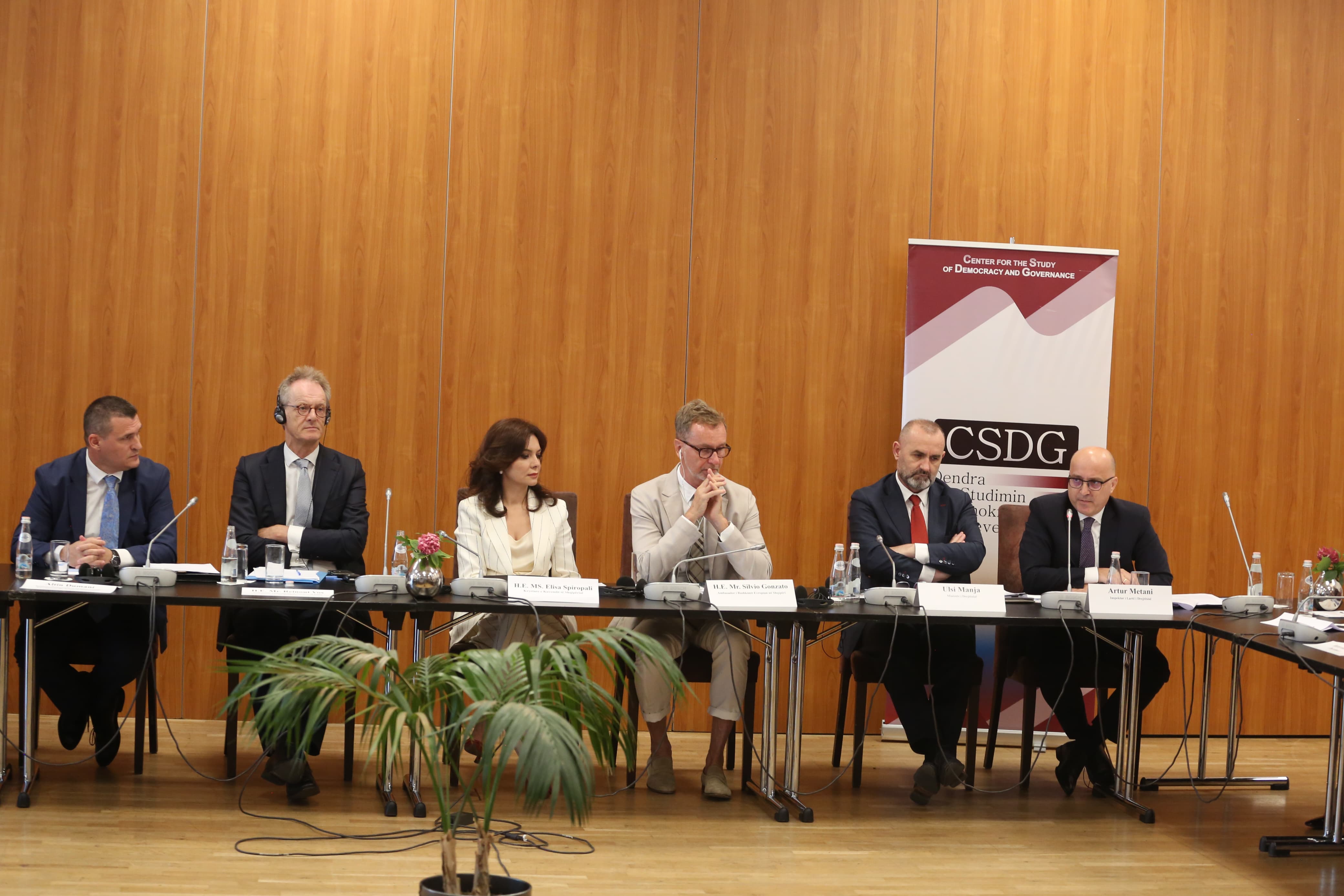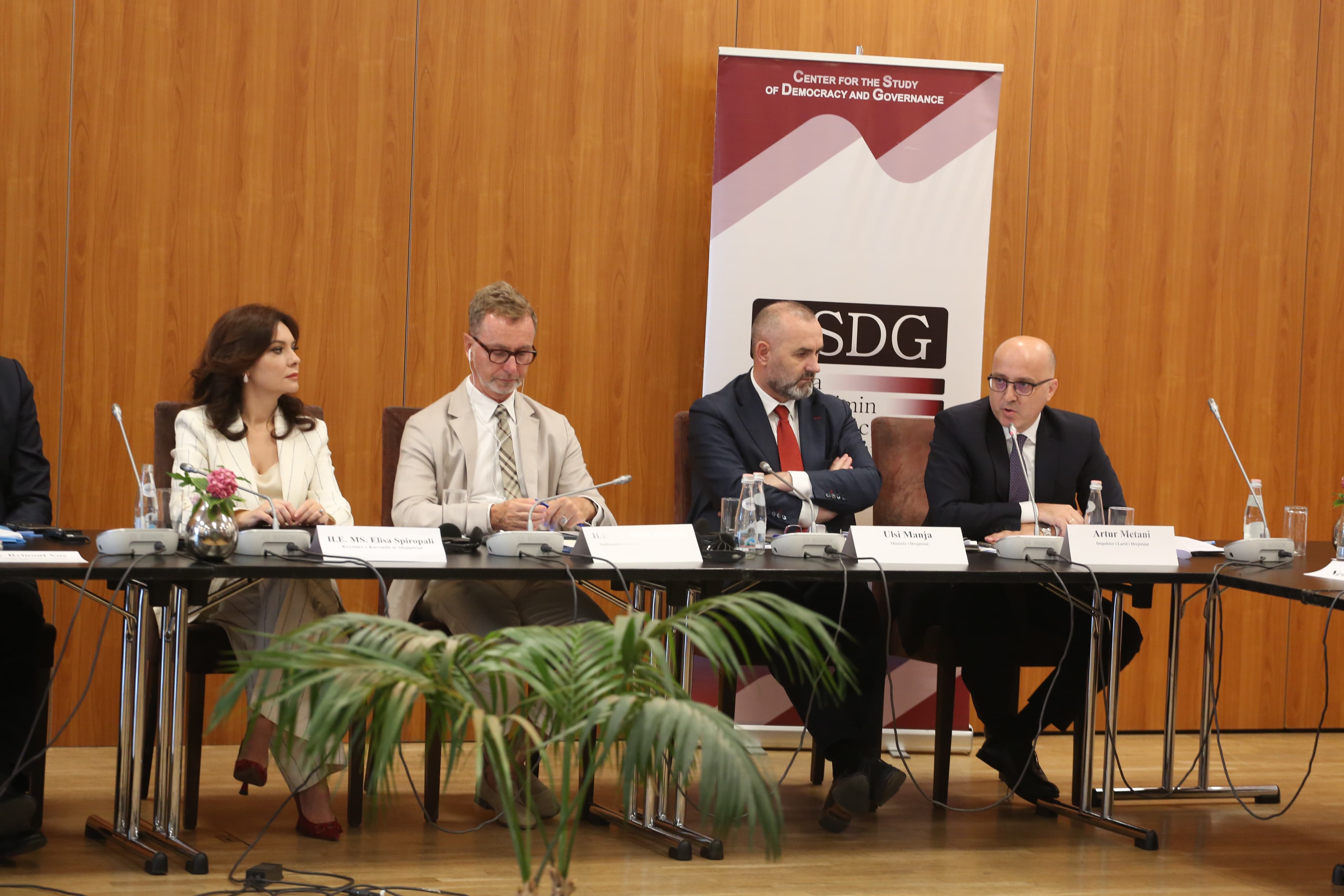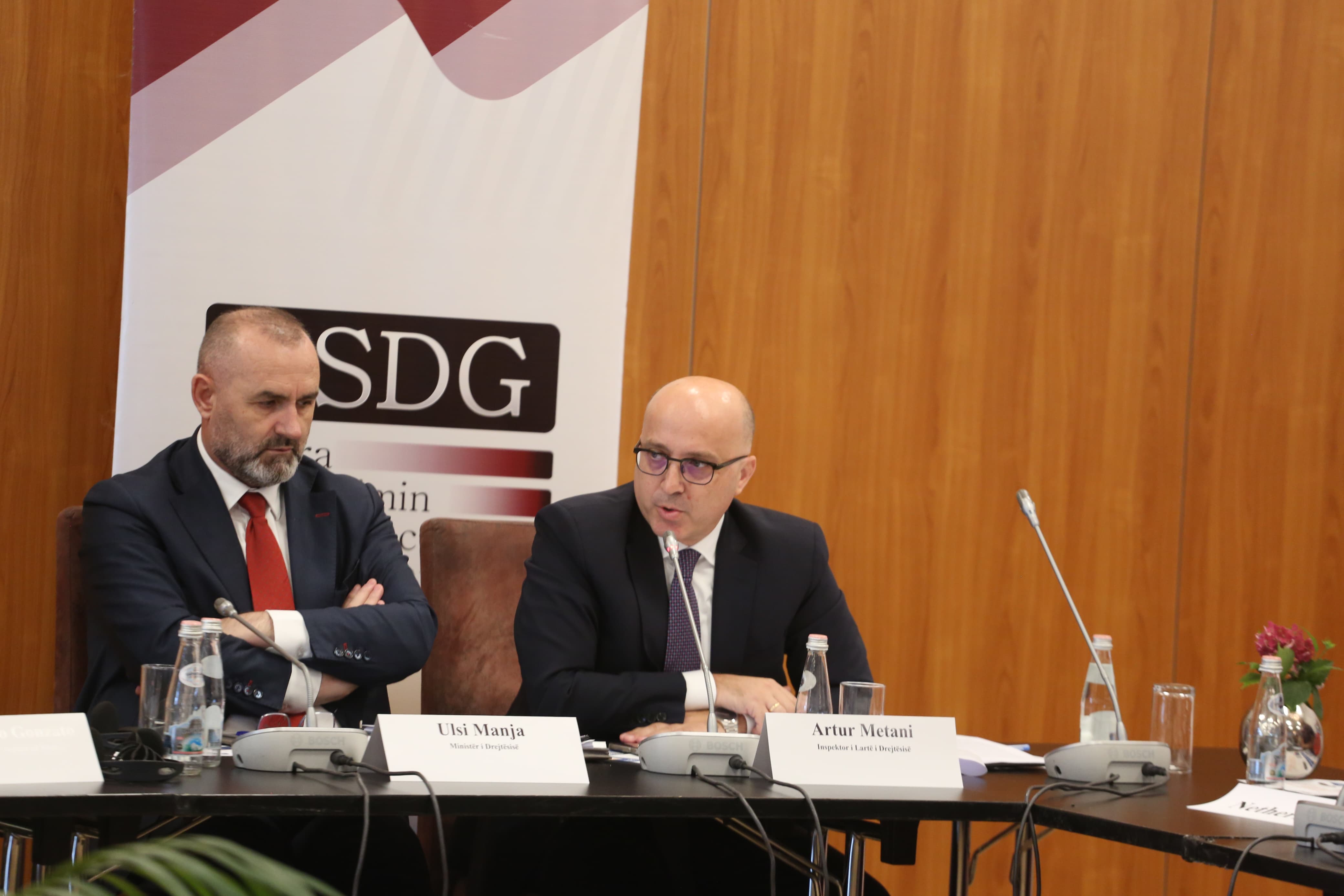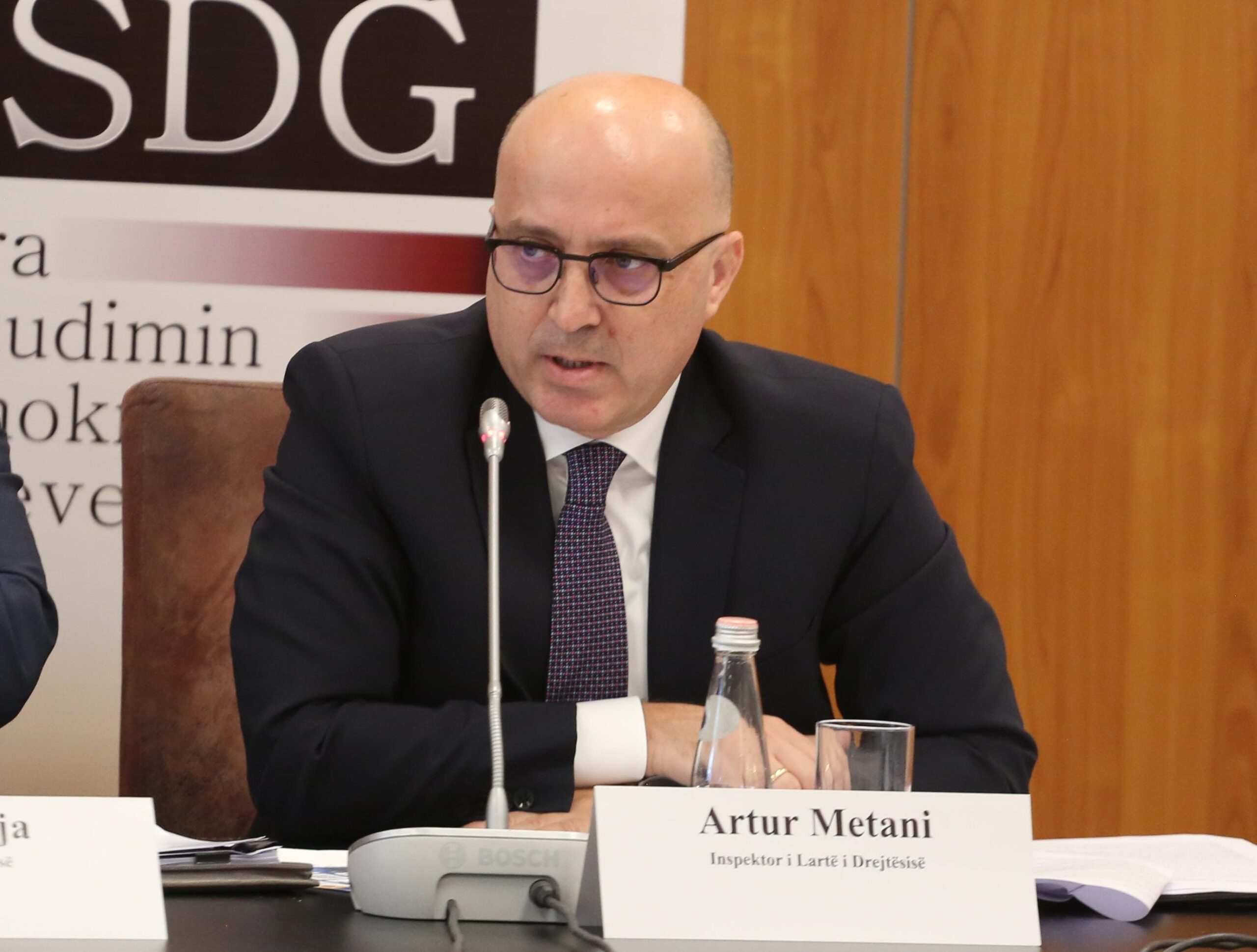
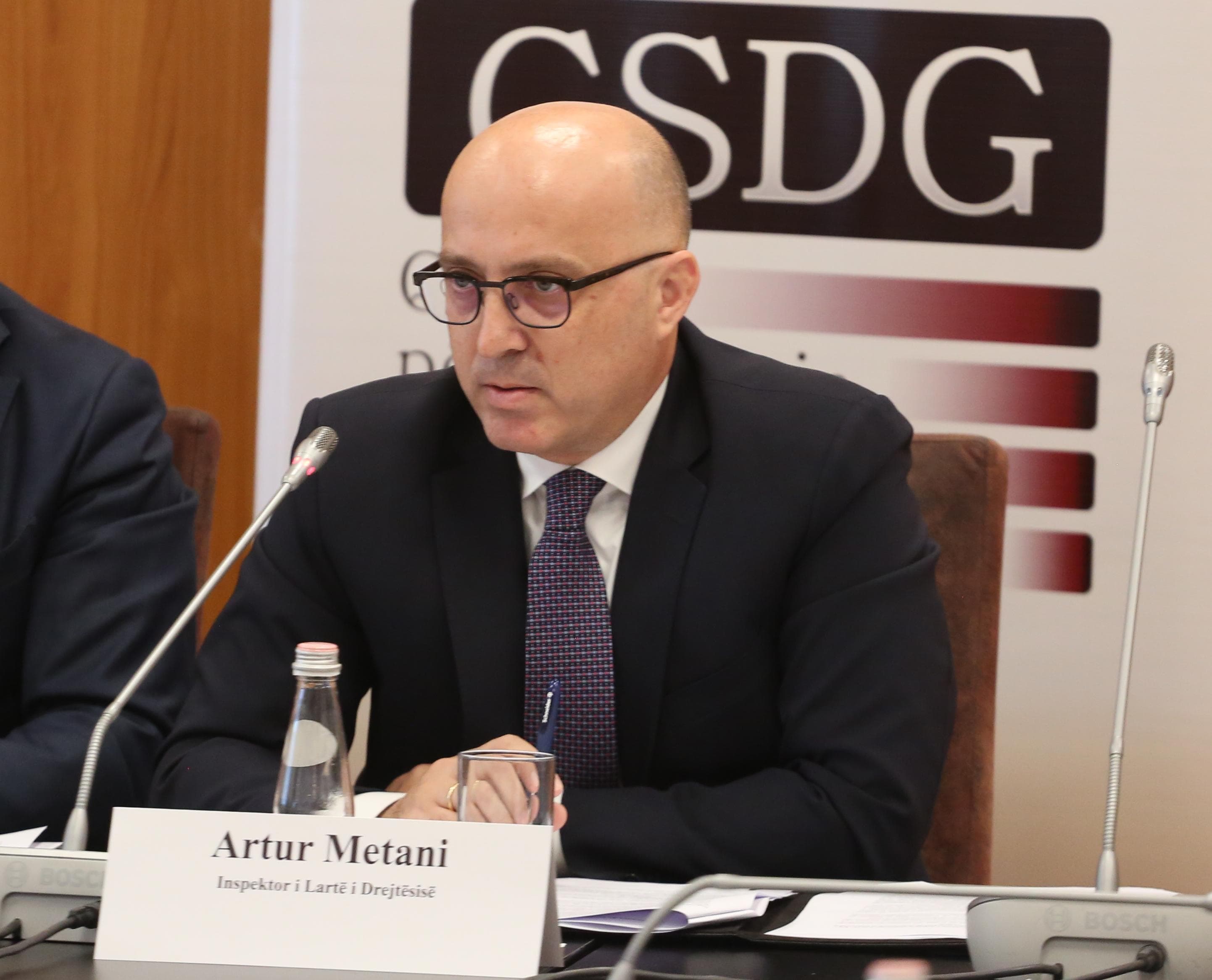
The High Inspector of Justice, Mr. Artur Metani, participated in the roundtable “Assessment of the Institutional Architecture in Function of the Performance and Integrity of the Special Prosecution: Guarantees for Independence and Accountability Mechanisms”, organized by The Center for the Study of Democracy and Governance, where the evaluation report “Independence and Accountability of the Special Prosecution Office, as Prerequisites for Institutional Performance and Integrity” was presented.
Mr. Metani focused in his speech on the concepts and practice of independence and accountability of magistrates, presenting statistics from the 5-year activity of the HIJ on the level of disciplinary check over prosecutors and judges of SPAK, Special Court of First Instance for Corruption and Organized Crime and members of the High Prosecutorial Council.
Full speech of the High Inspector of Justice, Mr. Artur Metani
Honorable Mr. Dyrmishi!
Honorable Speaker of the Parliament!
Honorable Mr. Minister!
Honorable Ambassadors!
Honorable Colleagues!
Honorable Participants!
When examining or analyzing the activity of an independent power, such as the judiciary, the discussion undoubtedly begins with the definition and importance of the principle of independence of this power. Undoubtedly, independence is an important element of the rule of law and this is where the discussion should begin for any assessment of the judiciary. Of course, the independence of the judiciary is something that cannot be achieved in a day, it is something that requires continuous pursuit, it is something that requires political will and the development of a country’s democracy.
The conclusion that there is no democracy without an independent judiciary and that there is no independent judiciary without democracy may seem a little disappointing at first glance, but this shows the strong connection between the rule of law and democracy. This is one side of the coin. The most important consequence of the principle of independence of magistrates is the lack of responsibility for the decisions they give, according to their conviction based on the law. However, the consequences of power for the assessment that society gives to magistrates is such that there must be responsibility, including removal from office in case of violations that justify this action. This is because independence is not a privilege, but a responsibility! In this sense, there must be a continuous process of independence and accountability. These processes must be characterized by action and counter-reaction at the same time. The more powers the judicial power possesses, the higher the demands for accountability will be. For this purpose, it is important that the bodies of judicial governance have an active approach to the accountability system of magistrates, applying new approaches, which consist in the combined application of standards of their accountability and responsibility. When referring to the concept of accountability of magistrates, we must bear in mind the fact that this concept is different from that of their responsibility, concepts that are linked together, and both together constitute what is called the accountability system of magistrates. The accountability standard includes the recruitment or selection of magistrates on the basis of merit, their professional qualification, immobility from duty, substantial independence, structural and financial independence, immunity and physical integrity, exercise and control by the highest courts, based on the principles of internal independence of magistrates and informal between international jurisprudence and legal doctrine and the creation of an ethical and professional system of the work of magistrates.
If these means are not effective, then in exceptional cases, as well as depending on certain circumstances, measures related to the system of responsibility of magistrates and related to their criminal, civil, or disciplinary liability are applied. In this sense, magistrates can be prosecuted according to the provisions of the Criminal Code and the Code of Criminal Procedure and specifically SPAK, which investigates criminal offenses in the field of corruption, has had several cases where several magistrates were the subject of its investigation. Secondly, the magistrate has no civil responsibility due to the exercise of his function except in the case where he has shown gross negligence. And thirdly, magistrates of all levels, members of the councils, the Prosecutor General, as well as members of the Supreme Court bear disciplinary responsibility, in the event that, while exercising his duty or outside it, he undertakes actions that constitute disciplinary violations, according to the legal provisions in force.
Given these parameters and these standards, I would like to present you with some numbers, not because the numbers constitute a standard, but they show a trend in the functioning of the accountability mechanism of the magistrate’s work and in the specific case of SPAK. The numbers constitute the processing of complaints at all levels, or all structures that are responsible for controlling the work of SPAK.
For the period 2020 – July 2025, 128 complaints against SPAK magistrates were filed with the High Inspector of Justice, of which 92 complaints have been reviewed and 36 complaints are in process. The law provides that if the complainant does not agree with the decision-making of the High Inspector of Justice, the complainant has the right to appeal the decision to the High Prosecutorial Council. For the same period, 5 appeals were filed with the High Prosecutorial Council against 92 decisions of the High Inspector of Justice, and this relevant committee of the council decided to uphold the decisions of the High Inspector of Justice. For the First Instance of the GJKKO, for the entire period 2020 – July 2025, a total of 53 appeals were filed with the High Inspector of Justice, of which 42 appeals were reviewed and 11 appeals are in process. In the same way, 3 appeals were filed with the High Prosecutorial Council against the decisions of the High Inspector of Justice. In all three cases, the High Prosecutorial Council confirmed the decision-making of the High Inspector of Justice.
For the period 2020 – July 2025, 55 complaints were filed with the Court of Appeal for Organized Crime and Corruption with the High Inspector of Justice, 49 were reviewed and 6 are in process. In the same way, two decisions of the High Inspector of Justice were appealed to the High Prosecutorial Council and in both cases the decision of the High Inspector of Justice was upheld. For the period 2020 – July 2025, 174 complaints were filed with the High Inspector of Justice against members of the Supreme Court, of which it results that 112 complaints were reviewed and 62 are in process. All of these, (including the High Prosecutorial Council), for this period, 7 complaints were filed with the High Inspector of Justice against members of the HPC and 4 complaints were reviewed while 3 complaints are in process.
I would like to draw attention here to the fact that, in relation to the High Prosecutorial Council, the High Inspector of Justice has had two investigative procedures, which have been terminated because the evidence was insufficient to prove the commission of a disciplinary violation. All of this shows, in my view, that the accountability system is working and I believe this is one of the standards achieved in these 5 years. This system is working and every magistrate, including SPAK prosecutors, including judges of courts for organized crime and corruption or other courts, feels that the accountability system is there. Every complaint against them is reviewed in accordance with the standards, maintaining the right balance between the public interest in seeing how a prosecutor or a judge administers justice, and of course, with what we said from the beginning, the independence of judges and prosecutors. I believe that the trend is positive.
Thank you!