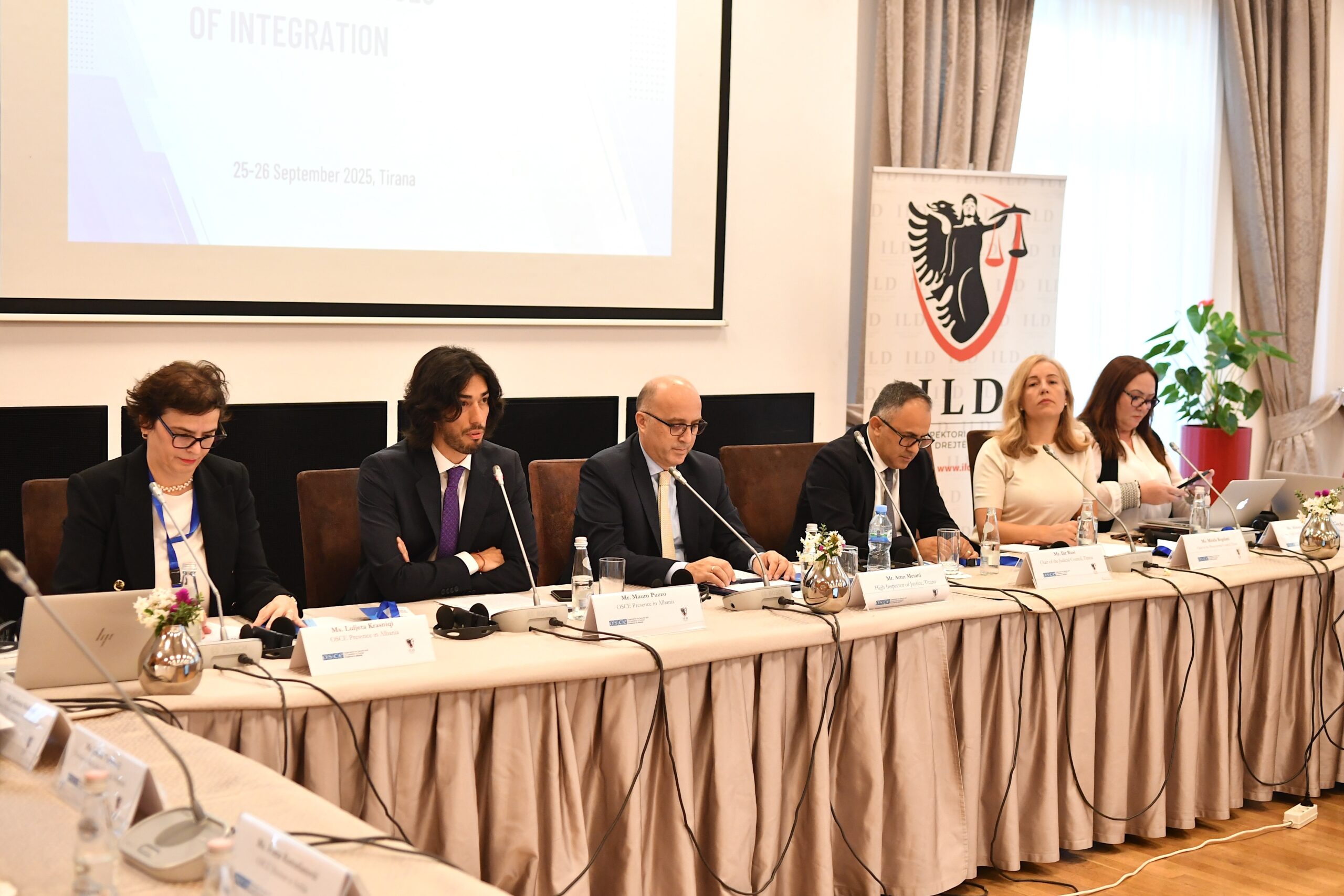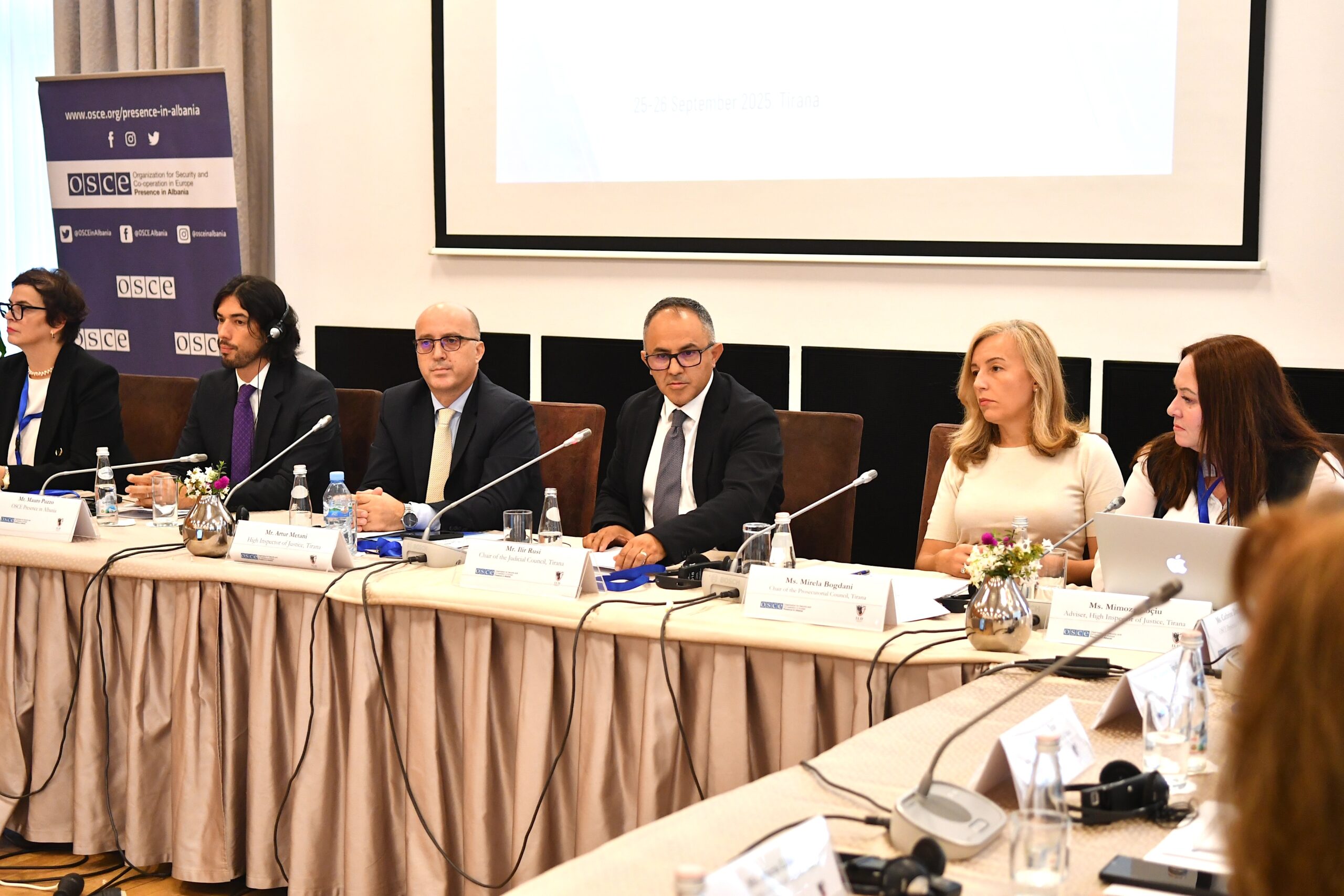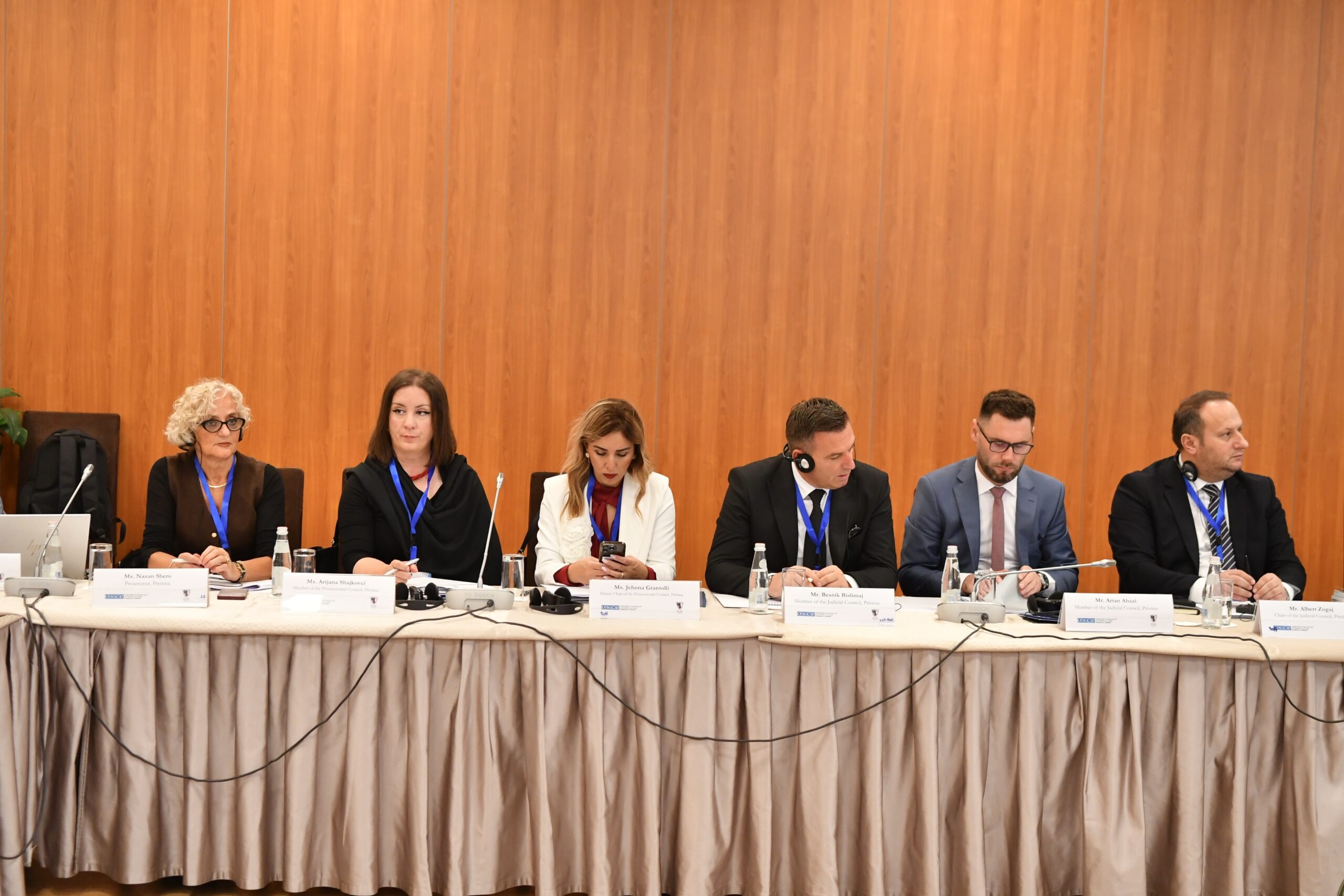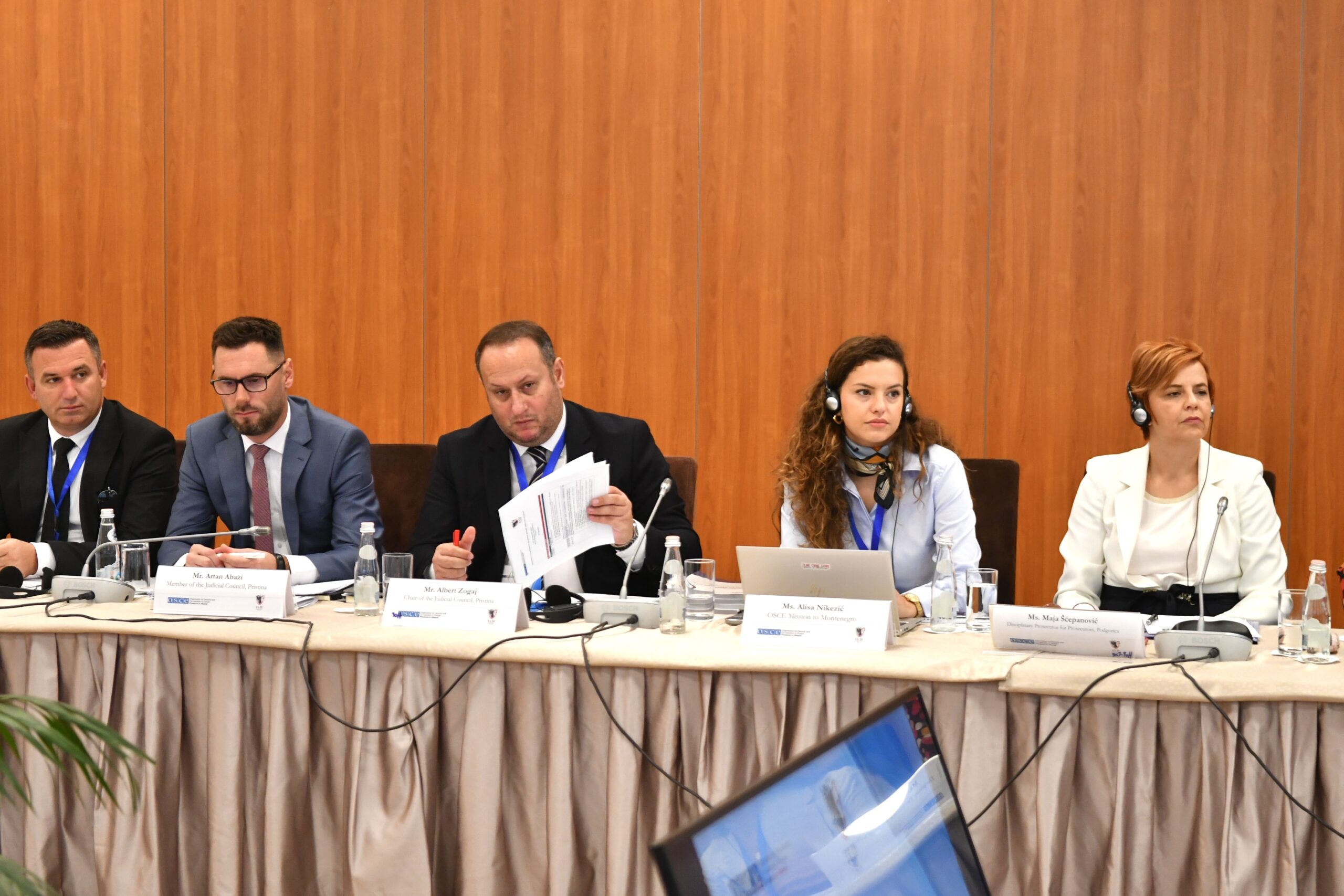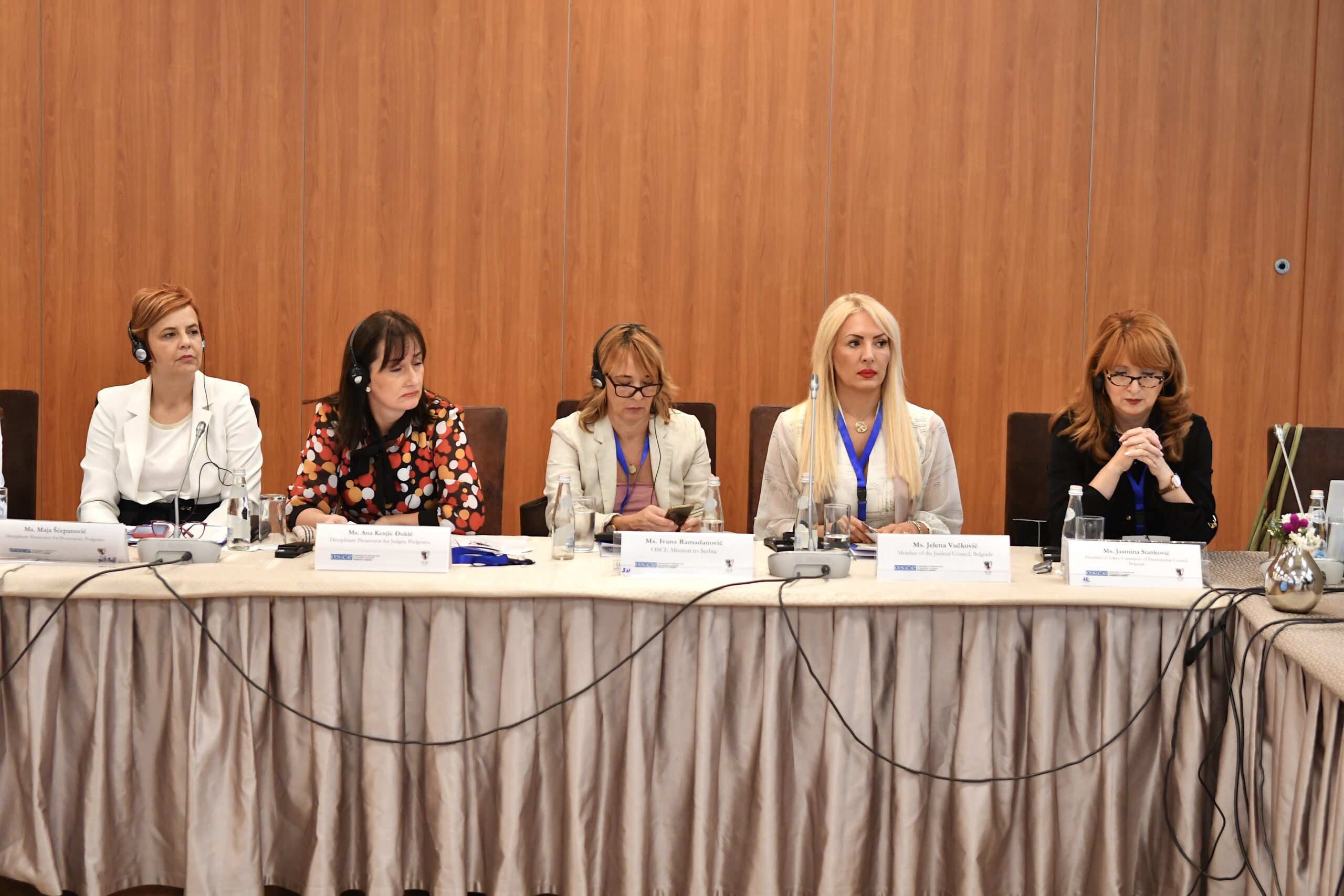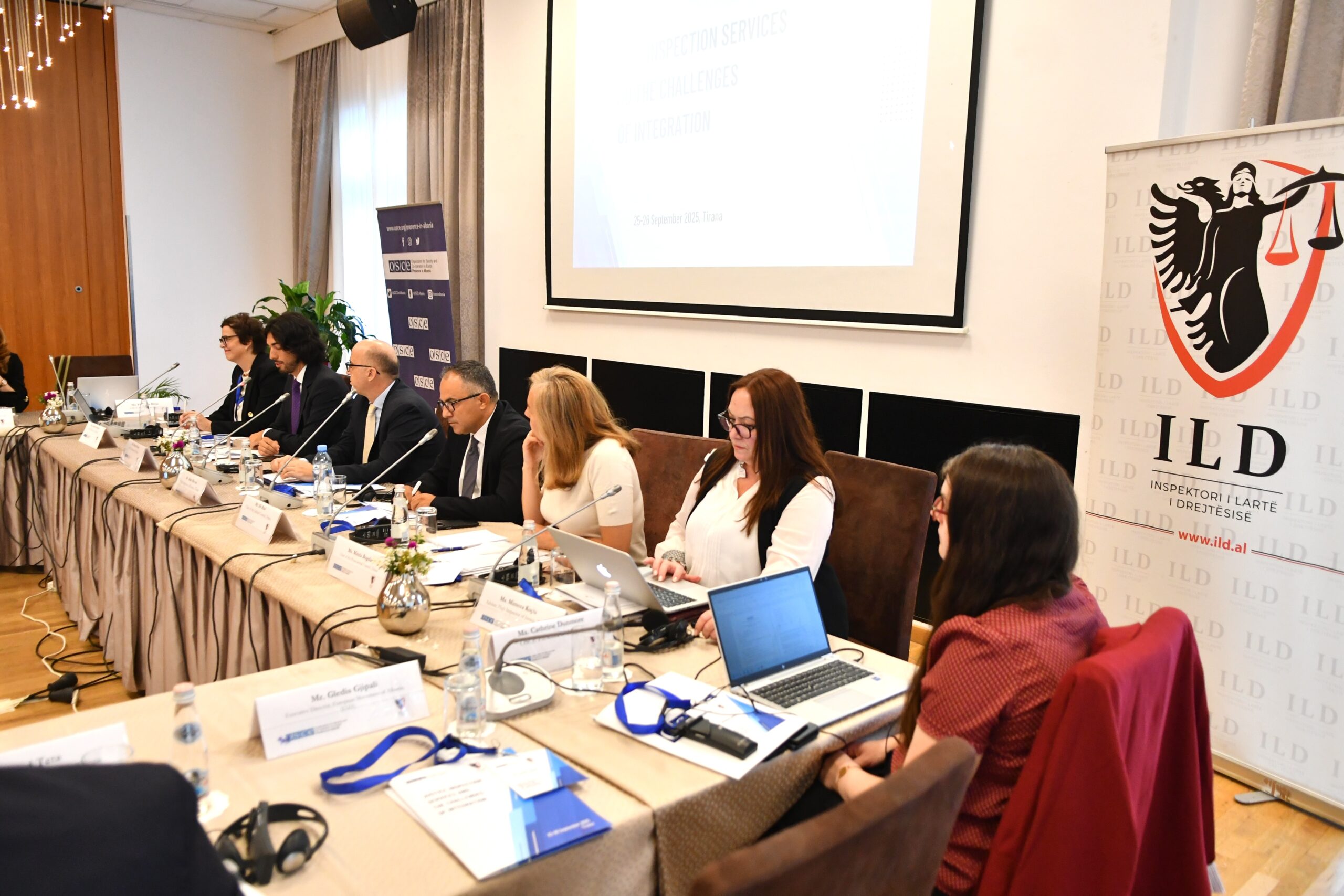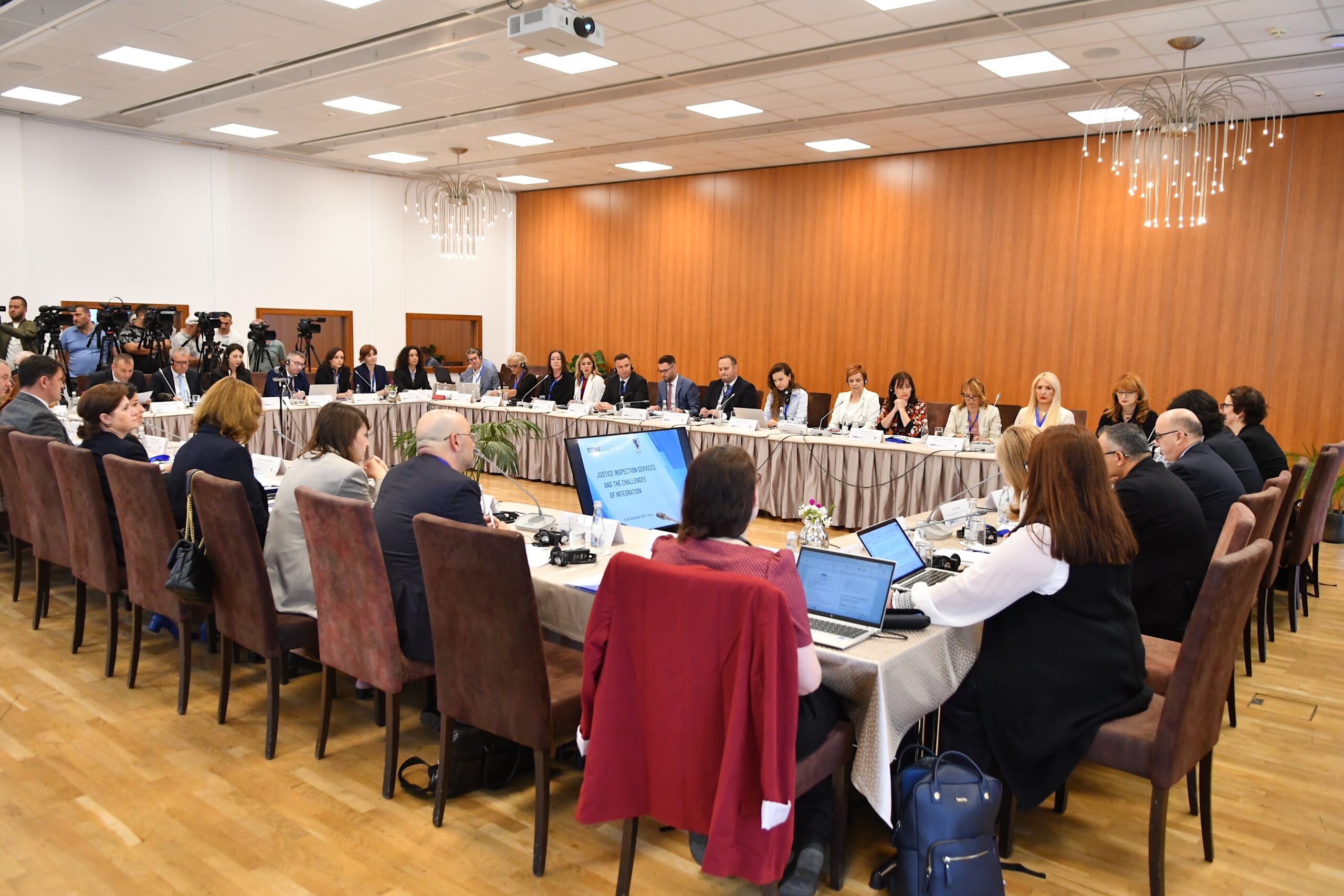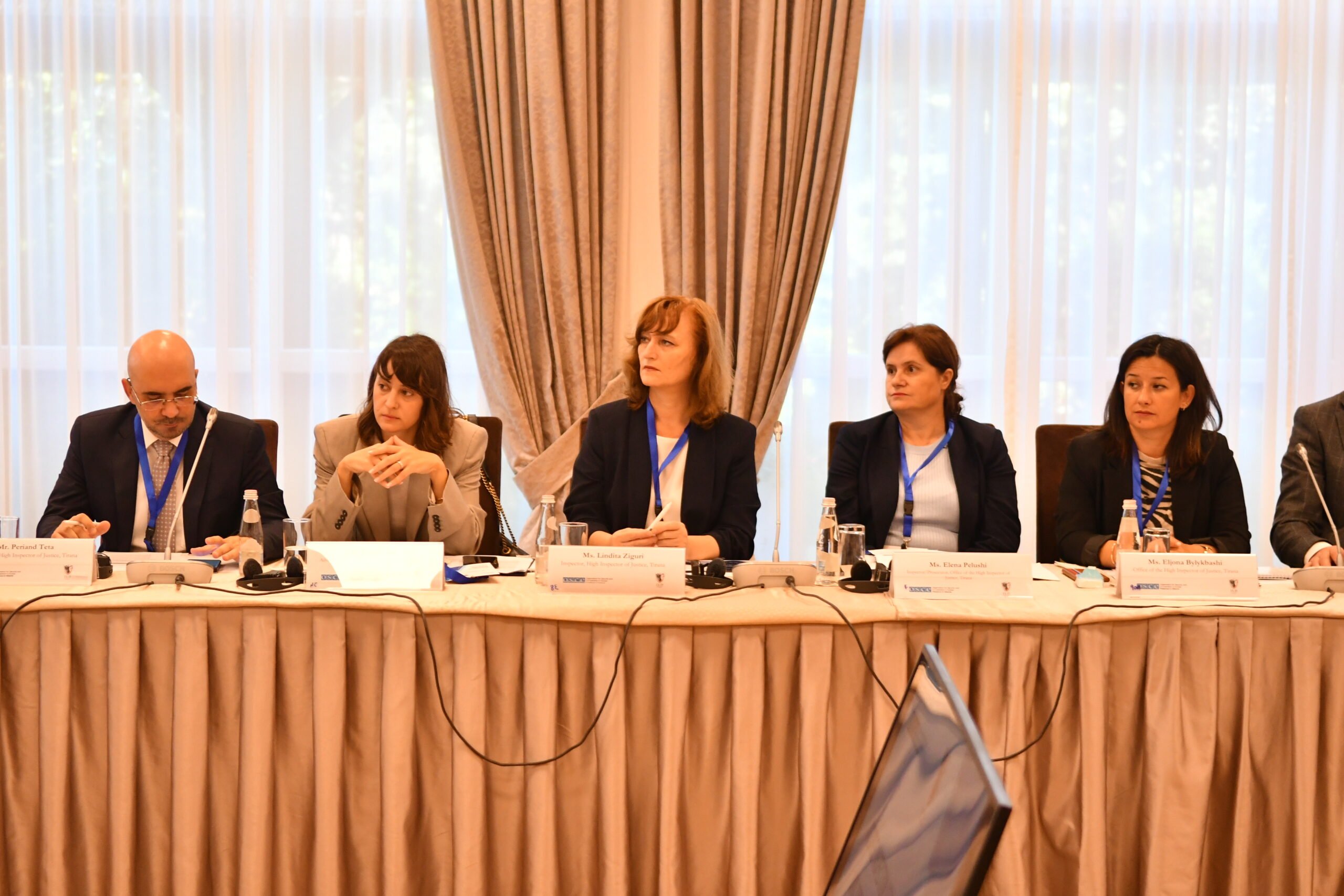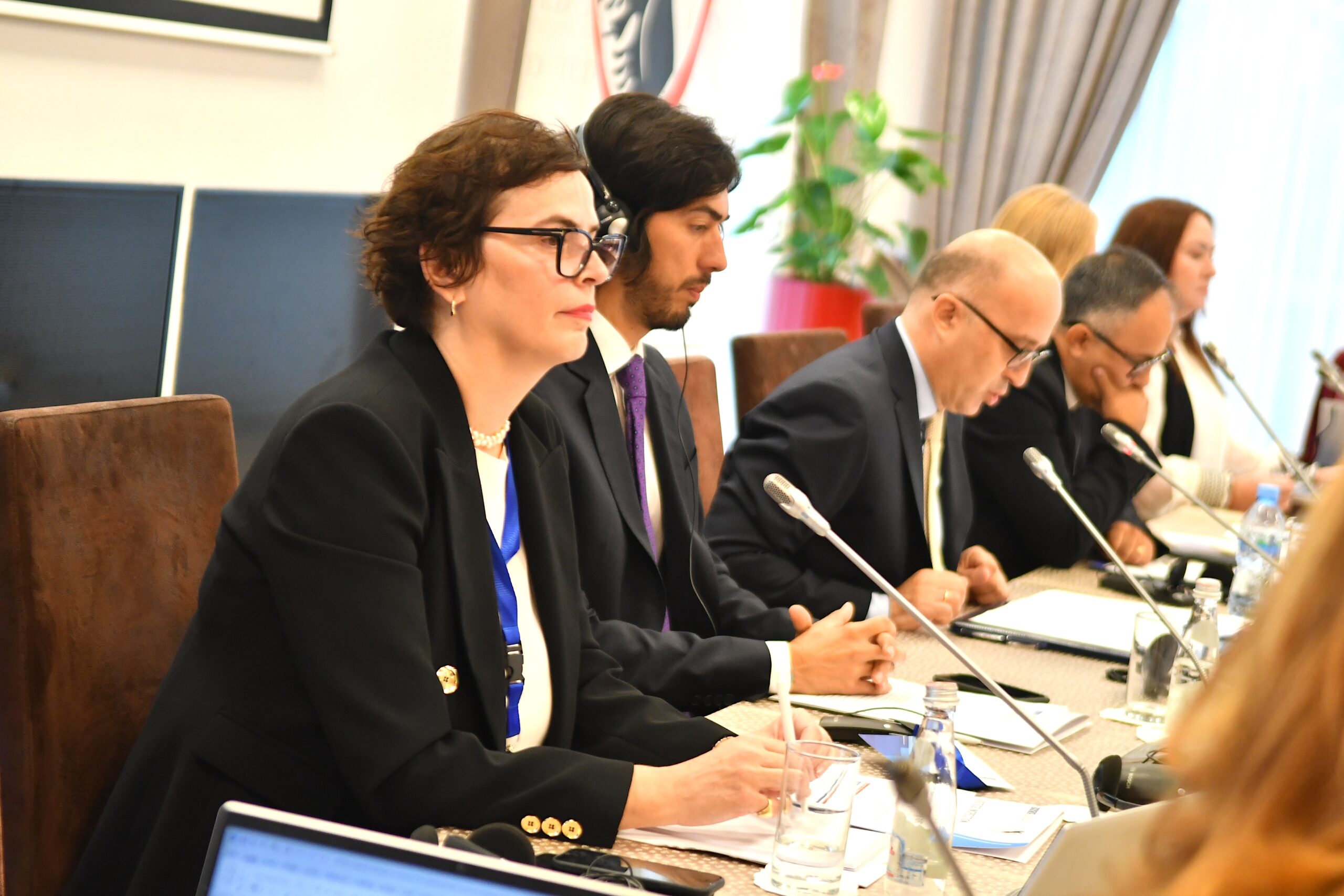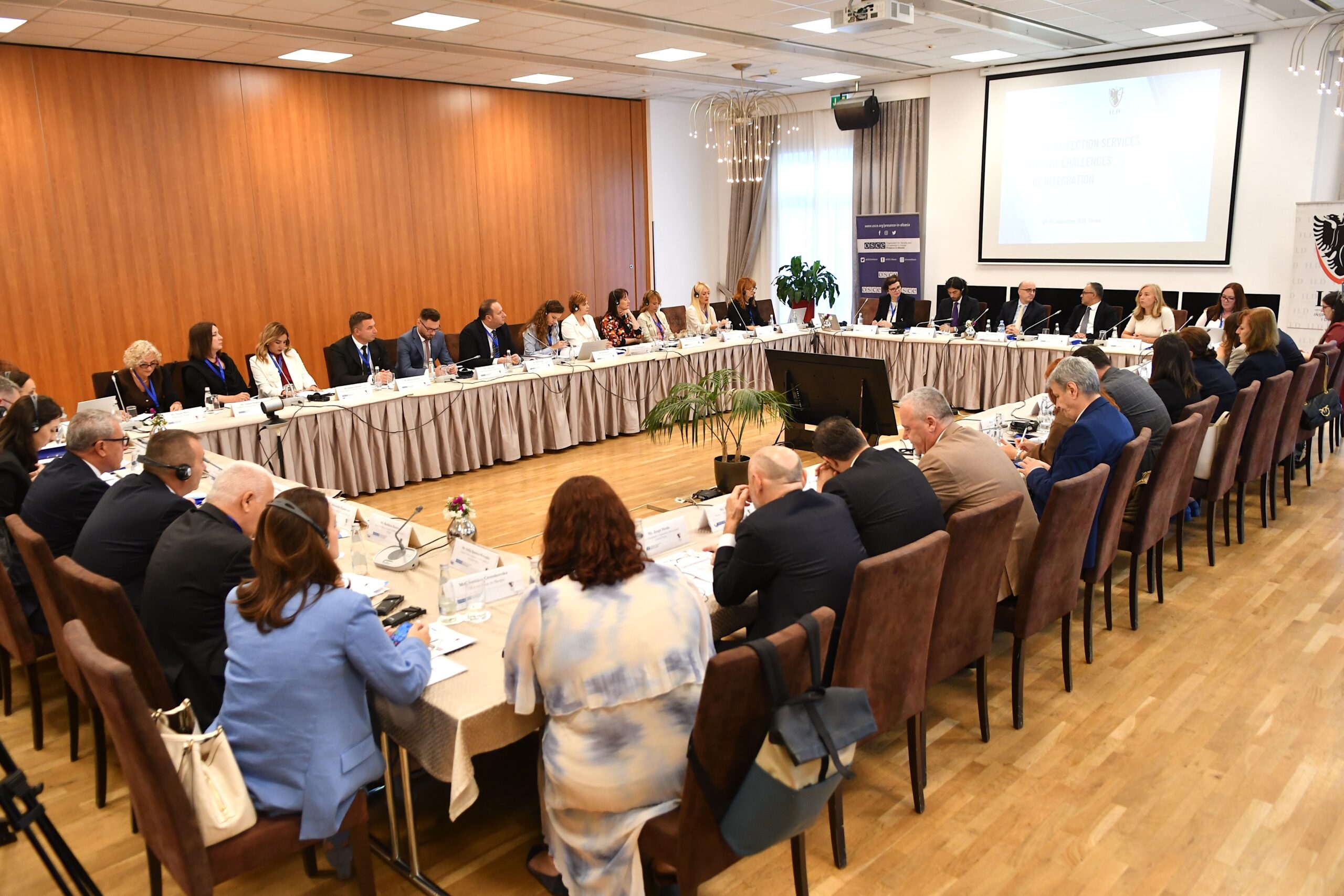
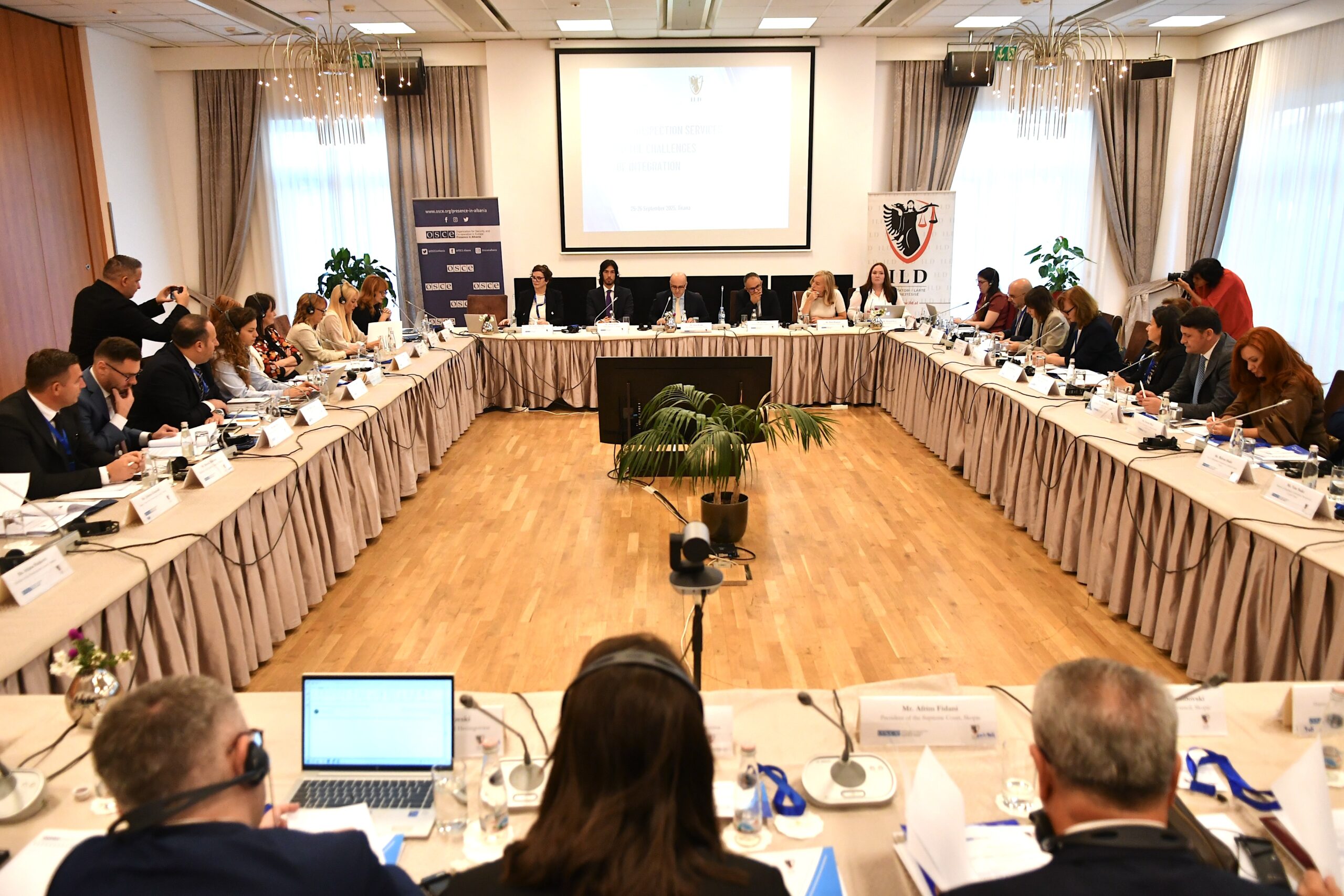
Justice institutions from across the region came together in Tirana on 25–26 September 2025 for the conference “Justice Inspection Services and the challenges of integration” to exchange experiences, address challenges related to judicial integrity and discuss their role in the process of European Union integration.
The conference was organized as a joint effort between the Office of the High Inspector of Justice and the OSCE Presence in Albania, in cooperation with the OSCE Missions in Belgrade, Podgorica, Pristina, Sarajevo and Skopje.
Over the course of the two-day conference, discussions focused on three major themes: the principles and functioning of inspection services, their role in safeguarding democratic standards and promoting integrity, and the contribution of these institutions in the context of the EU integration process.
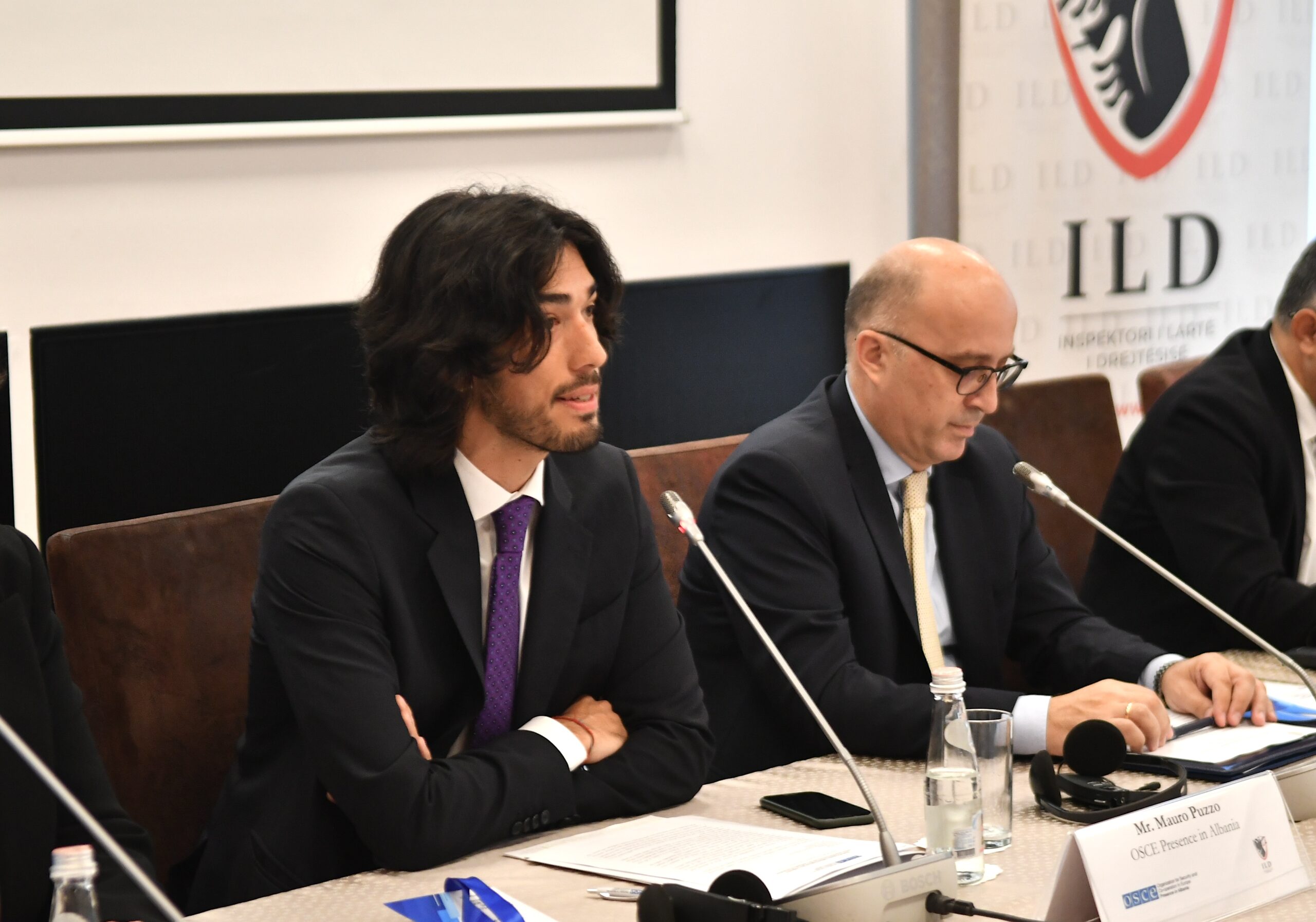
At the opening session, the conference was addressed on behalf of the Head of the OSCE Presence in Albania, Ambassador Michel Tarran, by Mr. Mauro Puzzo, Head of the Rule of Law and Human Rights Department at the OSCE, as well as by the High Inspector of Justice, Mr. Artur Metani, the Chair of the High Judicial Council, Mr. Ilir Rusi, and the Chair of the High Prosecutorial Council, Ms. Mirela Bogdani.
Full adress of the High Inspector of Justice mr. Artur Metani
Good morning everyone and welcome to Tirana!
Dobro doshli u Tiranu!
Dobre-doj-dovte vo Tirana!
Welcome to Tirana!
I feel deeply privileged to open this two-day regional conference together with colleagues from Belgrade, Podgorica, Pristina, Sarajevo, Skopje and Tirana.
This has been a long-held aspiration of mine, something I have shared with colleagues across the justice system and with international partners for almost two years. Following the exchange visits in Podgorica and Tirana, in Pristina and in Skopje nearly two years ago, it became clear that there was a genuine need to meet with our regional counterparts, to learn from one another’s experiences, and to share our vision for the professional standards that justice inspection bodies must uphold. Of course, turning this idea into reality required significant effort, particularly in terms of coordination and organization. That is why I want to express my sincere gratitude to the OSCE Ambassador to Albania, Ambassador Michel Tarran, for embracing this initiative, and to the Ambassadors of the OSCE Missions in Belgrade, Podgorica, Pristina, Sarajevo and Skopje, whose support made it possible for delegations from across the region to join us here in Tirana.
Thank you all!
Looking around this table today, I am even more convinced that an initiative of this scale has real value for all of us. I believe it will mark the beginning of stronger institutional cooperation, both bilateral and multilateral.
This gathering has been designed as a forum for professionals: a space to exchange experiences, to discuss challenges, and, when necessary, to share concerns, while reflecting together on the role we play in the broader process of European Union integration.
From the very outset of this idea, I was fully aware that our institutions have functional and institutional differences when it comes to disciplinary investigations and the inspection of judges and prosecutors. Yet I believe we share the same conviction that, despite these differences, what unites us is the common interest in the sound administration of justice, in safeguarding integrity, independence and accountability of judges and prosecutors; in short, in building an efficient justice system that enjoys the trust of the public. Institutions such as those we represent play a central role in this process.
The High Inspector of Justice in Tirana is a relatively new institution, established only five and a half years ago as an independent constitutional body. Its mandate is to verify complaints, investigate disciplinary violations, initiate disciplinary proceedings against judges and prosecutors at all levels, members of the High Judicial Council, members of the High Prosecutorial Council and the Prosecutor General, as well as to carry out institutional inspections of courts and prosecution offices. Prior to 2016, disciplinary proceedings were divided among three institutions: the High Council of Justice, the Minister of Justice and the Prosecutor General. With the 2016 justice reform, however, a new architecture was created, assigning all disciplinary oversight for both judges and prosecutors to a single, independent institution, the High Inspector of Justice. In the following session you will have the opportunity to hear a more detailed presentation of the functions and role of the High Inspector of Justice.
The strengthening of the rule of law, as a key pillar of any democratic society and as an essential dimension of each country’s profile in the context of European Union integration, is a shared priority for all of us.
Today every country must intensify its efforts not only to reinforce judicial independence, but also to enhance the efficiency and accountability of justice sector institutions. The two go hand in hand: the more accountable a magistrate is, the more secure the citizen is in the protection of their rights; the more independent a magistrate is, the more democratic a society becomes. At the same time, the standards of a functional system of magistrate accountability make justice more efficient.
In this sense, finding the right balance between, on the one hand, the public interest in the proper administration of justice and, on the other hand, the independence of magistrates, remains a permanent challenge, because judicial independence and accountability are dynamic values. Social developments inevitably bring institutional and economic transformations, and the balance between independence/accountability remains a constant professional and institutional challenge.
With this in mind, I sincerely hope that together we will find the right path to establish professional and institutional communication, and to cooperate by identifying opportunities for meaningful exchanges with one another.
Distinguished colleagues,
Justice plays a vital role in the life and quality of every society. The creation or consolidation of the rule of law is never an easy process. In every country, it is a dynamic and continuously evolving effort to identify the right mechanisms that guarantee respect for the standards and values necessary for an efficient, accountable and independent justice system.
As I mentioned earlier, in 2016 Albania undertook a profound legal and institutional reform of its justice system, an ambitious endeavor aimed at aligning with the stage of social development, emphasizing the independence of magistrates and our joint commitment to meet expectations of citizens and to strengthen public trust in justice institutions. The responsibility for developing and implementing this reform rests first and foremost with the actors of the justice system, but also with other institutions, other branches of power, and society as a whole. Implementing such reform is not easy, but it is certainly possible, and its results are a key benchmark for our country in negotiations with the European Union.
In this context, a conference such as today’s here in Tirana, bringing together our regional counterparts to reflect on both our experiences and the challenges of EU integration from the perspective of our institutions, will, I believe, contribute meaningfully to the vision and daily work of the High Inspector of Justice in Tirana. The discussions we hold over these two days will help us adapt good practices from our peer inspectorates into our own daily work.
Human rights, democracy and the rule of law are key assets for the European Union, and therefore also for each of us as aspiring member states. From my perspective, these values should not be seen merely as obligations recorded in the annual progress reports of our countries, or more recently in the European Commission’s Rule of Law Report. Rather, this dynamic should be understood as a contribution from each of us, first and foremost to the societies of our own countries.
This is why I consider today’s joint activity so important. It offers us the opportunity to share our experiences and perspectives, to discuss each other’s best practices, and, why not, to coordinate methods of oversight and evaluation of justice institutions in line with our common European values, regardless of our political, legal or social differences.
I hope that this first-ever gathering in Tirana will not only achieve these goals but will also serve as the starting point of a strong tradition of cooperation among us.
Allow me once again to thank each of you for your presence in Tirana and for your attention, and I wish you all a successful and productive conference!