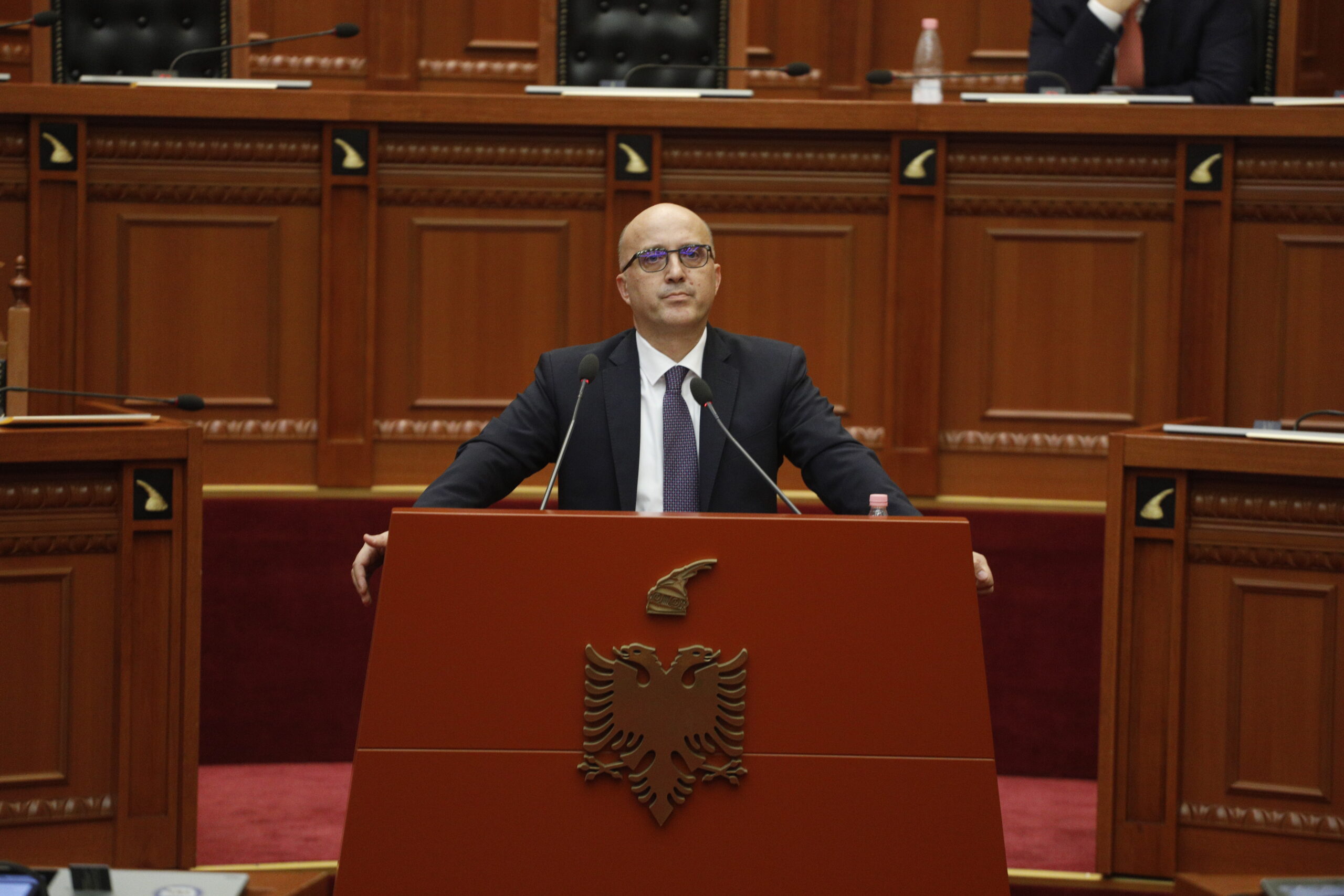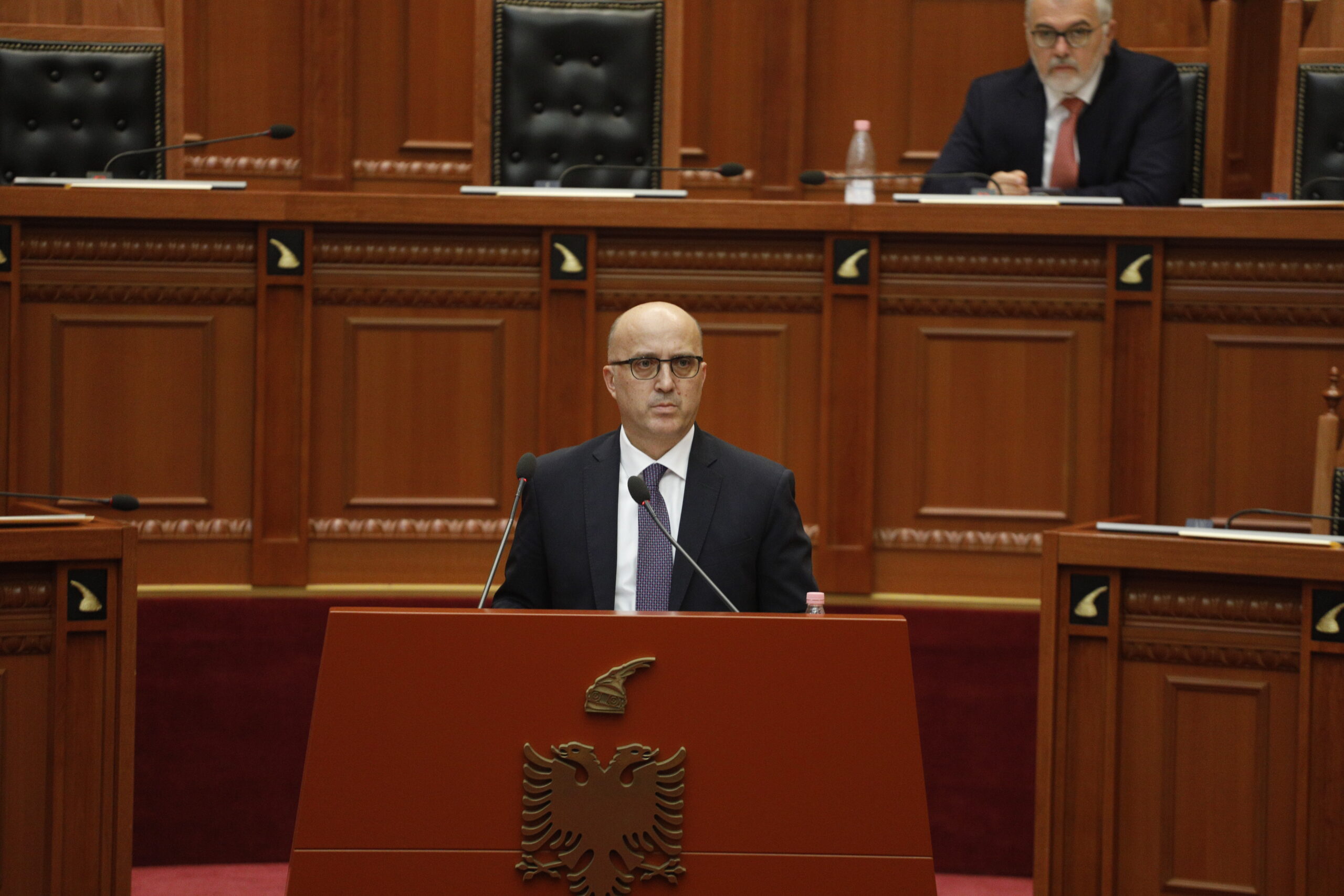
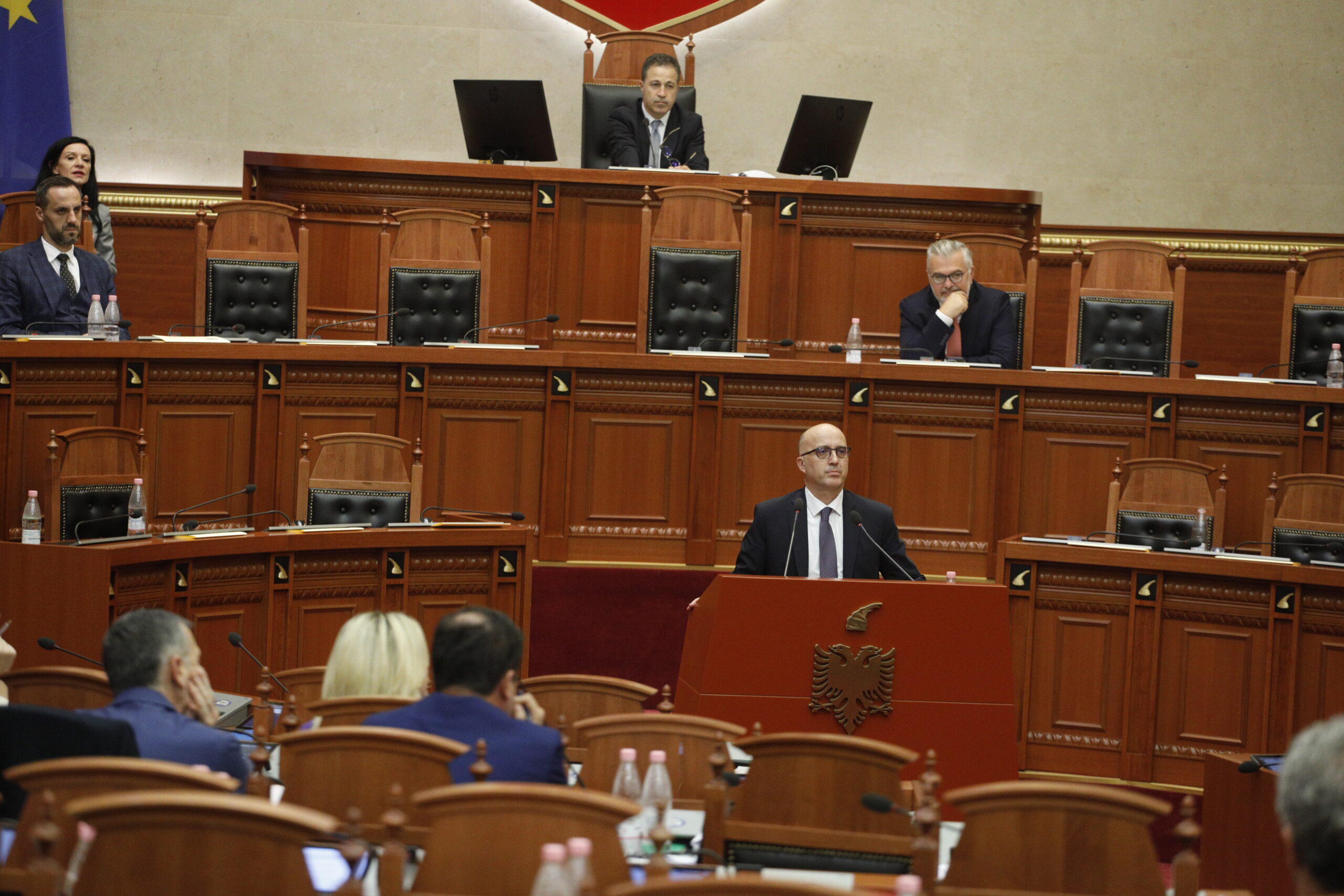
Honourable Mr. Speaker of the Assembly,
Honourable members of the parliament,
As every year, I am presenting to this Assembly the information on the activity of the High Inspector of Justice for the year 2024. You have the report in front of you. The figures and data have been provided there; therefore, I will avoid reiterating the statistics detailed in the report. However, to summarise briefly, the statistical data for the year 2024 concerning the activities of HIJ are as follows:
During the year 2024, the HIJ had 2854 complaints to review. It reviewed 1374 complaints where 54 of them ended with a disciplinary investigation. During 2024, there was a doubling of requests for disciplinary proceedings, specifically, there are 11 magistrates under proceedings, (6 judges and 5 prosecutors), with proposed measures ranging from dismissal from office to confidential remarks. In addition to complaints and disciplinary proceedings, the HIJ has also conducted 6 thematic inspections, which have ended with 54 recommendations, of which 9 are related to taking measures to issue acts, 29 to taking administrative measures and 15 recommendations to the High Inspector of Justice for further verification procedures. For all the decision-making of complaints by the High Inspector of Justice during the past year, there were only 89 complaints to the HPC or HJC. None of the decisions of the High Inspector of Justice have been overturned.
However, beyond the statistics, which show the dynamics and functionality of the accountability mechanism of judges and prosecutors, I believe that it is necessary for the High Inspector of Justice to present to you an overview of the state of the justice system, of course from the perspective of the High Inspector of Justice, in order to present to you the challenges facing the system and the issues that we, the bodies of the justice system, but also other institutional and public actors, must address.
The High Inspector of Justice, in the exercise of its activity, bases his work firstly on the complaints submitted by citizens or by various institutions. Secondly, on the thematic inspections that are carried out and here it should be noted that the number of inspections has increased every year. Thirdly, through other administrative mechanisms that the High Inspector of Justice has established to obtain information on the work of the courts and prosecution offices, in addition to those who submit complaints or thematic inspections. Based on these directions, a view has been prepared that I would like to present to you, on the issues that the system faces today, the way in which the High Inspector of Justice has addressed these issues, and other challenges that need to be addressed by the justice bodies and other institutional and public actors.
From its activity, the High Inspector of Justice has identified several issues and conclusions, as follows:
- Duration of judicial processes beyond reasonable deadlines, protracted investigative actions and delays in the reasoning of judicial decisions
The effectiveness and standard of the justice system is not at the appropriate and satisfactory level for Albanian citizens. As far as can be seen, the excessive length of judicial processes continues to remain problematic, a problem consistently highlighted by complaints, the jurisprudence of the ECHR, but also in the reports of international organizations. In its latest decision-making, the ECHR has also addressed concrete recommendations to local authorities, emphasizing the need to fill vacancies in the Administrative Court of Appeal and the Court of Appeal of General Jurisdiction. The excessive length of judicial processes directly affects the perception and trust of the public in the justice system. The increase of whose trust is one of the main reasons for which the justice reform was conceived and undertaken.
Through the available legal instruments, the High Inspector of Justice has addressed this issue, through recommendations of a regulatory and administrative nature, resulting from the thematic inspection carried out at the Court of First Instance of General Jurisdiction of Tirana, on the duration of the trial of judicial cases, during the period 01.03.2023-31.05.2023, an inspection already concluded with concrete recommendations for the actors of the justice system.
From this thematic inspection it resulted that:
a) The first reason that has influenced the duration of judicial processes beyond reasonable deadlines is the workload of the magistrates of this court. For the year 2023, the average workload for a judge of the Court of First Instance of General Jurisdiction of Tirana, has been on average 1176 trial cases, while for judges at the courts of the same judicial level it has been 841.7 cases per judge.
For the year 2023, the number of judges in the approved staff of this court is 80 judges, while only 43 judges have effectively exercised their duty during 2023
b) The second reason is the unfilled vacancies at this court. This inspection resulted in the staff of the First Instance Court of General Jurisdiction of Tirana (Criminal and Civil Chamber) for the year 2023 being filled to the extent of 54%, as far as this body is concerned. Assessing the importance of filling vacancies in the system, based on the reports of the European Commission and the 2025 Rule of Law Report, the High Inspector of Justice has recommended to the High Judicial Council, as the institution responsible for following up on human resources issues in the courts, to take effective and immediate measures to fill the staff of this court, setting a 1-year deadline for its fulfillment. We will continuously monitor the fulfillment of this recommendation, within the scope of the competences that the HIJ exercises.
c) The third reason is infrastructure, but I will discuss this issue a little later.
On the other hand, in all those cases where the HIJ, within the framework of the verification and disciplinary investigation, has found that the delays have exceeded any reasonable deadline, demonstrating the negligence of the magistrate in fulfilling his/her duty, for reasons unrelated to causes beyond the control of the magistrate, he has submitted requests for disciplinary proceedings to the relevant councils. In total, during its activity, in cases of delays in judicial processes or proceedings, the High Inspector of Justice has decided to initiate disciplinary investigations for 51 magistrates and at their conclusion, requests for disciplinary proceedings have been submitted for 17 magistrates. (8 judges and 9 prosecutors). The proposed measures for these disciplinary violations are:
- “Dismissal from office”, for 2 judges and 3 prosecutors;
- “Temporary salary reduction of up to 40 percent, for a period not exceeding one year”, for 3 judges and 5 prosecutors;
- “Public reprimand”, for 3 judges and 1 prosecutor.
Another inspection conducted by HIJ is the use of alternative adjudication mechanisms. This inspection at the courts of first instance in Elbasan, Tirana, Durrës, and Vlorë found that mediation was rarely used, despite the requirement in Article 25 of the Code of Civil Procedure. At the end of these inspections, it was recommended, among other things, that any orientation of the judge for mediation be reflected in the minutes of court hearings, in order to enable monitoring and analysis of this practice in subsequent inspections.
In order to monitor the activity of prosecutors, in the context of continuous complaints about the delay of investigative activity, the High Inspector of Justice has initiated a thematic inspection of cases for which the prosecutor has proceeded with a request or decision to dismiss, due to the statute of limitations of criminal prosecution throughout 2024. Through this inspection and the institutional inspection, which is taking place at the Prosecution Office at the First Instance Court of General Jurisdiction in Dibër, over the entire process of documentation circulation in this prosecution office, the High Inspector of Justice aims not only to identify problems, but also to address issues of a systemic aspect.
Delayed reasoning of judicial decisions constitutes another systemic problem with an impact on the right of individuals to a due process of law. The High Inspector of Justice, reflecting the recommendations made for the activity of this institution during 2023 in the Resolution of the Assembly of Albania, has decided to conduct thematic inspections in several courts of general jurisdiction and in one court of administrative jurisdiction. Through these thematic inspections, the HIJ has taken a snapshot of the situation of the delivery of judicial decisions at the Court of First Instance of General Jurisdiction in Tirana, the Administrative Court of First Instance in Tirana, the Courts of First Instance of General Jurisdiction in Fier, Shkodër and is currently concluding the thematic inspection at the Court of First Instance of General Jurisdiction in Gjirokastër. At the end of each inspection, the HIJ has assessed to identify a reasonable period that the magistrate needs to submit the final reasoned decision, considering the average time that each magistrate in the same court needs to reason decisions related to issues of the same typology. The deadline estimated by the High Inspector of Justice at the end of each inspection does not replace the legal deadline in any case but constitutes a finding by the HIJ at the time of conducting the inspection, considering the current situation of the workload that the system has today and the vacancies in the justice system. In this context, I personally think that the commitment of the court, the HJC, or even the Assembly itself, to draft and approve measures to reduce the backlog, (which has reached a large number), is an indispensable tool.
- Court infrastructure and audio recording of hearings
Another problem that courts are facing today is the way in which court hearings are conducted in the absence of the necessary infrastructure to comply with the procedural requirements for conducting trials with audio recording. The content of complaints, verifications and periodic information administered at the Court of First Instance has shown that the current infrastructure does not allow for the conduct of all court hearings with audio recording, in accordance with the legal obligation, especially in the Court of First Instance of General Jurisdiction in Tirana. These shortcomings, together with the vacancies in the system, have affected the quality of working conditions, exposing the judiciary to a lack of solemnity in the conduct of judicial processes.
During the inspection of the Court of First Instance of General Jurisdiction in Tirana, with the objective of the duration of judicial processes, this issue was identified and the HIJ recommended that the High Judicial Council, in cooperation with the Head of the Court and the Council of the Court, take the necessary measures to guarantee the use of the court premises, so that the judicial process of all civil cases with opposing parties is conducted in courtrooms equipped with audio recording, within the first 6 months of 2026.
- Respect for the solemnity of the judicial process and ethical standards
Respect for the rules of ethics and solemnity is the focus of the work of the High Inspector of Justice. The behaviour of the magistrate is linked to ensuring the preservation and strengthening of public trust in the justice system. In each disciplinary proceeding initiated, the High Inspector of Justice has tried to maintain the balance between the shortcomings and challenges that magistrates are facing in their work, with the duty that the magistrate has to display a behavioural model, which carries values and which must not only be transmitted, but also be displayed, during and outside the exercise of the function. In cases where unethical behaviour has been proven during the conduct of the disciplinary investigation, proposals for disciplinary measures to be taken by the Councils have been forwarded. During its activity, the HIJ has initiated disciplinary investigations for 14 magistrates, 10 judges and 4 prosecutors for violation of the rules of ethics and at the end of them, requests for proceedings have been submitted for 7 magistrates, 3 judges and 4 prosecutors, proposing:
- “Temporary salary reduction of up to 40 percent, for a period not longer than one year”, for 2 magistrates.
- “Public reprimand”, for 3 magistrates.
- “Confidential reprimand”, for 2 magistrates.
As it has been consistently demonstrated, punitive measures are the last resort that should be applied to guarantee the accountability of the system. For this reason, I believe that the relevant Councils should have closer cooperation with the School of Magistrates in the ongoing training of magistrates, especially those with fewer years of experience in the system, in the context of increasing the frequency of training and their individualization for cases referred by the HIJ and cases for which disciplinary measures have been imposed. At the same time, attention should also be paid to the ongoing training of other magistrates, in the preparation of topics with an awareness-raising and preventive effect for avoiding such behaviours in the future, which could have a serious impact on the public’s perception of the justice system.
- Positions regarding judicial decision-making and the role of the High Inspector of Justice in relation to this issue
The HIJ would like to reiterate that its role in reviewing allegations of unfair decision-making by justice system actors cannot replace the interpretation and application of criminal procedural norms and institutions by the prosecutor, or the independent judicial review carried out by the court. This is a competence of the justice system bodies, which is fundamentally controlled by the hierarchical organization of the judiciary itself, through procedural mechanisms provided for by law.
The element of responsibility and accountability, according to the positions already established by the Appeal Chamber, comes to the fore when the magistrate during his decision-making acts in open and flagrant contradiction with the law, evidenced by the decisions of the highest courts, or in contradiction with the unifying practices of the highest courts by distorting the internal conviction, which should be in accordance with the law, the analysis of facts and evidence. Even the violation of decision-making within the levels of the judiciary is part of the control of judicial decisions and the hierarchical exercise of judicial power. This judicial control is carried out in the context of increasing the quality of justice and does not have as its purpose the disciplinary responsibility of magistrates. Changing or overturning a judicial decision by a higher court, cannot constitute a priori a sufficient factual basis for disciplinary proceedings against the magistrate, unless it is accompanied by other elements that show that the magistrate has acted in bad faith, ceding the obligation to exercise his duty with dignity in accordance with his conscience for the interpretation of the facts, in application of the norms of law.
In this context, in cases where the causes as above have been identified, which have brought discredit to the position and image of the magistrate, the High Inspector of Justice has initiated 25 disciplinary investigations and has submitted requests for proceedings for 9 magistrates, 7 judges and 2 prosecutors, requesting:
- dismissal from office, for 3 magistrates;
- suspension from office for 1 magistrate;
- temporary reduction of salary up to 40 percent for a period not longer than one year, for 4 magistrates;
- public reprimand for 1 magistrate.
It is important to emphasise, in discussing the authority and responsibilities of the High Inspector of Justice, the clear separation between disciplinary actions and criminal proceedings. The Constitution and the law have given the High Inspector of Justice clear attributes in carrying out disciplinary investigation procedures against magistrates, or other subjects included in the field of competence of this institution. The investigation and disciplinary procedure are not criminal in nature. They do not have investigative tools like a criminal prosecution body but are an administrative process. The rules and procedures that the law has provided serve to guarantee the development of a regular legal process against the magistrate, who is suspected of having committed a disciplinary violation and other parties participating in this process and do not provide mechanisms to evidence the existence of a criminal fact. Not without reason, the legislator has given priority to criminal, civil or administrative procedures by forcing the High Inspector of Justice to suspend the disciplinary investigation, when a criminal investigation against the magistrate is being conducted for the same facts.
- Issues related to the organization and functioning of prosecution offices
In the function of inter-institutional cooperation with the Prosecutor General Office, the High Inspector of Justice has maintained ongoing contacts with this institution and for this purpose has also concluded a cooperation agreement. Complaints referred by the Prosecutor General have served as data for the initiation of disciplinary verifications and investigations against several magistrates, which have been concluded with the proposal of disciplinary measures, including dismissal from office.
At the same time, the activity of the prosecution offices, in terms of the implementation of regulatory acts in relations with the head, has been the subject of a thematic inspection. This inspection aimed to implement the orders of the Prosecutor General, on maintaining the stability of the prosecution office, through institutional cohesion and uniformity of activity in all prosecution offices, in guaranteeing the functional independence of the prosecutor in decision-making on concrete issues. This inspection is expected to continue in the future, as problems have been identified again from monitoring the implementation of the recommendations made, but also from the verifications carried out within the framework of the complaint review process. In fulfilment of the legal obligation to inspect the allocation of cases by draw in the prosecution offices, HIJ has recommended a review of the regulatory act “On the allocation of cases in the prosecution office” and unification of the various practices identified during the inspection, in the prosecution offices at the Courts of General Jurisdiction. This inspection referring to legal obligations will be continued, focusing on monitoring the implementation of the recommendations made.
- Productivity in the conduct of hearings
Based on several complaints, which have been subject to verification, but also on information submitted by the courts of first instance of general jurisdiction themselves, one of the problems of the judicial system today is the productivity and effectiveness of magistrates in the planning and conduct of court hearings, as well as making of the necessary procedural actions to avoid unproductive hearings. To address this situation, the High Inspector of Justice has decided to conduct a thematic inspection in several courts of general jurisdiction, with the aim of inspecting the manner of planning court hearings and managing the examination of cases according to the relevant categories, in accordance with the deadlines established by the procedural provisions. One factor that influences the insufficient rate of evasion of judicial cases, as we have also highlighted in our thematic inspection reports, is the failure to fill vacancies in the courts of first instance and in particular in the Court of Appeal of General Jurisdiction and the Administrative Court of Appeal. This process, as evidenced, is linked to the failure to complete the ethical-professional evaluation procedures of magistrates on time. In this context, we consider it necessary to take concrete measures to increase the effectiveness of this process by orienting and cooperating with the Councils in the application of uniform evaluation standards considering the guidelines given by the decision-making of the Supreme Court.
Honourable Members of Parliament!
Despite the results so far, the institution of the High Inspector of Justice finds that the justice system faces significant challenges related to its organization and functioning. The effectiveness and quality of the justice system are not at the level that meets the expectations of Albanian citizens. This is part of the process of consolidating the Justice Reform and a responsibility of all our bodies, starting from the Assembly of the Republic of Albania, the governing bodies of the judicial power, or the magistrates, judges and prosecutors.
The infrastructure of the judicial power is an aspect that requires special attention The lack of appropriate facilities and the application of information technology, including audio recording systems of sessions, case management systems, archives, circulation of procedural and administrative documentation, or technology systems that cover specific processes of the work of the court or prosecutor’s office, directly affect the quality and solemnity of the trial or the development of the criminal investigation process. In some cases, these conditions have also affected the ethical and professional behaviour of magistrates, exposing the justice system to negative perceptions by the public. For this reason, investment in infrastructure should be seen as an integral part of policies to strengthen the independence, legitimacy and integrity of the judicial power.
The extraordinary workload and the high number of court cases remain one of the most serious challenges, which undermine the quality and duration of court proceedings, as well as the rights of Albanian citizens in the framework of a due process of law. In this regard, the joint commitment of all public bodies, such as the Assembly, the Councils, the Prosecutor General, the courts and the prosecution offices is required to draft concrete measures to reduce the backlog; increase the number of judges and prosecutors, fill staff vacancies, increase human resources and improve the infrastructure. At the same time, the courts and prosecution offices themselves must draft case prioritization systems, to ensure a faster and fair treatment of court files.
The accountable system constitutes the cornerstone of the rule of law. Only if this system functions fully, fairly and effectively, can the judicial power be organized on a sustainable basis of professionalism, integrity and legitimacy. On the contrary, an accountability system that functions only in a punitive and not a preventive aspect loses its educational role and contributes to the decline of public trust. The accountability of the judiciary should be perceived as a preventive and improvement mechanism, not as a mechanism of intimidation, intervention or punishment.
The role of the High Inspector of Justice should not be seen simply in a disciplinary aspect, but in a broader educational and preventive prism. The aim is to create a high ethical and professional culture in the justice system, where the sense of accountability is part of the consciousness of magistrates and not an external factor. If the accountability system, i.e. education at the School of Magistracy, appointments and promotions of magistrates by the Councils, the role of the highest courts in increasing the quality of judicial decisions, etc., functions fully, fairly and effectively, then the judicial power will be organized and will function on a stable basis of professionalism, legitimacy and integrity. Otherwise, if this system does not function, the application of the system of accountability of magistrates (i.e. sanctions) may be a delayed mechanism and reaction, not playing a preventive role, but only a punitive one, and resulting in not only undermining public confidence in the judicial power, but also the legitimacy or authority of this power.
This is the true dimension and philosophy of a legitimate reform in a justice system: building a justice system that self-regulates through its integrity. This discussion leads us to a universal dilemma, faced by many countries: the balance between independence and accountability. Even in Albania, where the justice system is still in the consolidation phase after a deep institutional reform, this balance requires special care. On the one hand, the functional independence of the magistrate must be protected, as the foundation of the rule of law, while on the other hand, it must be guaranteed that this independence does not turn into a lack of responsibility.
The greatest challenge of the High Inspector of Justice today is to preserve its institutional independence and ensure a constructive role in guaranteeing the independence of the judicial power not as a play on words and not as a shield for eventual illegalities that the system may commit, but as an important principle for the future of the country, as a principle that shows that the system accountable to magistrates is not a choice or emotion, much less of the High Inspector of Justice. It is a principle on which a legal state is based. In this context, the High Inspector of Justice has the obligation to demonstrate integrity, transparency and impartiality in every decision-making. This is a sensitive process, where the institution must act as a defender of the principles of justice, but not as a factor that influences or orients the decision-making of the judicial power. In this process, the High Inspector of Justice will continue to apply with dedication, the highest standards of due process, as well as to be a guarantor of the balance between independence and accountability in the Albanian judicial system.
Today we are faced with an ambiguity on the role and function of the High Inspector of Justice, which does not only stem from citizens, who through complaints filed with the HIJ claim resolution of judicial disputes, interference in judicial processes, or influence on judicial decision-making, but is also encountered in the context of numerous claims from other public circles, including political actors, the media or other public bodies themselves.
This phenomenon requires addressing from a systemic perspective. The Supreme Court, as the highest body in the pyramid of the judicial hierarchy, also has a fundamental importance in guaranteeing a quality justice system, not only through conflict resolution, but also in ensuring the avoidance of divergences and maintaining consistency in the interpretation and application of the law. For this reason, the High Inspector of Justice has requested special attention from the Supreme Court, to exercise its calculating role, in establishing sustainable standards and practices.
Simultaneously, I believe that public legal education is an essential foundation for strengthening confidence in the justice system. An informed, aware and active public is the most valuable partner of justice institutions. Here, the Parliament and the Ministry of Justice must also play a fundamental role, within the framework of the Strategy for Legal Education of the Public.
If citizens do not understand the role of justice institutions, role of magistrates, the limits of the institutions’ competences and the complaint mechanisms, the justice system risks being perceived as closed and incomprehensible. Today we are facing a worrying situation, where the factors that have influenced its creation may be different but the lack of reaction and taking measures on our part to prevent these negative phenomena can bring serious consequences, not only for the justice system, but also for our society itself. For this reason, I personally think that all our bodies should continue their efforts and invest in transparency, legal education and public communication, making justice closer to the citizen, clearer in its functions and more reliable in the results it produces or is legally obliged to produce.
The Institution of the High Inspector of Justice offers maximum commitment to develop a culture of institutional cooperation and coordination, where all institutions of the justice system such as the HJC, HPC, the Supreme Court, the School of Magistrates, or other bodies, such as the Parliament and the Ministry of Justice, work on joint strategic action plans to improve the quality of justice and strengthen the trust of citizens. Achieving this goal calls for a long-term perspective, a well-organised plan for implementation, and ongoing evaluation to ensure each recommendation becomes part of the institution. Building an effective and sustainable justice system means coordinating between institutions, maintaining transparency, and upholding the separation of powers. These are essential for the Albanian justice system to operate with lasting professionalism, integrity, and trustworthiness.
Thank you!