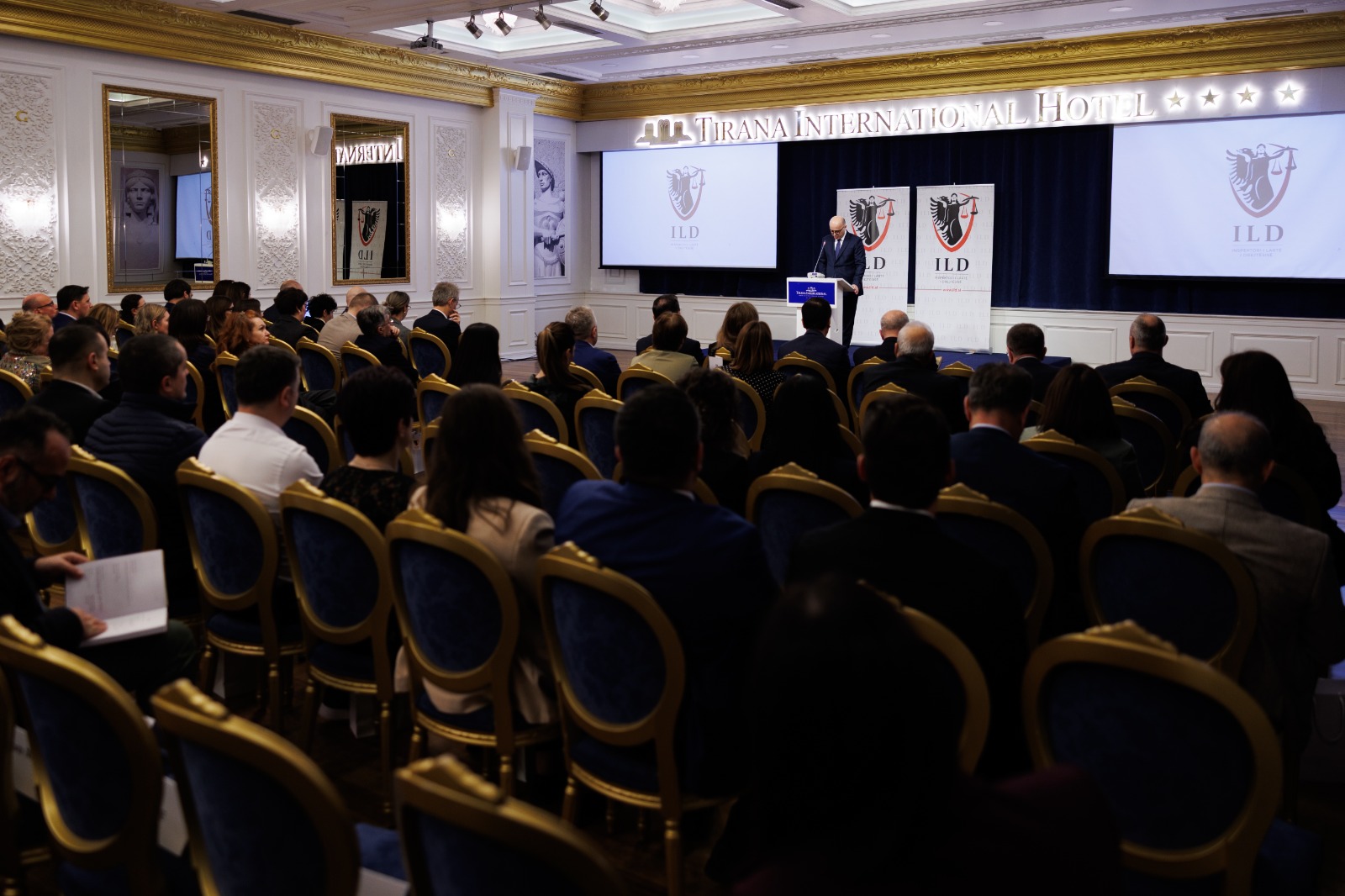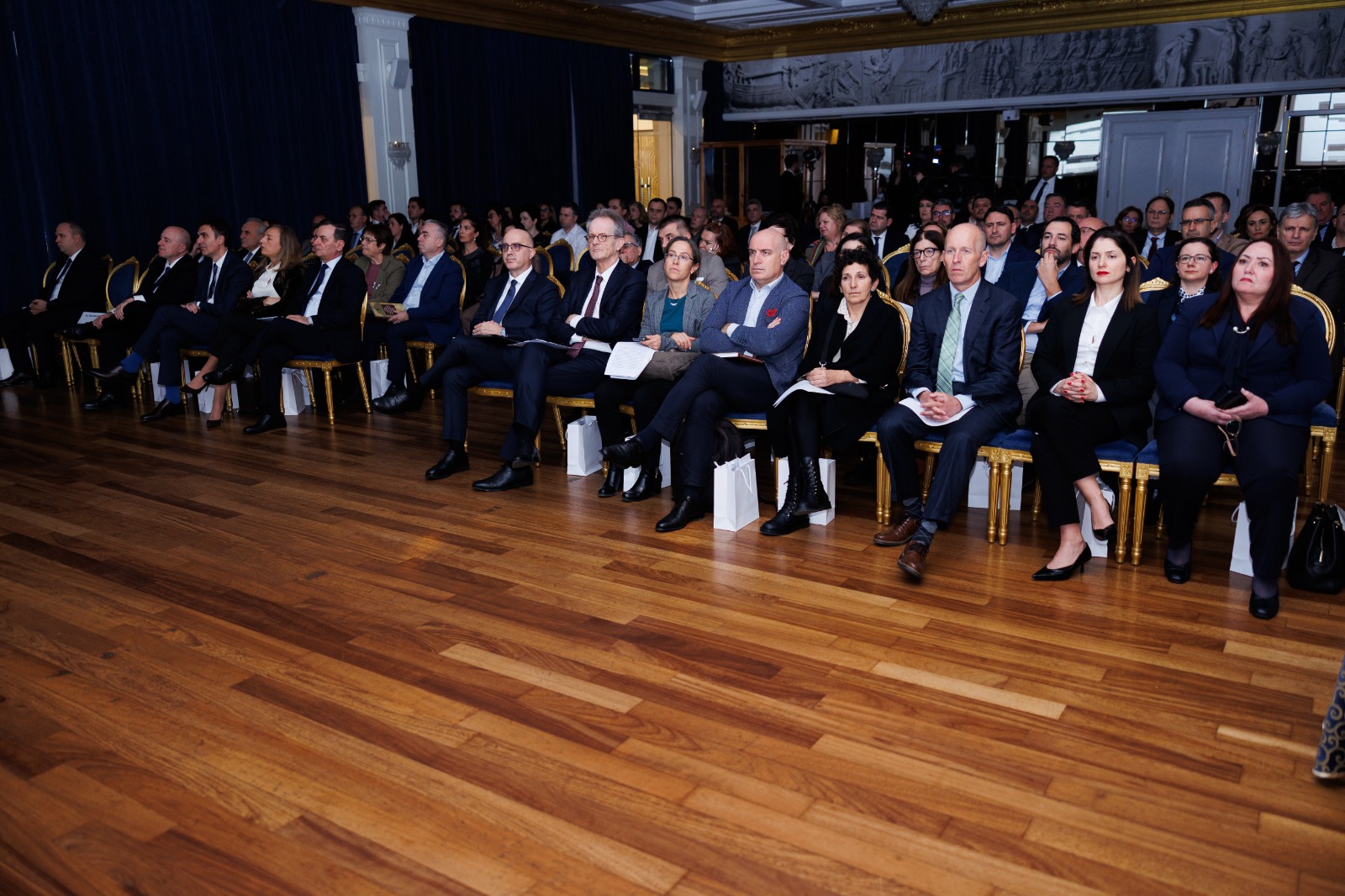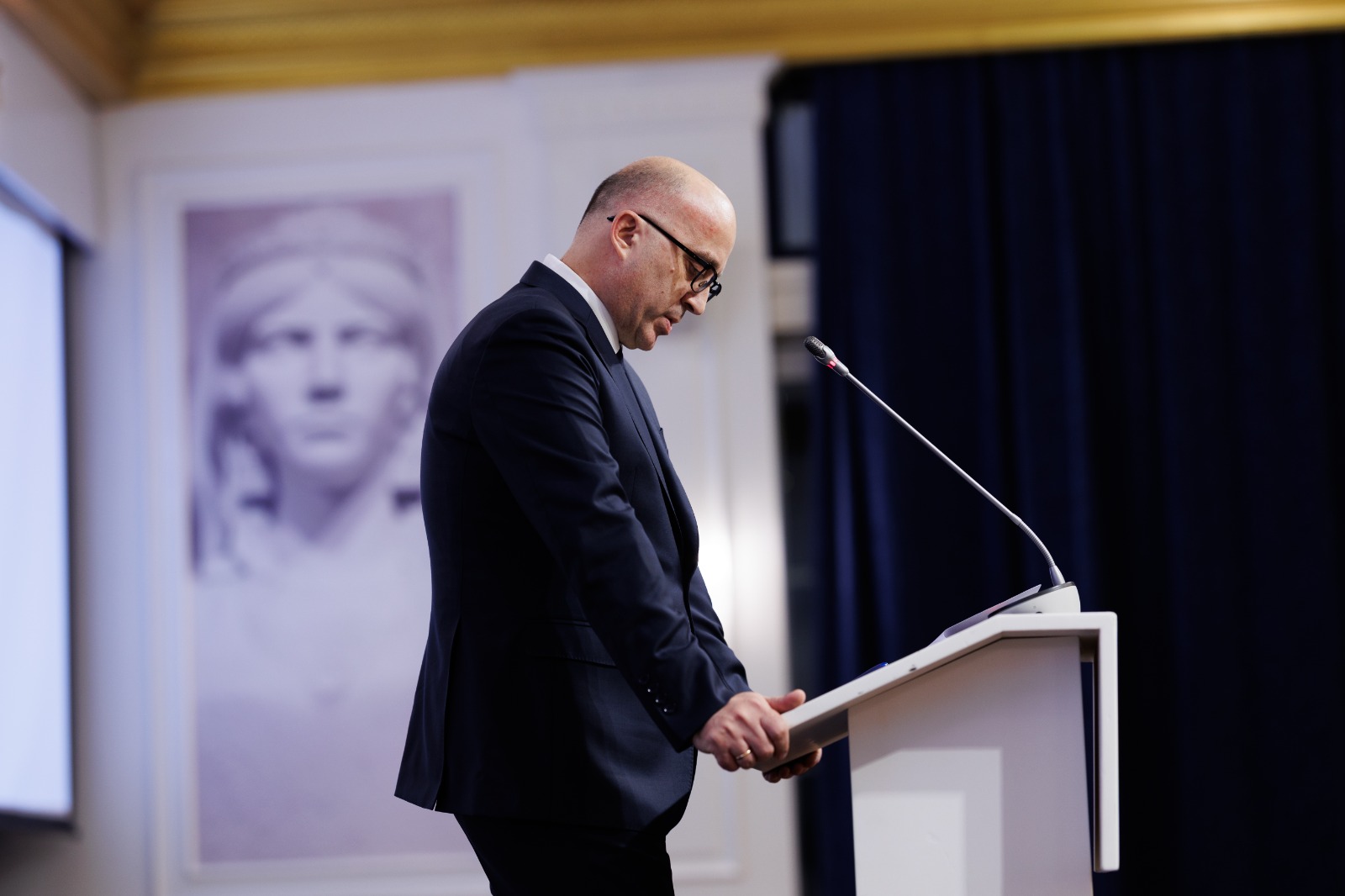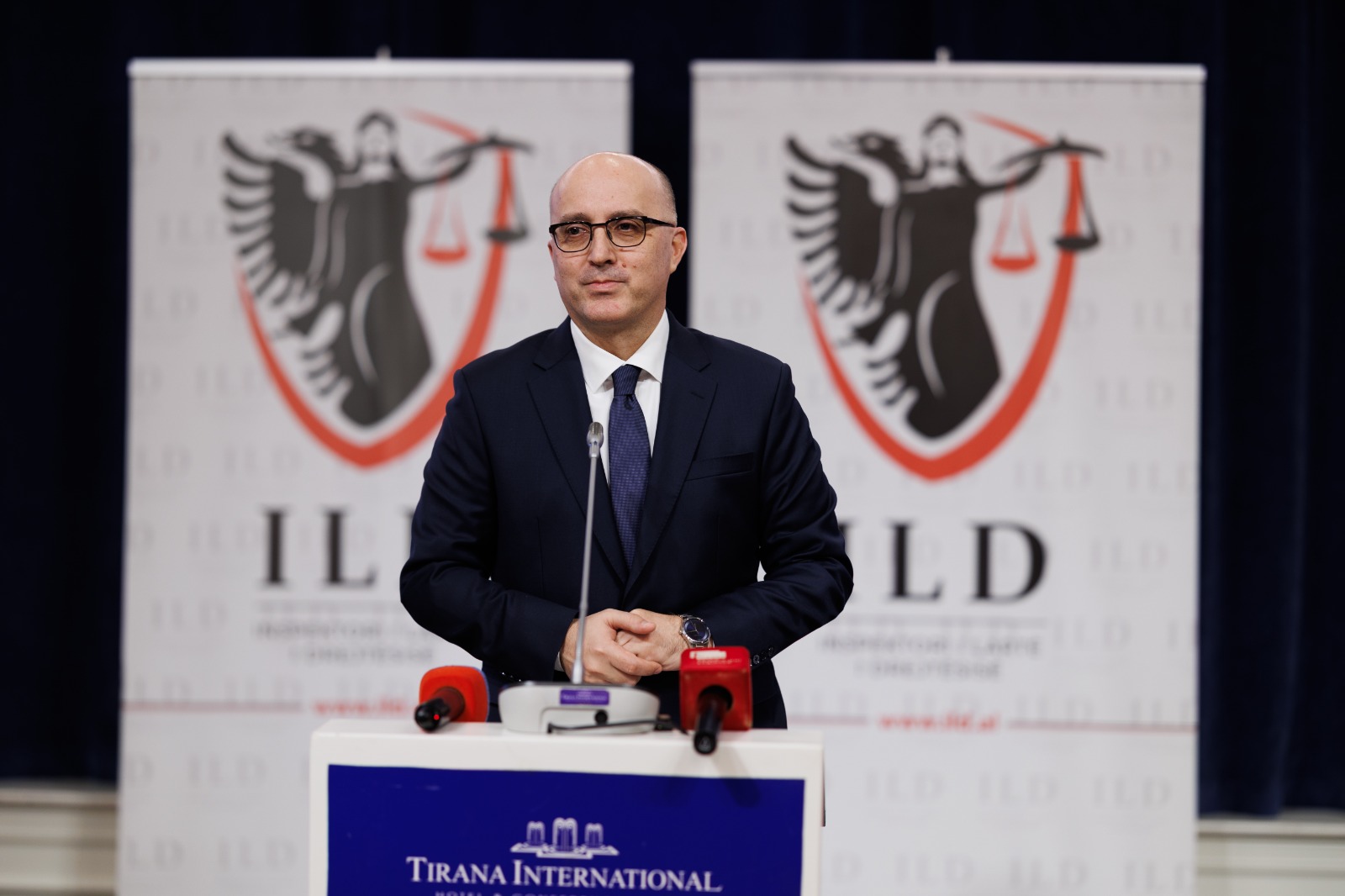
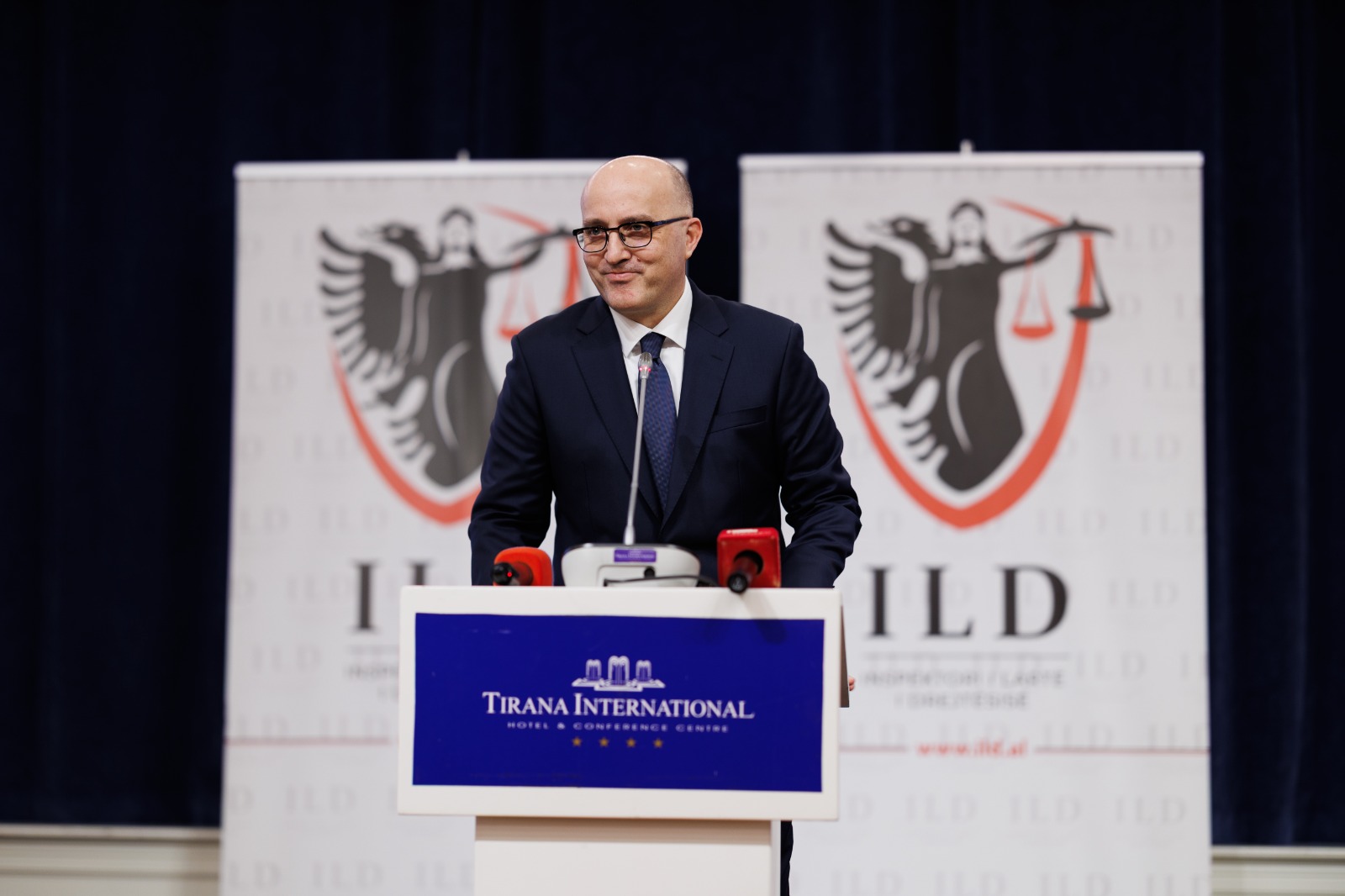
Greetings to all and welcome to this meeting!
First, I would like to thank all of you for taking the time to come to this meeting. To be honest, when we thought about and discussed with our colleagues at the High Inspector of Justice office the idea of the path of the judicial inspection service and the prosecution service in Albania, we were very enthusiastic, but also unsure whether we would be able to show extensively the development of the inspection of magistrates in Albania. Judicial inspection often remains in the shadows and public attention is naturally taken by judicial decisions. However, judicial inspection remains a very important tool for maintaining the integrity of the justice system.
Considering this, but also the real possibilities, for the High Inspector of Justice to produce a historical documentation of the entire progress of the judicial inspection service in Albania, since 1912, seemed almost an insurmountable challenge.
Apparently, we succeeded. Today, we will open the curtain on this vital and exciting part of our history. The materials published in this book constitute a very important part of the institutional tradition of Albanian justice. With the exception of special researchers in this field, I believe that these are materials, little known to many of us. The community of jurists interested in the developments of justice in Albania, have not had the opportunity to become directly acquainted with the materials presented in this book through archival sources. This publication today attempts to fill this gap.
Keeping in mind that even simple publications with a historical subject can arouse debate, with this publication, we did not want to make any interpretation or comment on the historical events that marked the birth and development of the judicial inspection. We have tried to faithfully reflect what has happened historically, based on documents obtained from archival sources. So, to publish these documents, simply as they are.
On the other hand, I want to emphasize strongly that it is truly exciting to note the strong state consciousness that in the founding of the Albanian state in 1912. The national government of Vlora decided that in addition to the establishment of the courts and prosecution offices of the Albanian state, it would also create a justice inspectorate, in order to guarantee not only the accountability of the system, but also its independence. The inspectors also had a significant competence, verifying that the state administration did not interfere or influence in any way the activity of the courts. I would like to emphasize once again the importance of establishing the Inspectorate of Justice based on high standards of separation of powers and preserving the independence of magistrates. The ruling elite of the Albanian state at that time showed, through the establishment of the institutions of the Albanian state with this spirit of constitutionalism, that it had a high-class legal capacity, which the state needs at every moment of its life. It was these legal capacities that had the burden of setting the architraves of the Albanian state building and which managed to build the most important and necessary laws for the functioning of the newly established state, which, according to the words of one of the representatives of this elite, Ahmet Zogu, (published in the newspaper Dita e Re, in 1922), had to stand “facing the West”. This publication is also a tribute to their efforts to build a modern and democratic justice system.
Among the improvements that were made later, until the country was declared a monarchy, the focus on the professionalism of magistrates stood out, as when a judge had more than half of his decisions overturned by a higher court, or when more than half of the decisions he had issued were not executable, then the Ministry of Justice decided to take the disciplinary measure of dismissal from office.
After the damage to the rule of law during the communist period, where courts and prosecution offices were identified with the party-state, pluralism brought the role of the judiciary back into focus as a key element of the rule of law, legislating the independence of judges and prosecutors. The President of the Republic as the head and then the Minister of Justice, with an ever stronger role, was the model that Albania tried by making improvements until 2016. Time showed that it was not enough to have an independent system that guarantees the rule of law, while, with a rare political consensus between the ruling and opposition parties, the Albanian Parliament approved the justice reform in July 2016, which reformed the entire system through a new architecture, which had the independence of judges and prosecutors as a common denominator. In this new architecture, the disciplinary process comes for the first time as the competence of a single institution, the High Inspector of Justice, an independent constitutional institution, which has the responsibility of disciplinary inspection for judges and prosecutors of all levels. The election to the position of the High Inspector of Justice came with the extraordinary responsibility of facing the establishment of such an institution with strong professional foundations, with the expectations of the public and other political and institutional actors and with the expectations of the justice system itself. Having no previous model, the establishment of such standards and above all, maintaining the balance between the independence of magistrates and the completely legitimate interest of the public in the way justice is administered, was and remains the guiding compass of the Office of the High Inspector of Justice. This remains the greatest professional and personal challenge of the Office of the High Inspector of Justice, not for institutional stability, but seeing this balance of interests as an important constitutional principle for the future of the justice system and the rule of law. Naturally, like any process, the testing of this working philosophy requires its own period of facing the challenges that the system is going through, and time will show the sustainability of its implementation in practice, as well as the long-term effects on the system.
Finally, but not least important, I would like to express much-deserved thanks to everyone who made this day possible today. I would like to thank Inspector Periand Teta, whose idea of seeing the judicial inspection service throughout the years, set this entire work process in motion.
Also, I would like to thank the High Inspector of Justice team, which has done excellent research work, both in the state archive and in the national library, although not professionals in the field of research. For months and months, every day with persistence and passion, they researched everywhere, wherever there could be history of the inspection service. So, thank you Elis Kuçi, Zilie Feçi, and Sidora Tyli for all your contribution.
Another thank you goes to Erind Mërkuri, a persistent and passionate par excellence lecturer of the history of law and constitutionalism, who invested time, energy and dedication, without any financial agreement, but only with the passion of love for history, to materialize archival documents in this publishing. Here, I would like to sincerely thank the EU4Justice mission, which financed the publishing of this history, with excellent quality and which is continuing to help us bring it to the English language.
Thank you, Director Artan Rama, for the excellent documentary, which shows us the protagonists of the judicial and prosecutorial inspection at the time, who with their idealization and seriousness, solved the difficult issues that time produced. I would like to thank another member of the High Inspector of Justice, Pavli Treska, who translated the documentary into English language for the foreign audience.
Being the head of this entire process, I would like to thank Mimoza Koçiu (the person who strongly believed in the realization of this idea and apparently she was right) for coordinating every step and every phase of the work, for the professional editing of this documentary and this publication, for leading the entire process, from day one when this idea was first discussed, until when the press release of this activity was presented.
Now, I want to invite you to watch the documentary “Inspecting Justice”, and then we will continue with the speakers, according to the program.
Have a nice evening!