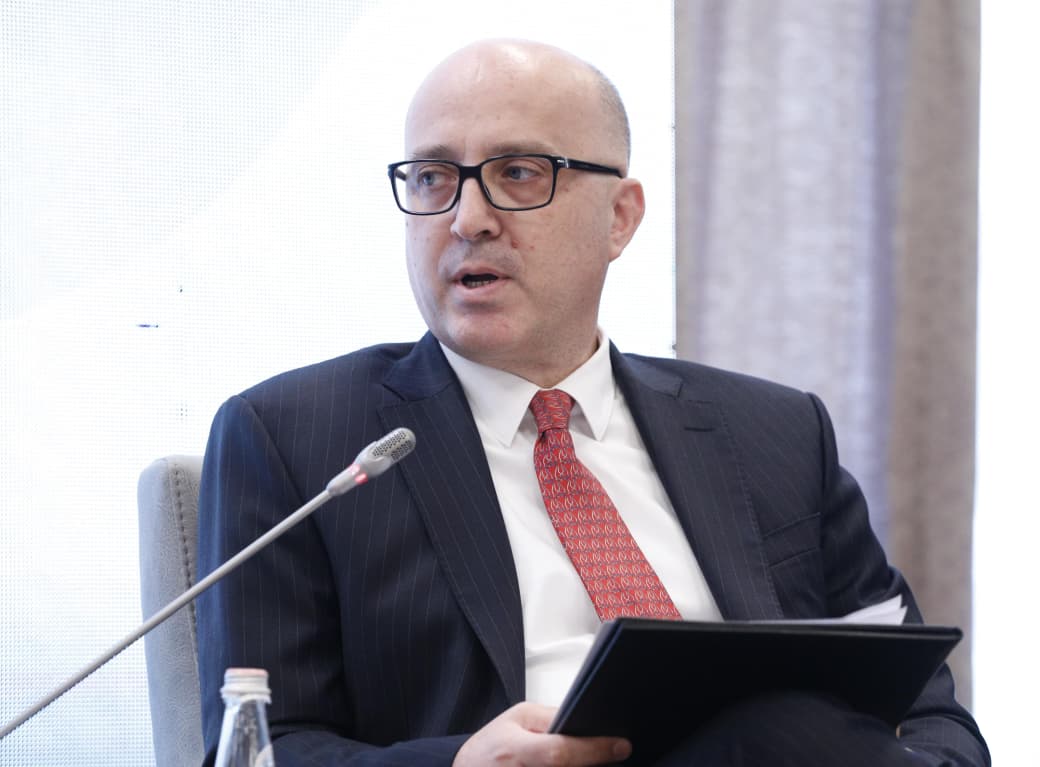

Speech by High Inspector of Justice Mr. Artur Metani at the closing ceremony of the transitional re-evaluation process of judges and prosecutors.
Honorable Mr. Çomo!
Dear participants,
Thank you for the invitation and the opportunity you gave me to express some thoughts regarding the completion of the transitional re-evaluation process of judges and prosecutors.
Although an unusual and shocking process for the system, the vetting of judges and prosecutors came as an imperative of the time, to address the deep and widespread public distrust of the justice system, high perception of corruption in the judiciary and corporatism in the system. In this regard, the members of the vetting bodies and IMO have done an extraordinary job, verifying and removing from the system the unhealthy part of it, based on concrete standards for assessing the integrity of judges and prosecutors. Today, the justice system, also because of this work, is significantly better than that of the period before 2016.
Now, the completion of the vetting process requires a careful assessment and a reflection on the future, as it marks the transition from the phase of the functioning of the extraordinary and sui generis vetting mechanism, of the checking of the integrity and professionalism of magistrates, towards a new stage, where the responsibility for guaranteeing the integrity and professionalism of magistrates belongs entirely to the new justice institutions.
This is why the completion of this process should not be seen as the finalization, or the achievement of the appropriate and successful results of the justice reform journey. This moment marks the beginning of the most important phase of the justice reform, which is related to the institutionalization of integrity and accountability standards. The challenge now is no longer to cleanse the justice system of unprofessional or irresponsible magistrates, but to guarantee the functioning of the justice system on the basis of stable standards of professionalism, ethics, and accountability.
Today, we must take a step forward towards a justice system that functions under normal conditions. A state governed by the rule of law cannot rely indefinitely on extraordinary measures. When extraordinary measures are of a continuing or permanent nature, they risk running counter to the very principles they are intended to protect. For this reason, the dilemma we must answer today is not whether or not vetting standards should continue, but whether these standards have become part of the functioning of the new institutions of the justice system to guarantee the integrity and accountability of magistrates in the future.
The challenge for all of us today is to build a new justice system that is sustainable, organized and operates on the basis of a “regular accountability” system. If we are to judge the success of the justice reform one day, the most significant indicator will not be simply the number of cases processed by the vetting bodies, or the individual decisions issued by them, but the ability of the new and permanent institutions to maintain and develop the very standards of integrity, professionalism and accountability that the vetting process aimed to establish. Only then can we say that the exceptional standards of a transitional nature have fulfilled their mission for which they were created, not by replacing the current institutions, but by creating the conditions for these institutions to function in accordance with the principles of the rule of law. For this reason, the focus of the new institutions of the justice system must remain on professionalism, impartiality, transparency and independence in the exercise of their constitutional powers. In this regard, the construction of stable and predictable institutional administrative practice is equally important. Reasoned decisions, clear procedures and consolidated legal standards not only strengthen the legal certainty of institutional activity but also contribute to the creation of a culture of professional accountability.
In this process, High Inspector of Justice is not the only institution that should play an important role. High Judicial Council and High Prosecutorial Council play an equally important role in guaranteeing meritocracy, career development and the effective functioning of accountability mechanisms. Meanwhile, the School of Magistrates remains the key institution where not only professional knowledge is shaped, but also the ethical culture of future generations of magistrates, since their integrity cannot be ensured only through the application of checking and accountability mechanisms. The integrity and professionalization of magistrates must be transformed into an institutional culture and must function based on an effective accountability system. This culture must be built continuously day by day through a combination of professional education, ethical awareness of magistrates, a career system and effective accountability systems.
At the same time, increased care and prudence must be shown in maintaining a delicate balance between the independence and accountability of magistrates. The independence of magistrates is not their personal privilege, but it is a constitutional guarantee for the citizen. At the same time, the truth is that independence cannot exist without an accountable system. The challenge of the new institutions is precisely to maintain this balance, so that accountability does not violate independence and independence does not turn into a lack of responsibility or accountability.
Thank you!
Full speech at the closing ceremony of the vetting