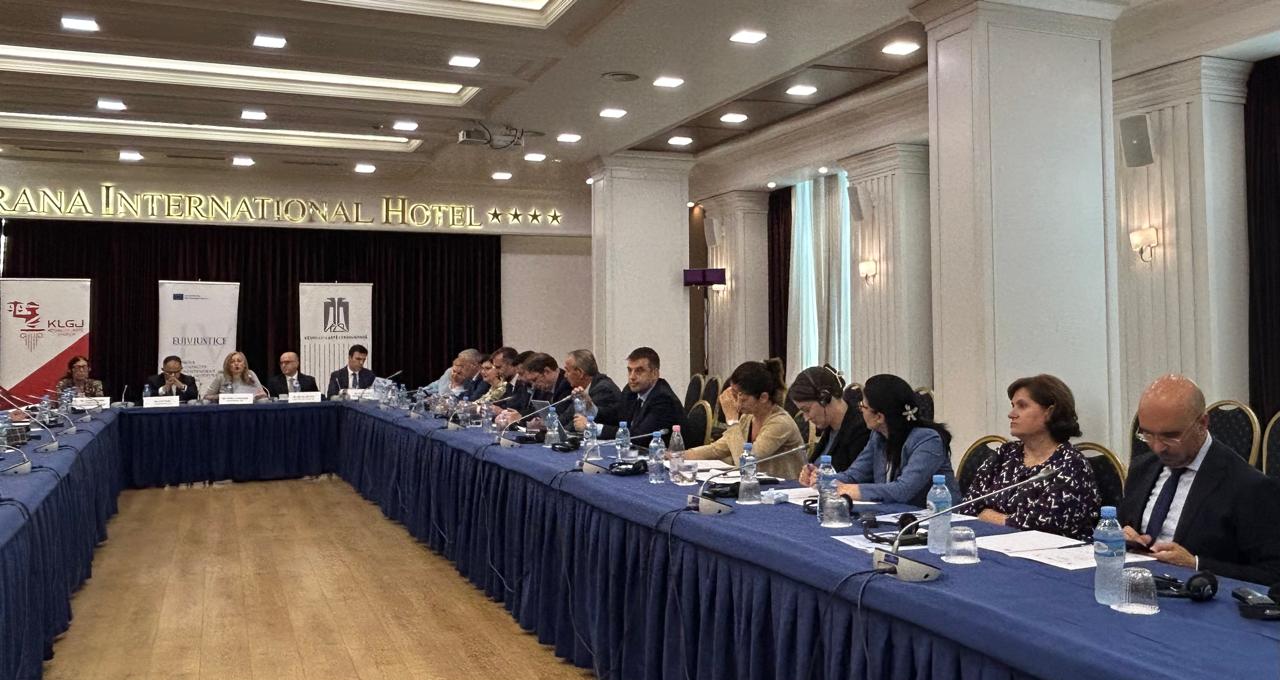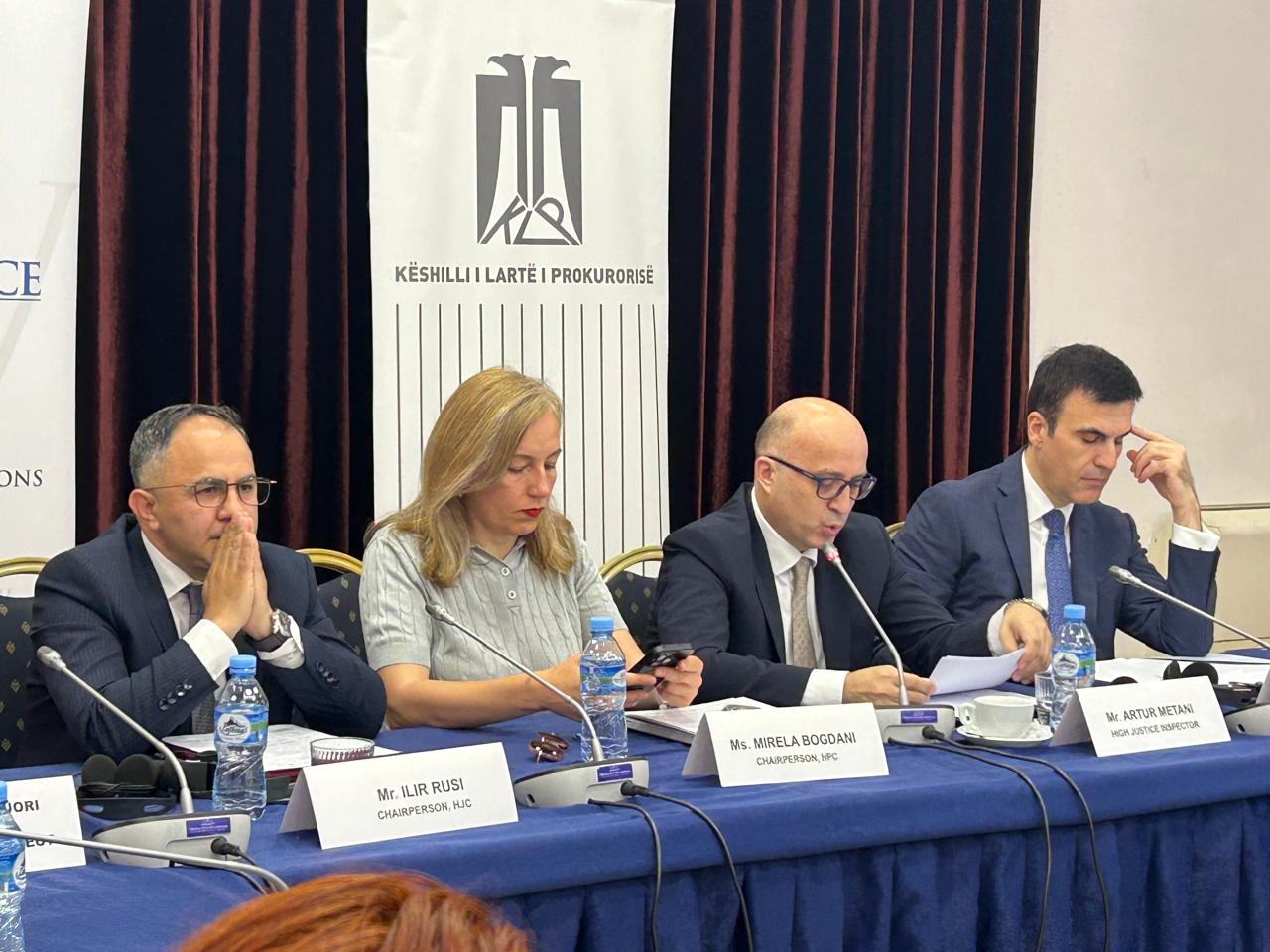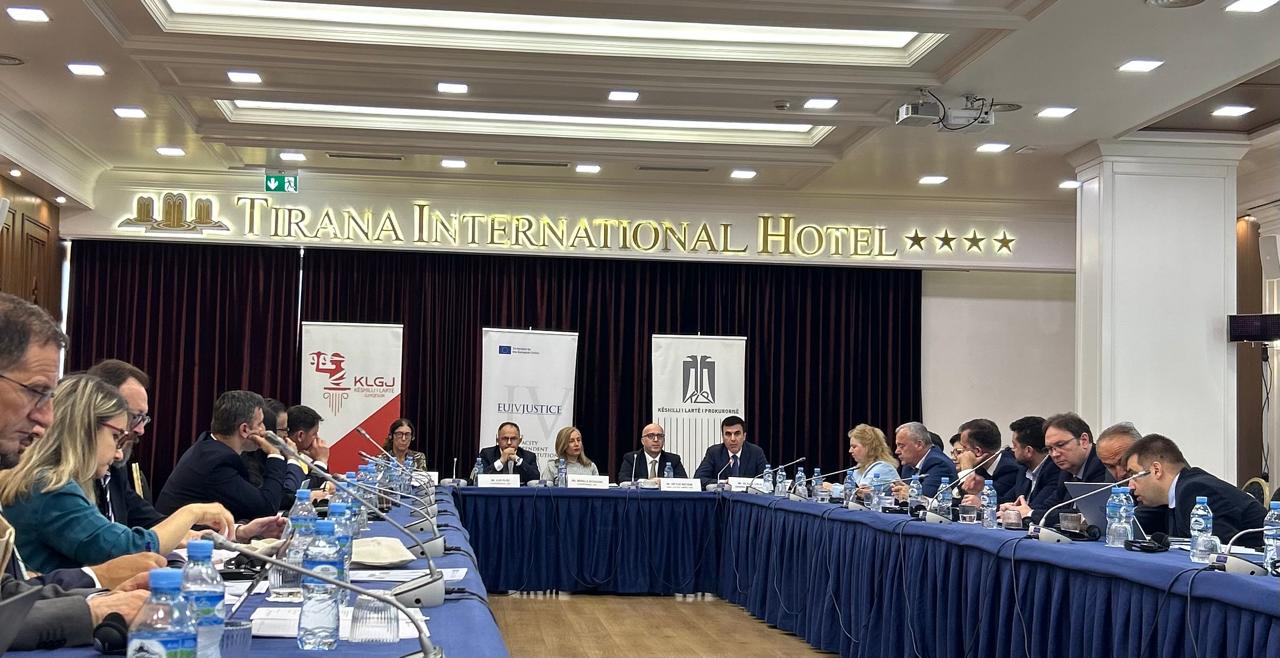
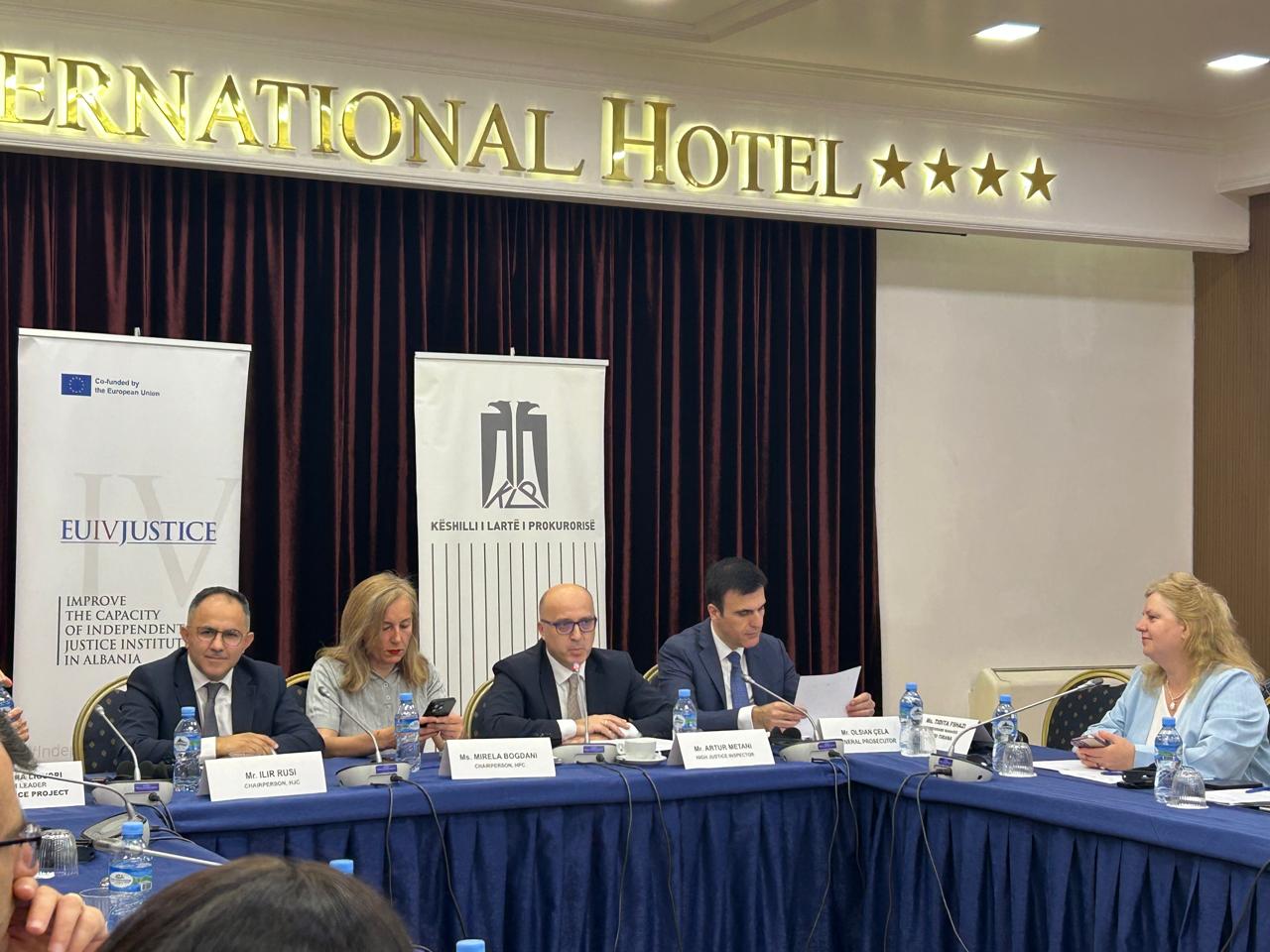
The High Inspector of Justice, through the mechanisms of thematic inspections, is active in the system of checking of the work of magistrates, by setting standards for an accountable, responsible, impartial and integrity-based justice system.
The continuous improvement of work processes and the implementation of new mechanisms for collecting information in order to address the inspection topics have served to increase the number of inspections, but also to address issues that are currently of public concern. More specifically, the High Inspector of Justice:
Has established the administrative mechanism for monitoring the activity of magistrates by receiving periodic information from courts and prosecutors’ offices. This periodic information serves to identify phenomena related to the quality and efficiency of the system that are included in the inspection topics.
This mechanism is considered a priority in identifying system problems that are the subject of thematic inspections. Here it is worth emphasizing the need to harmonize the data that courts and prosecutors’ offices submit to the Councils and the Prosecutor General. This coordination and harmonization of the reporting method is necessary to increase the efficiency in the way statistical data is reported, while also reducing the workload on these institutions to report in different formats to several institutions.
Participation in the annual analysis of the courts, becoming closely acquainted with the challenges of the system during the year.
Participation in working meetings with the councils to discuss and strengthen cooperation through thematic proposals.
Through thematic and institutional inspections, the High Inspector of Justice has not only ensured the accountability of magistrates by investigating suspected violations, but also addresses the judicial system with recommendations for regulatory, administrative and institutional measures to be followed by the inspection subjects, as well as other bodies that have governing functions towards the system. The recommendations made are not penal in nature, but aim to systematically address the problems faced by the justice system today.
During the period February 2020 – April 2025, the High Inspector of Justice has conducted 10 thematic inspections at courts and prosecutor’s offices. In total, 108 recommendations have been proposed, which have been addressed to the inspection subjects but also to other bodies.
The HIJ, in addition to the recommendations made for the inspection subjects, has also given recommendations for other bodies, whose activity affects the performance of the judicial system, such as measures for:
- Proposal for amendments to acts or their issuance;
- Change of the administrative practice followed by proposing measures for administrative actions;
- Strengthening of human resources capacities by proposing the following of certain topics in the continuous training of magistrates. Some methods in the administrative aspect can be applied by the courts themselves to temporarily promote the acceleration of the trial of cases.
Thematic inspections have also highlighted actions or inactions of magistrates, against whom the High Inspector of Justice has initiated verification, the results of which have led to disciplinary responsibility for some magistrates and work continues on the verification of other cases. Below we provide an overview and a summary of some of the thematic inspections carried out by the High Inspector of Justice.
At the beginning of the exercise of its functional activity, the HIJ decided to carry out the thematic inspection “On early conditional releases”. This inspection, which began in 2020, has addressed requests for “Conditional Release” by the courts of the judicial districts, courts of appeal and the prosecution offices under them, in relation to the implementation of the substantive and procedural criminal law in force.
The inspection has brought significant effects in the framework of the accountability and responsibility of magistrates. During its conduct, several magistrates were investigated and disciplinary proceedings were initiated against whom the High Judicial Council and the High Prosecutorial Council have imposed the disciplinary measure of dismissal from office. These disciplinary measures have also been left in force by the Appeal Chamber, with final decision-making, thus confirming the standard of work of the HIJ Office. In addition to this result in terms of identifying the individual responsibilities of magistrates, there has been an effect observed in terms of more careful use of the institute of “Conditional release” and increased quality of decision-making. At the end of the inspection, several recommendations of a normative, regulatory and administrative nature were drafted for the respective prosecutor’s offices and courts subject to inspection, the Supreme Court, the Prosecutor General, the High Judicial Council, the High Prosecutorial Council and the School of Magistrates, and at the same time, verifications were initiated mainly for the facts that resulted in the conclusion of this inspection.
Inspection with the subject: “On the procedure for the announcement and reasoning of judicial decisions of the Court of First Instance of General Jurisdiction of Tirana, (Civil Chamber) and the Administrative Court of First Instance of Tirana”, for the period 01.09.2022-30.12.2022. Taking into account the average workload of a judge at the Court of First Instance of General Jurisdiction of Tirana with 1361 cases and the submission of the announced decisions to the secretariat, it resulted that 89% of the decisions were submitted within the 120-day deadline, thus being considered in most cases, as the reasonable time needed by the judge to submit the final reasoned decision.
Through this thematic inspection, HIJ has taken a snapshot of the situation of the submission of judicial decisions by the Civil Chamber of the Court of First Instance of General Jurisdiction of Tirana. The 120-day deadline resulted as the reasonable time needed for the magistrate to submit the final reasoned decision, as only this deadline can make the difference, as well as serve as a reasonable time in the concrete situation of the workload, organizational structure and number of magistrates, or typology of cases tried, between the need to justify and submit all judicial decisions according to the deadline provided for in Article 308 of the Code of Civil Procedure and the current possibility and capacities of the Court of First Instance of General Jurisdiction of Tirana to respect this deadline.
This deadline does not replace the legal deadline in any case, but constitutes a finding by the HIJ at the time of conducting the inspection, in that court, to assess the undertaking of further verification or disciplinary investigation initiatives for magistrates who have not followed this deadline in reasoning of judicial decisions. It is worth emphasizing that the workload cannot be used to justify delays that exceed any reasonable deadline in the reasoning of the decision, since in this case the essence of the constitutional right to a due process of law would be violated and the notion of providing independent and impartial justice would lose its essence.
The results of this thematic inspection have served to initiate an investigation and disciplinary proceedings against a magistrate, which was concluded by the High Judicial Council with a decision to dismiss the request for disciplinary measures.
Delays in the reasoning of judicial decisions as an element that affects the essence of the right to a fair legal process have been in the attention of the HIJ on a continuous basis. With the thematic inspection carried out during 2024, two other courts were subjected to inspection, respectively the Courts of First Instance of General Jurisdiction Fier and Shkodra, for the period 01.01.2023-01.06.2023. From the data obtained from this inspection it results that, for the Court of First Instance of General Jurisdiction Fier 97.8% of decisions were submitted within the 60-day deadline, for the Court of First Instance of General Jurisdiction Shkodra 80.2% of civil decisions were submitted within the 60-day deadline, thus being considered in most cases, as the reasonable time needed by the judge to submit the final reasoned decision. Even in this case, the 60-day deadline has been assessed as a reasonable deadline in the conditions of the concrete situation of the workload and vacancies in the respective courts and a proportional balance between the fulfillment of the legal obligation on the one hand and the current capacities of the courts subject to inspection.
On the other hand, this deadline does not replace the legal deadline in any case but constitutes a finding by the HIJ at the time of conducting the inspection, in that court, to assess the undertaking of further verification or disciplinary investigation initiatives for magistrates who have not followed this deadline in the reasoning of judicial decisions. The findings of this thematic inspection are in the process of verification by the HIJ on a case-by-case basis to assess whether there are factual and legal elements to initiate a disciplinary investigation in the first instance.
- Another important topic included in the inspection plan for 2024 is the informing of the parties by the court about the right to resolve cases through mediation. This topic has been included as a measure within the integration process and the rule of law roadmap for this purpose. This thematic inspection has been extended to four courts, namely the Courts of First Instance General Jurisdiction of Tirana, Durrës, Vlorë and Elbasan. At the end of these Inspections, the HIJ has recommended the use of a proactive approach by the court, to inform and instruct the parties about the possibility of resolving the case through mediation, providing full information on the type of process and the procedural and time benefits that the parties have as a mechanism for increasing the efficiency of the justice system, accelerating the adjudication of cases and reducing the backlog in the courts.
- In determining the inspection topics, an important role is played by the fulfillment of legal obligations provided for by the regulatory framework in force. Specifically, thematic inspections regarding:
Allocation of cases by draw, as well as electronic checking of electronic system reports;
“On the practice and causes of the replacement of the prosecutor;
“On the assignment of cases to the prosecutor’s office.
These are inspections that must be carried out annually by the HIJ in the context of respecting legal provisions. At the end of these inspections, recommendations were issued:
- of a regulatory nature: which include recommendations for issuing sub-legal acts by court presidents or heads of prosecutor’s offices;
- administrative, which include assessments on aspects of activity efficiency; internal work procedures; distribution of work; respect for ethics; discipline; relationship with parties/public; electronic systems,
- disciplinary, which includes verifications of actions or inactions of magistrates that give rise to verification or even disciplinary investigation.
- Inspection with the object: “On taking administrative and procedural measures within the framework of the implementation of general instruction no. 12, dated 20.07.2020, of the Prosecutor General “On regulating relations between prosecutors and heads of prosecution offices, information, transparency and guaranteeing independence in prosecution offices with general jurisdiction”, as amended. This inspection aimed to implement the orders of the Prosecutor General, on maintaining the stability of the prosecution body through institutional cohesion and uniformity of activity in all prosecution offices, in guaranteeing the functional independence of the prosecutor in decision-making on specific issues. This inspection is expected to continue in the future, as the monitoring of the implementation of the recommendations made, as well as the verifications carried out within the framework of the complaints review process, have again identified problems.
- From the data administered within the framework of the review of complaints, at the initiative of the High Inspector of Justice, it has been decided to conduct a thematic inspection on the duration of the trial of judicial cases, taking into account issues of increasing the quality and efficiency of the judicial system, as a priority to the claims of the public. This inspection has been decided to be carried out at the Court of First Instance of General Jurisdiction in Tirana and is currently in the phase of concluding it with concrete recommendations.
- In function of the recommendation issued in the resolution of the Assembly of Albania, in the annual inspection plan for 2025, it has been decided to conduct an institutional inspection, with the objective of checking specific aspects of the activity in the administration of documentation from the moment of registration in the secretariat until the completion of its treatment. This inspection has been decided to be carried out at the Prosecutor’s Office at the First Instance Court of General Jurisdiction in Dibër and is currently in the data collection phase.
The monitoring of the implementation of the issued recommendations is ensured by the High Inspector of Justice through the monitoring mechanism of the implementation of the recommendations issued. Monitoring is carried out by receiving information from the inspected bodies and evaluating the information received.
Monitoring the implementation of the recommendations also constitutes a challenge for the High Inspector of Justice, as each inspection requires a high level of human resource involvement, in the face of the call to increase the number of qualitative inspections related to the quality and efficiency of the justice system. Following up on recommendations is a process that requires continuous efforts and professional growth both at the level of human resources and in capacity building, which the High Inspector of Justice aims to improve in the future in line with the best European practices in this regard.
In conclusion, the above data shows that the accountability checking mechanism towards the justice system is functioning, with established and confirmed standards, without excluding the need for continuous strengthening and improvement by increasing the quality and efficiency of the system, towards the individual and the rule of law.
In this context, the High Inspector of Justice is aiming to draft a working methodology that will regulate the monitoring of the implementation of these recommendations. In this regard, the contribution and assistance of the EUIVJustice project with the best European practices and standards in drafting this methodology constitutes an added value.
Thank you