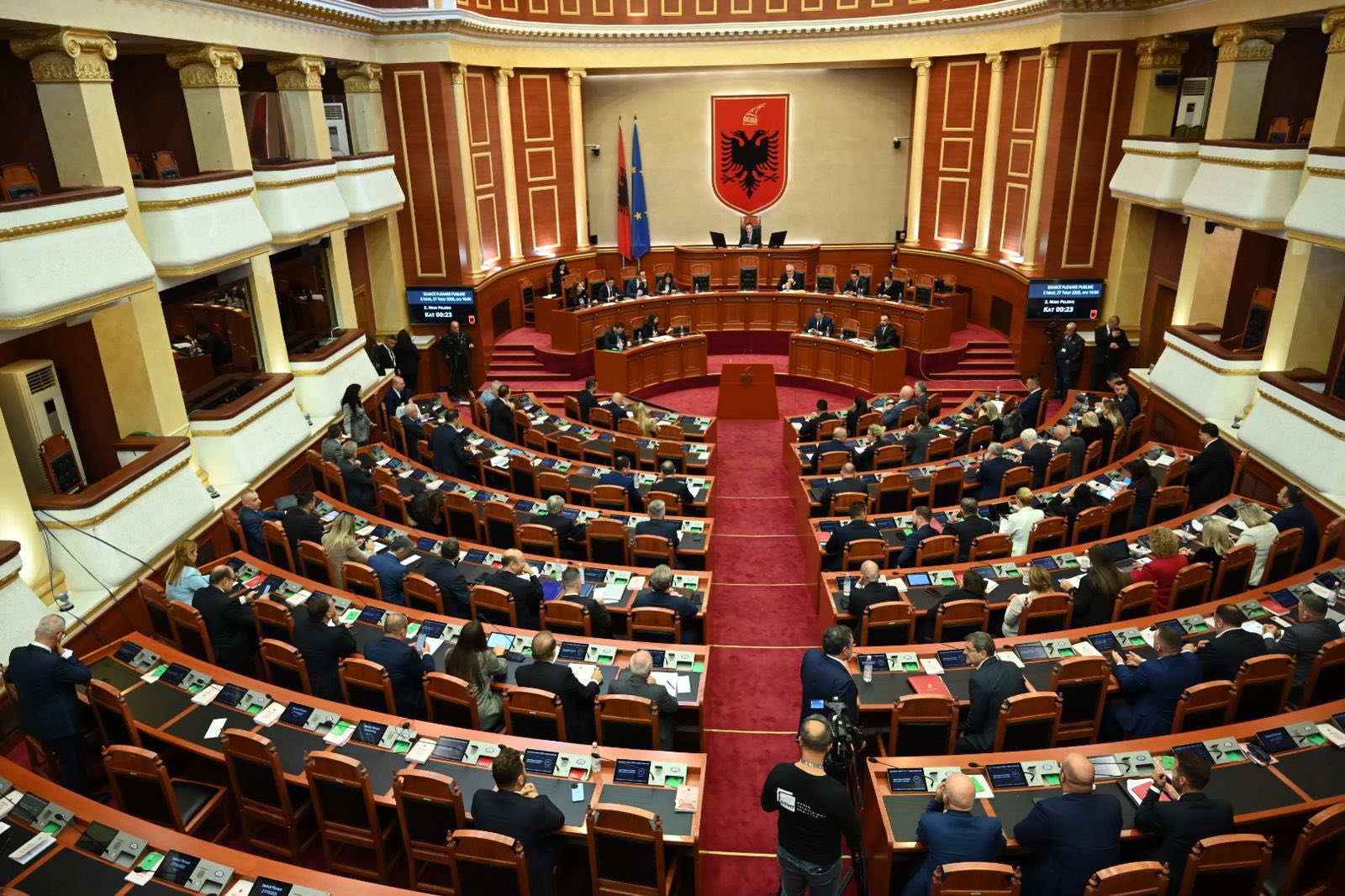
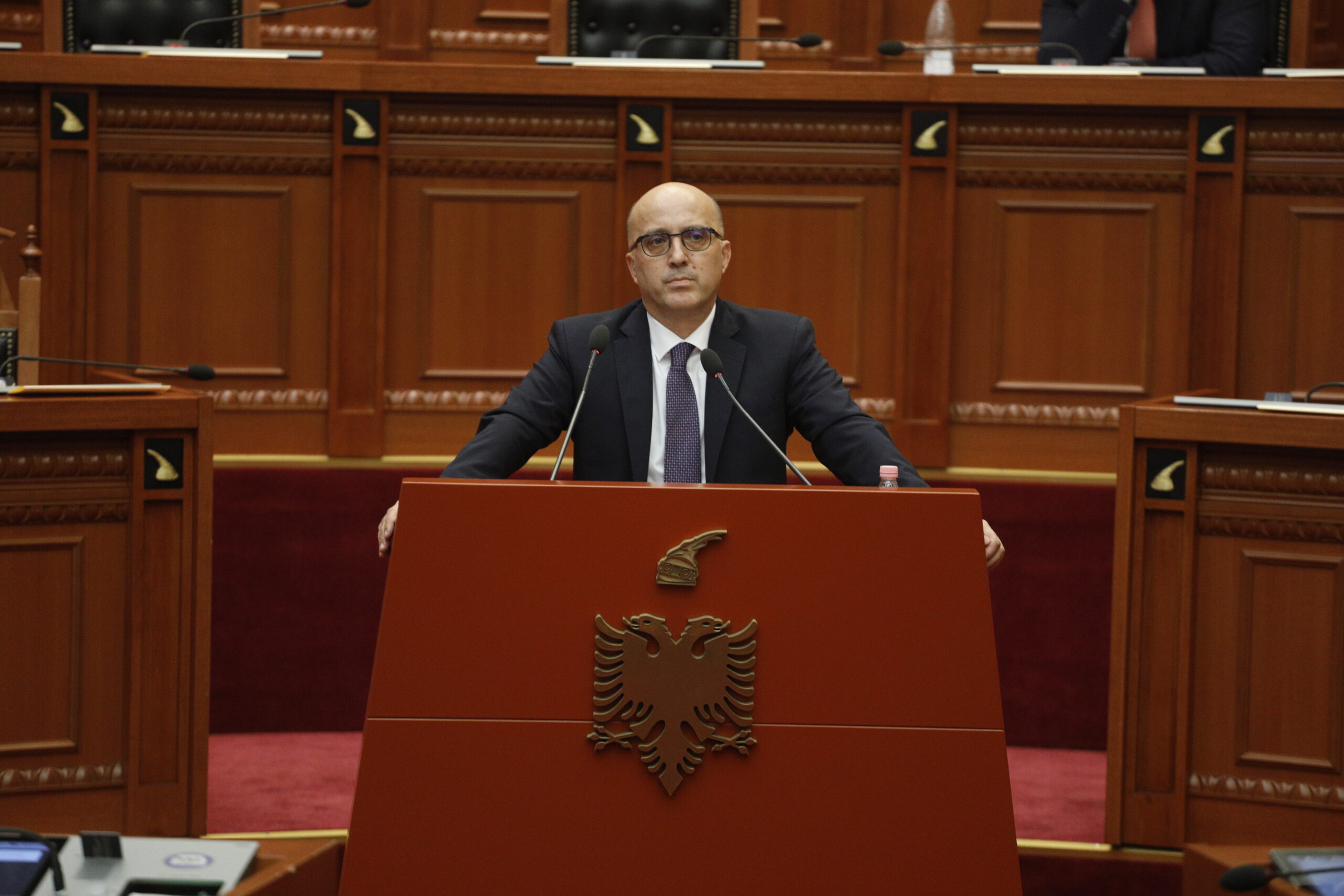
High Inspector of Justice, Artur Metani: Questions raised by MP Eno Bozdo.
Question 1. Mr. Bozdo’s first question includes a series of related inquiries. Under the provisions of Law no. 96/2016 (Articles 124 and 124/1), the High Inspector of Justice is empowered to initiate a disciplinary investigation ex officio when information from the media or other sources is considered credible. In exercising this authority, the HIJ may request information from any institution concerning the assets or integrity of a magistrate. Can a criminal court decision issued by a foreign judicial authority, formally legalized with an apostille in accordance with the law, be regarded as credible evidence for the HIJ to initiate a disciplinary proceeding against a sitting magistrate of the Special Court?
Is information provided by the Prosecutor General’s Office confirming the authenticity of the criminal conviction of magistrate Irena Gjoka considered reliable evidence? Why is this information not sufficient for the HIJ to begin gathering data ex officio, to request the relevant documentation from the Prosecutor General’s Office, or to seek further information from the State Intelligence Services or other competent institutions?
Is this information sufficient to request verification of the declarations or forms submitted by magistrate Irena Gjoka in connection with her transfer or appointment to the Special Court, or during the transitional re-evaluation process; bearing in mind that, under Article 102 of Law no. 96/2016, every magistrate is obliged to declare the reasons for the termination of their mandate, and failure to do so constitutes a disciplinary violation, while non-declaration of a criminal conviction is grounds for dismissal for judges of the special courts?
High Inspector of Justice, Artur Metani: Regarding the first question, the matter referred to in all three sub-questions is of a criminal nature, as was also confirmed by the Prosecutor General. This issue is currently under criminal investigation, and only once the criminal process is concluded will the High Inspector of Justice assess whether there is any disciplinary or administrative responsibility on the part of magistrate Gjoka. The Law on the Status of Judges and Prosecutors, which governs the disciplinary investigation procedure conducted by the HIJ, provides in Article 126 that the criminal process takes precedence over a disciplinary procedure that may concern the same facts. Accordingly, once the criminal proceedings are finalized, the High Inspector of Justice will determine whether there are sufficient facts and legal grounds to initiate disciplinary proceedings, in full compliance with the applicable legal framework.
Question 2. This is likewise a group of related questions. According to Article 102 of Law no. 96/2016, one of the disciplinary violations in the exercise of duty is the failure to comply with procedural legislation, when such violation has been established by higher courts. Is a finding by the European Court of Human Rights (ECtHR) on the misapplication of criminal procedural law sufficient indication for the High Inspector of Justice to initiate a disciplinary proceeding ex officio?
Has the case “Gëllçi v. Albania” served as a basis for the HIJ to verify whether there were disciplinary violations by the magistrates who ordered or approved the relevant security measures?
Is the ECtHR’s finding that the High Court of Albania has applied an erroneous practice in rejecting requests concerning violations of the reasonable-time standard for trials, and that judicial reform cannot justify delays, sufficient indication for the HIJ to begin disciplinary proceedings ex officio?
Is a finding by the Constitutional Court that a High Court decision lacks reasoning sufficient indication for the HIJ to act?
Does the HIJ have an established practice defining how many Constitutional Court findings against a magistrate would trigger a disciplinary investigation?
Is the Constitutional Court’s finding that constitutional rights of individuals including, in one case, a journalist; were violated through unjustified or insufficiently reasoned searches and seizures, or through an interpretation of law inconsistent with the Constitution and the ECHR, sufficient indication for the HIJ to open disciplinary proceedings against the prosecutors of the Special Prosecution Office and the judges who approved such measures?
High Inspector of Justice, Artur Metani: The review of judicial decisions within the court hierarchy is part of the judicial control system and the internal exercise of judicial authority. Such review aims to improve the quality of justice, not to establish disciplinary responsibility for magistrates. The reversal or amendment of a decision by a higher court cannot, a priori, constitute sufficient factual grounds for disciplinary proceedings against a magistrate, unless accompanied by additional elements showing that the magistrate acted in bad faith, departing from their duty to perform their function with integrity, in good conscience, and in faithful interpretation of facts and legal norms. Through the legal instruments available, the High Inspector of Justice has addressed the issue of delays in judicial proceedings exceeding reasonable time limits, by issuing regulatory and administrative recommendations arising from thematic inspections. Where disciplinary violations have been identified; cases of delay or procedural stagnation, the HIJ has initiated disciplinary investigations against 51 magistrates, resulting in 17 formal disciplinary requests submitted (8 judges and 9 prosecutors). The proposed disciplinary measures for these cases were as follows:
- “Dismissal from office” – for 2 judges and 3 prosecutors;
- “Temporary salary reduction up to 40% for a period not exceeding one year” – for 3 judges and 5 prosecutors;
- “Public reprimand” – for 3 judges and 1 prosecutor.
The initiation of a disciplinary procedure does not depend on the number of Constitutional Court decisions that may find a violation. The High Inspector of Justice opens a disciplinary investigation only when there are sufficient facts establishing a reasonable suspicion that a disciplinary violation has occurred. As for Constitutional Court findings declaring that High Court decisions lack reasoning, it should be clarified that such findings fall within the constitutional review process, aimed at ensuring respect for the principle of due process of law. The HIJ has not identified any case where a Constitutional Court decision citing insufficient reasoning has justified the initiation of a disciplinary investigation. Nevertheless, we continuously monitor the compliance of judicial bodies with the standards set by the Constitutional Court.
From the verifications carried out, no findings have emerged indicating that the decisions of the Special Courts have been overturned by the High Court on the grounds of open or flagrant violation of the law or of unifying case law, to an extent that would undermine the integrity or reputation of the magistrate, thereby justifying the opening of a disciplinary investigation.
Questions 3, 4, and 5. Is a public announcement that a lawyer has been arrested in the courtroom, allegedly in connection with the exercise of his professional duties, sufficient grounds for the High Inspector of Justice to initiate ex officio disciplinary proceedings against the magistrates involved?
Is the conduct of the prosecutor; who decides to remove the opposing party from the courtroom, orders the arrest, and subsequently carries it out; sufficient to justify the initiation of disciplinary proceedings? Should the High Inspector of Justice have reacted more promptly in this case?
Is it sufficient to open a disciplinary investigation against the presiding judge for partiality in the proceedings, considering that she allegedly allowed the prosecutor to take control of the hearing and actively obstructed the right of defense? Is the impartiality of the court a fundamental constitutional principle, and do the failure to guarantee impartiality and restriction of the right to defense constitute serious procedural violations?
Does it fall within the mission of the HIJ to verify the correct application of procedural provisions by magistrates?
High Inspector of Justice, Artur Metani: In accordance with the legal provisions and based on the information made public in the media, the High Inspector of Justice has initiated ex officio verification of the case, which is now nearing conclusion. Upon completion, a public announcement will be made.
Question 6. Has the High Inspector of Justice carried out any verification regarding the statements made by the Prosecutor General in Parliament, according to which certain newly appointed prosecutors are not fully aware of their procedural position and have communicated with foreign embassies about ongoing investigative or judicial matters? Does the act of prosecutors sharing information on ongoing cases with representatives of foreign states constitute a breach of investigative secrecy?
High Inspector of Justice, Artur Metani: In this particular case, the High Inspector of Justice had previously initiated a disciplinary investigation ex officio. Upon completion of the investigation, it was concluded that the actions or omissions of the magistrate constituted a “minor disciplinary violation” under Article 102, paragraph 1, letters “g” and “j” of Law no. 96/2016 “On the Status of Judges and Prosecutors in the Republic of Albania,” as amended.
Accordingly, the HIJ proposed to the High Prosecutorial Council (HPC) the imposition of the disciplinary measure “Public Reprimand.” However, the High Prosecutorial Council rejected the request.
Question 7. Have there been any reports from court presidents concerning the observance of official working hours by magistrates? Are media reports; suggesting that despite claiming heavy workloads, some judges allegedly work part-time, spending two days per week at their assigned courts and three days in Tirana, sufficient grounds for the HIJ to verify work discipline through institutional security camera systems or case management systems?
High Inspector of Justice, Artur Metani: As I mentioned earlier, based on several complaints that have been subject to verification, as well as information submitted by first instance courts of general jurisdiction, one of the systemic challenges in the judiciary today concerns the productivity and efficiency of magistrates in planning and holding court hearings, as well as in performing the necessary procedural actions to avoid unproductive sessions. To address this situation, the High Inspector of Justice has initiated a thematic inspection in nine courts of general jurisdiction, with the following focus: “On the planning and conduct of court hearings over a ten-month period.”
High Inspector of Justice, Artur Metani: Questions raised by MP Bardh Spahia.
Question 1. You must be aware of the public attacks made by Prime Minister Edi Rama against the prosecutor of Shkodra, Elsa Gjeli, as well as against judges of the Administrative Court of First Instance Tirana and the Administrative Court of Appeal. Regarding these attacks, have there been any official complaints submitted to your institution by the Prime Minister or the Minister of Justice? If so, how many such complaints have been filed, and which judges were specifically subject to these complaints? At what stage are these complaints, and has there been any decision taken on them? If yes, what were the conclusions, and what did your verifications or investigations reveal? In other words, did the Prime Minister’s accusations have any legal basis, or were they purely political attacks made by a losing party in court? In the same context, I would also like to ask about the complaints filed by the former Mayor of Tirana, currently under arrest, against Prosecutor Ols Dado and Judges Erion Bani and Engert Pëllumbi. It is worth recalling for the public that these magistrates, particularly the prosecutor, were subject to orchestrated public and media attacks by Mr. Veliaj and certain media outlets, which, as revealed by Special Prosecution Office’s investigations, were coordinated smear campaigns. At what stage are these complaints? Have there been any decisions taken, and what were the findings? In this case as well, have any disciplinary violations been identified, or have these attacks also proven to be politically motivated? Finally, since we are speaking about the Prime Minister’s public statements, there have also been criticisms directed at your institution and yourself personally, suggesting that the HIJ is not fulfilling its duties, does not address complaints, and fails to take action against judges or prosecutors who, according to him, commit violations merely because their decisions are not favorable to the government.
High Inspector of Justice, Artur Metani: The Minister of Justice is a special subject expressly recognized by law with the right to submit complaints to the High Inspector of Justice. Such complaints are examined by the HIJ in full accordance with its constitutional and legal competences. Some of these cases have already been finalized, and the Ministry of Justice has been formally notified of the respective decisions, while other complaints remain under review, within the scope of the HIJ’s legal mandate. Institutional cooperation with the Ministry of Justice has been ongoing, including in the submission of proposals for thematic inspections.
From 2020 to date, the Ministry of Justice has submitted 29 complaints to the HIJ, and disciplinary investigations have been initiated in 10 cases.
With regard to the specific complaints mentioned involving particular magistrates, I wish to clarify that these cases are currently under review. In accordance with legal provisions, and in order to protect confidentiality and the integrity of the magistrates concerned, no further details can be disclosed at this stage. However, the High Inspector of Justice acts proactively, assessing every relevant source of public information and individual complaint in line with its mandate and responsibilities.
Question 2. How do you assess these public attacks? How do they affect the work of your institution? Do they undermine the independence of the High Inspector of Justice?
Do HIJ inspectors feel under pressure, influence, or threat from the executive branch or Prime Minister Edi Rama? We have not seen any public reaction from you regarding these attacks, and I would like to understand why you have chosen to remain silent in the face of the Prime Minister’s statements. In other words, what was the concern or hesitation behind your decision not to respond publicly to the attacks that were directed personally against you and your institution?
High Inspector of Justice, Artur Metani: For the sake of accuracy, Mr. Spahia, I have taken a public stance on every political statement, not only those made by the Prime Minister, but by anyone who has commented publicly on the judiciary or the HIJ. I have done so both through direct public statements and through my work as High Inspector of Justice. The most recent instance was two weeks before the tragic event at the Court of Appeal, where a magistrate lost his life. On that occasion, I made a public statement and conveyed the following messages:
First, judges cannot seek independence only from political influence; they must also ensure independence from any other form of interest.
Second, any criticism or insult that goes beyond a legitimate critique of a judge’s or prosecutor’s work is unconstitutional.
Third, I have called for self-restraint among judges and prosecutors, because the level of political rhetoric or deontology displayed by politicians should not dictate the conduct of magistrates. They must perform their duties in strict conformity with the law.
And finally, the Constitution and the law guarantee that every judge and prosecutor must feel free and secure in the exercise of their functions.
What I wish to emphasize is that, naturally, when there are political declarations, like any person, we may all have emotional reactions but I am not permitted to act emotionally in the exercise of my duties. My duty is to assess every political statement objectively, to determine whether it contains any elements relevant to the work or competence of the High Inspector of Justice.
Question 3. In recent months, there has been significant public debate regarding the new draft Criminal Code, published by the Ministry of Justice as the outcome of a working group of experts, whose selection process and working methodology remain unclear to the public. The draft has not yet been submitted to the Parliament of Albania. My question to you is whether: You or your institution have been part of the consultation process for this draft and as a legal professional and as the holder of a constitutional function, what is your opinion on the proposed new Criminal Code? Do you share the concerns expressed by the President of the Supreme Court and the Prosecutor General regarding the legislative technique, the large number of articles, and the over-criminalization of social behaviors? I ask this because, should the draft eventually be submitted to Parliament, your perspective could help MPs form a more informed position on it.
High Inspector of Justice, Artur Metani: The High Inspector of Justice has not been involved in the drafting process of the new Criminal Code. We were officially informed about the draft at the beginning of September, when it was sent to us for review and comment. Of course, this is a process that requires time, given the scope, complexity, and the need for a careful and meticulous evaluation of such an extensive legal document. Once our review is completed, we will make our position public, either through press statements, conferences, or public consultations that may be organized on this topic.
High Inspector of Justice, Artur Metani: Question from Mr. Oerd Bylykbashi.
Citizens complain about the long duration of investigative processes by the Prosecution, as well as the duration of judicial processes. Has there been any inspection by your institution regarding the duration of investigative and judicial processes? If so, what were the findings, conclusions and measures recommended by these inspections? If not, do you not consider that it is within your role to address such a great concern of Albanian citizens who are confronted with the justice bodies to understand whether the delay in investigations and judicial processes is a result of the failure of certain judges and prosecutors to properly fulfill their functions?
To understand this phenomenon, I believe that some data from your side would also help us.
How many complaints have you received regarding the delay in investigations and judicial processes? How many of these complaints are being verified? How many of these complaints have been archived? How many of these complaints are under investigation? For how many of these complaints have disciplinary proceedings been initiated? In how many cases have you requested measures for prosecutors or judges from the relevant Councils, HJC or HPC? In how many of the cases where you requested measures, has your request been accepted?
High Inspector of Justice, Artur Metani: I actually presented this data in my opening remarks, but if Mr. Bylykbashi were to repeat it once again…!
Speaker of the Assembly, Mr. Niko Peleshi: If you have responded, continue with the other questions.
High Inspector of Justice, Artur Metani: Question 2. In fact, there was talk here about the duration of investigative and judicial processes, which are certainly a great concern but repeatedly, we as members of parliament also receive complaints regarding the long time it takes to review complaints by your institution, the High Inspector of Justice. According to the complaints we have received, the verification, review and investigation of a complaint until a concrete decision can take years. Now, to better understand this citizen concern, I would like to know:
How long does it take to review a complaint submitted to your institution? Do you consider this duration to be beyond a reasonable period? Since a complaint can take a long time to review, does this turn into an ineffective mechanism because, as is known, five years after the disciplinary violation is committed, it is time-barred and disciplinary proceedings cannot be initiated? So, does this long duration risk that judges and prosecutors who commit disciplinary violations will remain unpunished, since the violations are time-barred and you are legally unable to initiate disciplinary proceedings?
Are prosecutors and judges who violate the law being amnestied due to delays in reviewing complaints against them?
High Inspector of Justice, Artur Metani: When the High Inspector of Justice started its work in January 2020, as I mentioned in the Laws Committee, for almost a year, HIJ worked with only one inspector. Since the beginning of the assignment, 3 thousand complaints were transferred to the High Inspector of Justice, somewhat less than from previous institutions and of course, from the data we have, about 625 of them came after the statute of limitations. Despite this backlog, or the number of complaints that came with the number that came to HIJ, the High Inspector of Justice created, or took measures to approve 3 orders of a general nature for the administration, categorization, and determination of the method of handling processing, so that the backlog would be eliminated, but also so that we would be in time to respond to citizens, especially on the issue you raised, so that complaints would not be time-barred to the High Inspector of Justice.
The processing of the complaints according to the methodology that is also public on the website of the High Inspector of Justice, is done according to an order of priority based on criteria such as: date of submission; typology or urgency of processing the complaint; respect for the principle of equality and objectivity, as well as the time necessary for the review and evaluation of each documentary practice.
The number of time-barred complaints as I told you, at the moment they came to the HIJ was 625, where 99 have reached the statute of limitations in HIJ, i.e. 1.3%, of the total number of complaints inherited from previous bodies (backlog). This is a negligible value, if we consider that in these years the aim has been to establish the institution from the beginning, to create and establish work standards, to unify and standardize procedures and in particular to address the limited human resources in terms of the number of inspectors, where even today, 5 years after its establishment, the HIJ functions with 50 percent of the inspectors’ capacity. In any case, the HIJ shows increased care, so that despite the non-compliance with the deadlines for reviewing complaints, every claim raised in complaints is processed within the 5-year statute of limitations, addressing it through prioritizing the review of complaints, where the deadline for the alleged violation is primary. At the same time, due to the established standard, in each case, both from investigations and from council decisions, the activity of the magistrate when deciding to initiate a disciplinary investigation is assessed in the complex (delays and/or postponement) and consequently the magistrate is not amnestied, even if an individual complaint has reached the statute of limitations .
Question 3. Citizens, the media and also civil society continue to complain about prosecutors and judges who exercise their duties in conditions of conflict of interest, incompatibility with duty, in violation of the rules of ethics and solemnity, in conditions of exercising illegal influence or even corruption.
Have there been inspections by you in certain prosecution offices or courts regarding this phenomenon? If so, what are the findings, conclusions and recommended measures from these inspections? If not, don’t you consider it within your role to combat, through the legal mechanisms at your disposal, cases of conflict of interest, nepotism, incompatibility, violations of ethics and solemnity, the exercise of illegal influence and corruption in the prosecution offices and courts? I would like to know the number of complaints you have received regarding the above issues in order to understand this phenomenon even better.
How many of these complaints are under verification? How many were archived? How many are under investigation? For how many complaints have you initiated disciplinary proceedings? For how many complaints have you requested disciplinary action?
What were the decisions of the High Judicial Council for the investigated judges and the High Prosecutorial Council for the investigated prosecutors?
High Inspector of Justice, Artur Metani: An issue consistently addressed by complaints is the allegations of violation of the principle of impartiality or conflict of interest. The legislator has addressed through procedural mechanisms the necessary guarantees to ensure the rights of the parties to a trial by an impartial court, through the possibility of the magistrate to request the withdrawal from the trial or the proceedings and the right of the participating parties to request the exclusion/replacement of the magistrate. Compliance with these procedural institutions is controlled within the levels of the judicial system. Even the Supreme Court has not found any violations of the principle of impartiality or trial in conditions of conflict of interest, such as to lead to the initiation of disciplinary proceedings, which should be considered the last punitive measure for the magistrate.
The High Inspector of Justice has addressed the standard of conducting an impartial court trial, also through thematic inspections that constitute a legal obligation, namely the thematic inspection on the allocation of cases by draw in the courts and the assignment of cases to the prosecution offices. Through these thematic inspections, the High Inspector of Justice has aimed to monitor the procedure for selecting a judge or prosecutor by draw in order to provide the necessary guarantees of impartiality and to prevent possible abuse in relation to the formation of the trial body, through the use of selective methods.
Regarding the disciplinary violation of incompatibility or conflict of interest, according to the provisions of the legislation in force, the High Inspector of Justice has decided to initiate a disciplinary investigation for 1 magistrate judge and 4 members of the High Prosecutorial Council. A request for proceedings has been submitted for 1 magistrate judge to be dismissed from office, which has been suspended until the conclusion of the interim re-evaluation procedure with a final decision by the Appeal Chamber, while for 4 members of the council the disciplinary investigation has been closed due to insufficient evidence.
Question 4. I believe you are familiar with the case of the judge of the First Instance Court against Corruption and Organized Crime, Ms. Irena Gjoka/Maneku/Shpata, who was convicted in the Greek state. She did not declare this conviction either in the decriminalization form, as well as in her vetting process. There was an official complaint from the Democratic Party regarding this judge.
At what stage is this complaint? Have the preliminary verifications been carried out and what has been the decision-making up to this stage regarding this complaint? If they have been carried out, what has resulted from your verifications? If they have not been carried out or if the complaint has been archived, do you not consider that a judge convicted with a final criminal decision in a country of the European Union, a conviction which she has not declared to the competent bodies, commits a serious disciplinary violation, for which she must be held accountable?
In order to avoid any evasive answer, I am clear that this issue is also being addressed by the Decriminalization Sector at the Prosecutor General Office, but I would like to understand your position regarding the case in question, or even beyond the case if you think that a judge or prosecutor convicted with a final criminal decision, (a decision that is hidden from state institutions), should continue to remain in office and provide “justice” to citizens.
High Inspector of Justice, Artur Metani: The answer is the same as for the previous question. The alleged fact is criminal in nature, as was evidenced by the General Prosecutor. This fact is under investigation and only at the conclusion of the criminal investigation will the High Inspector of Justice be able to assess the administrative disciplinary responsibility of the magistrate.
High Inspector of Justice, Artur Metani: Question by MP. Mr.Kapri…
Niko Peleshi: Thank you Mr. Metani! Mr. Kapri is not in the hall.
Thank you very much for the questions and now we will continue the debate in order.
Mr. Metani, thank you!
High Inspector of Justice, Artur Metani: Thank you!