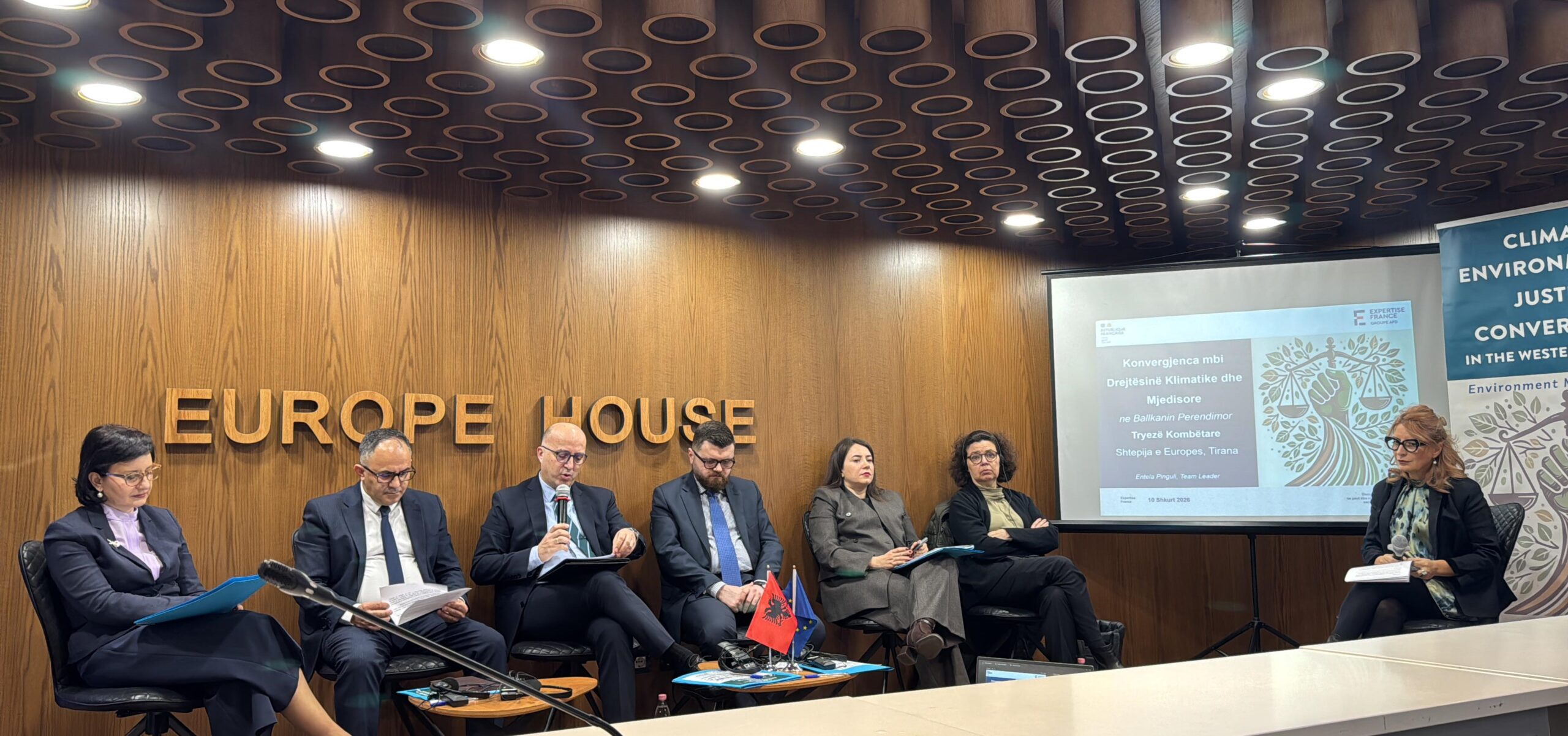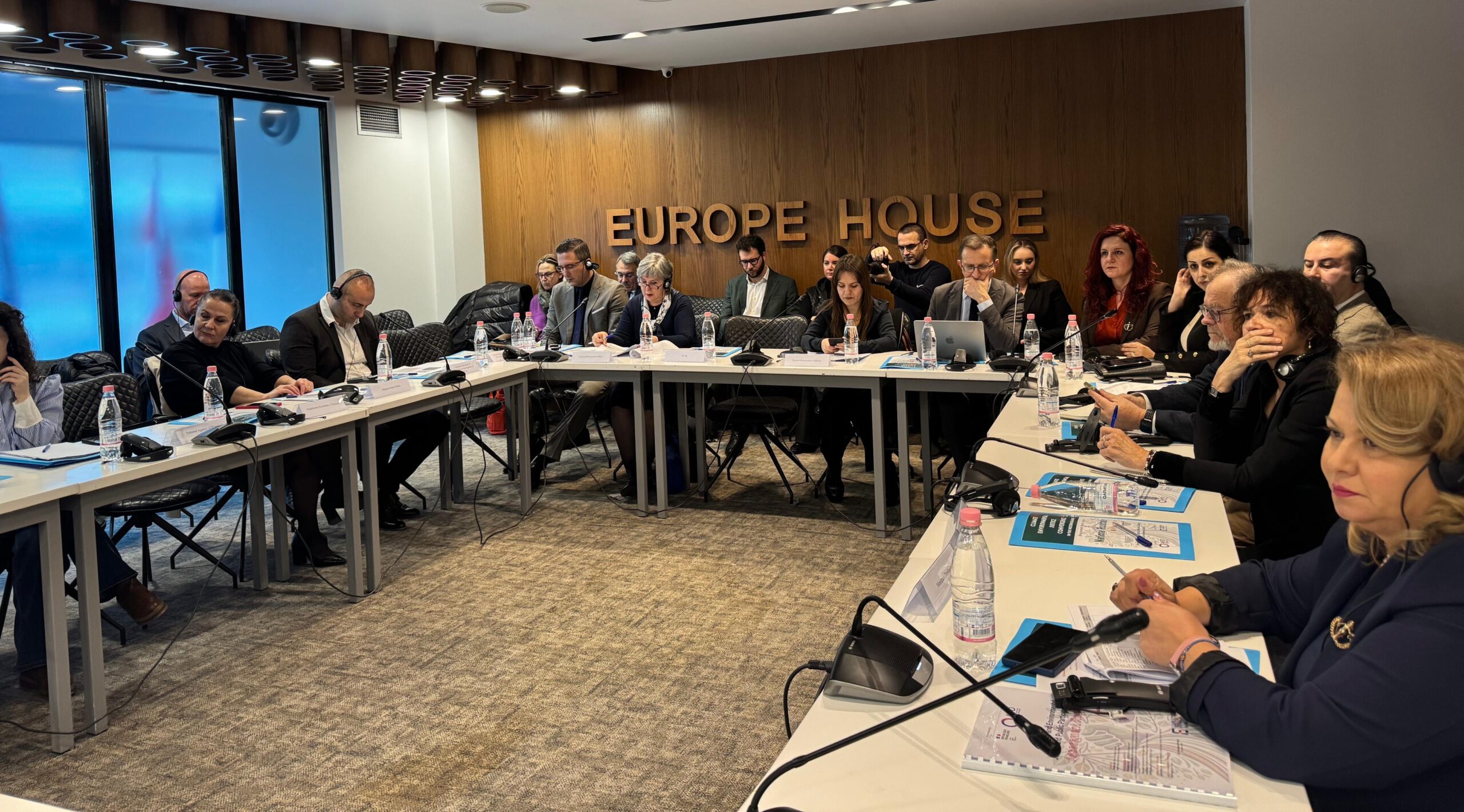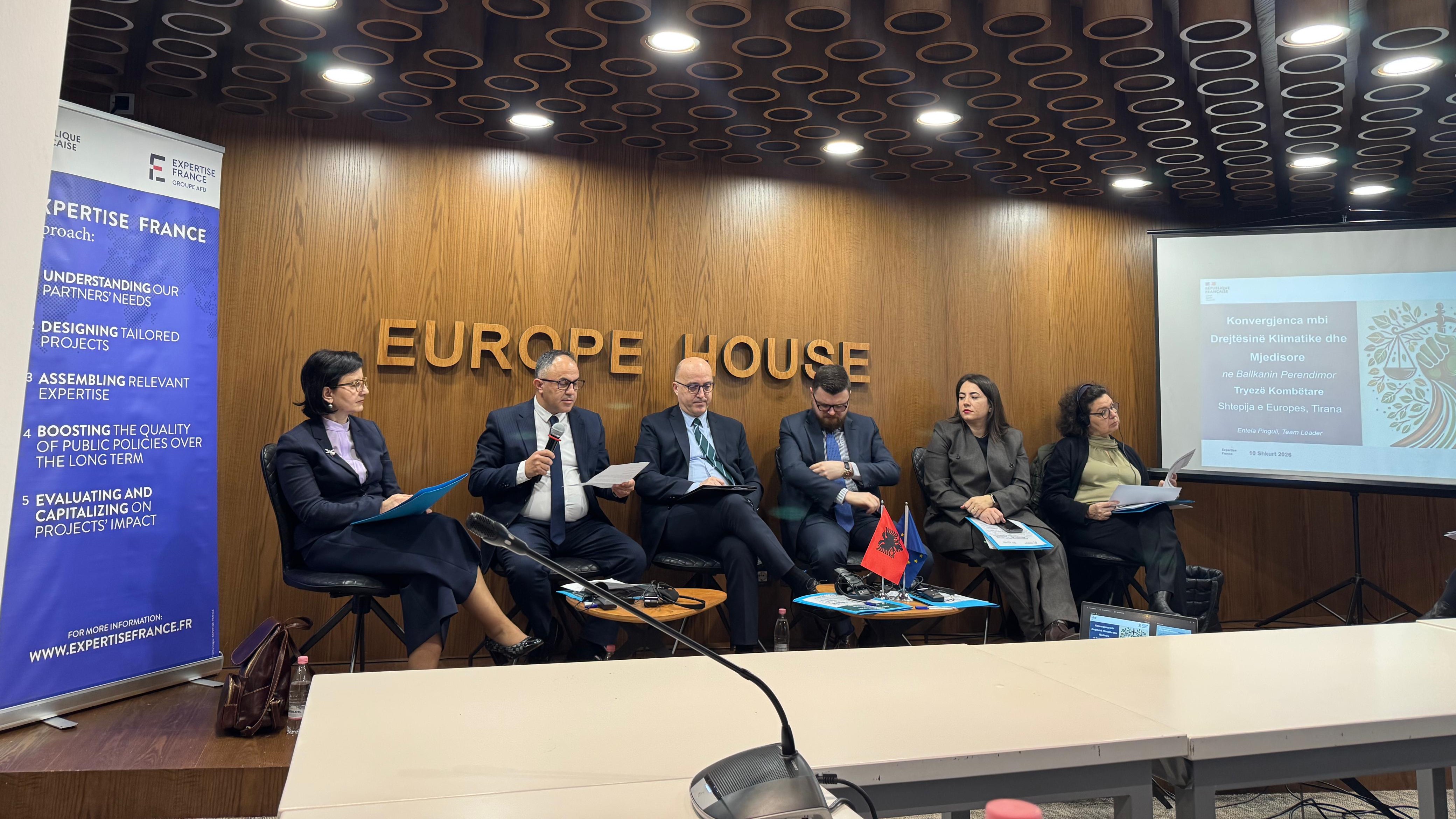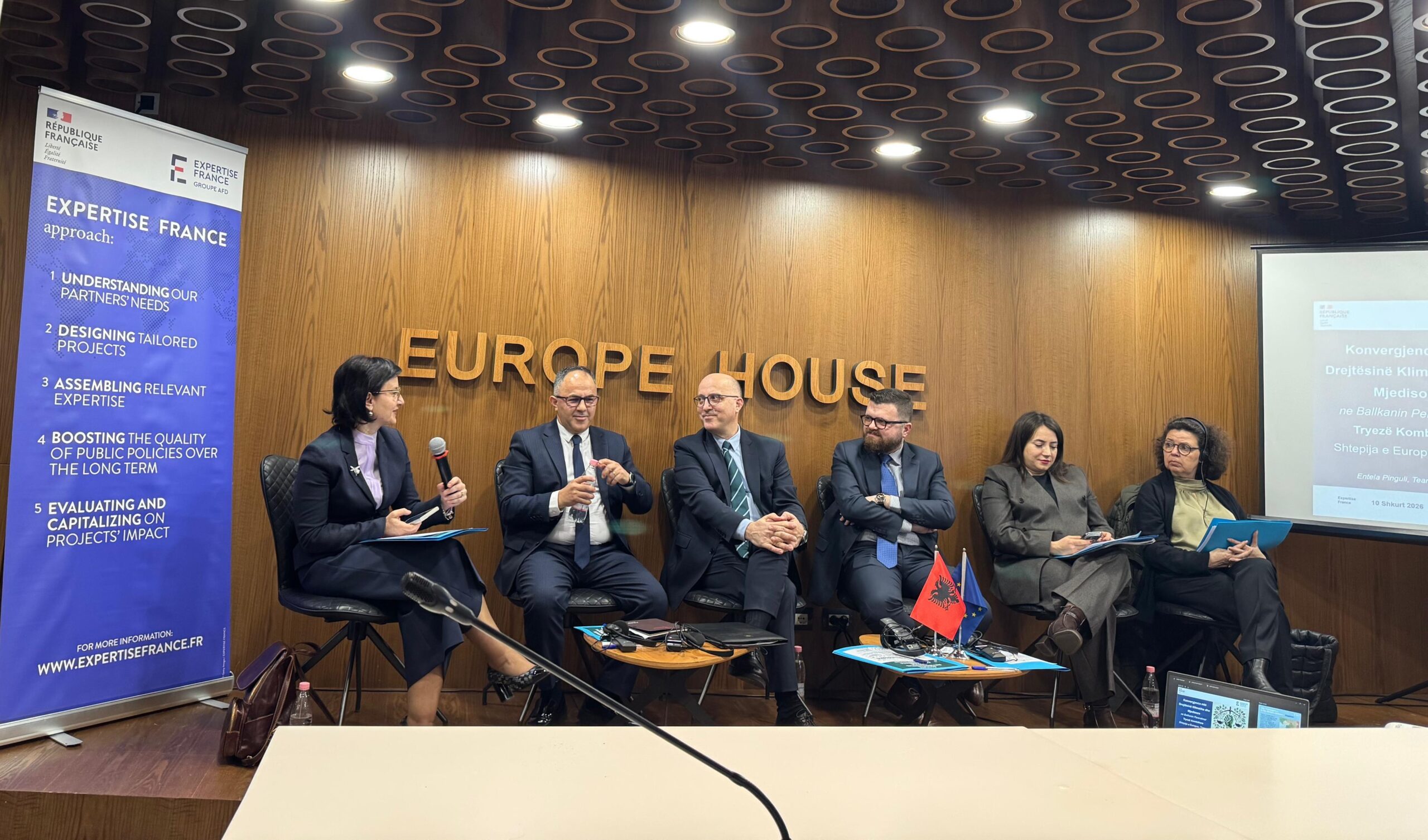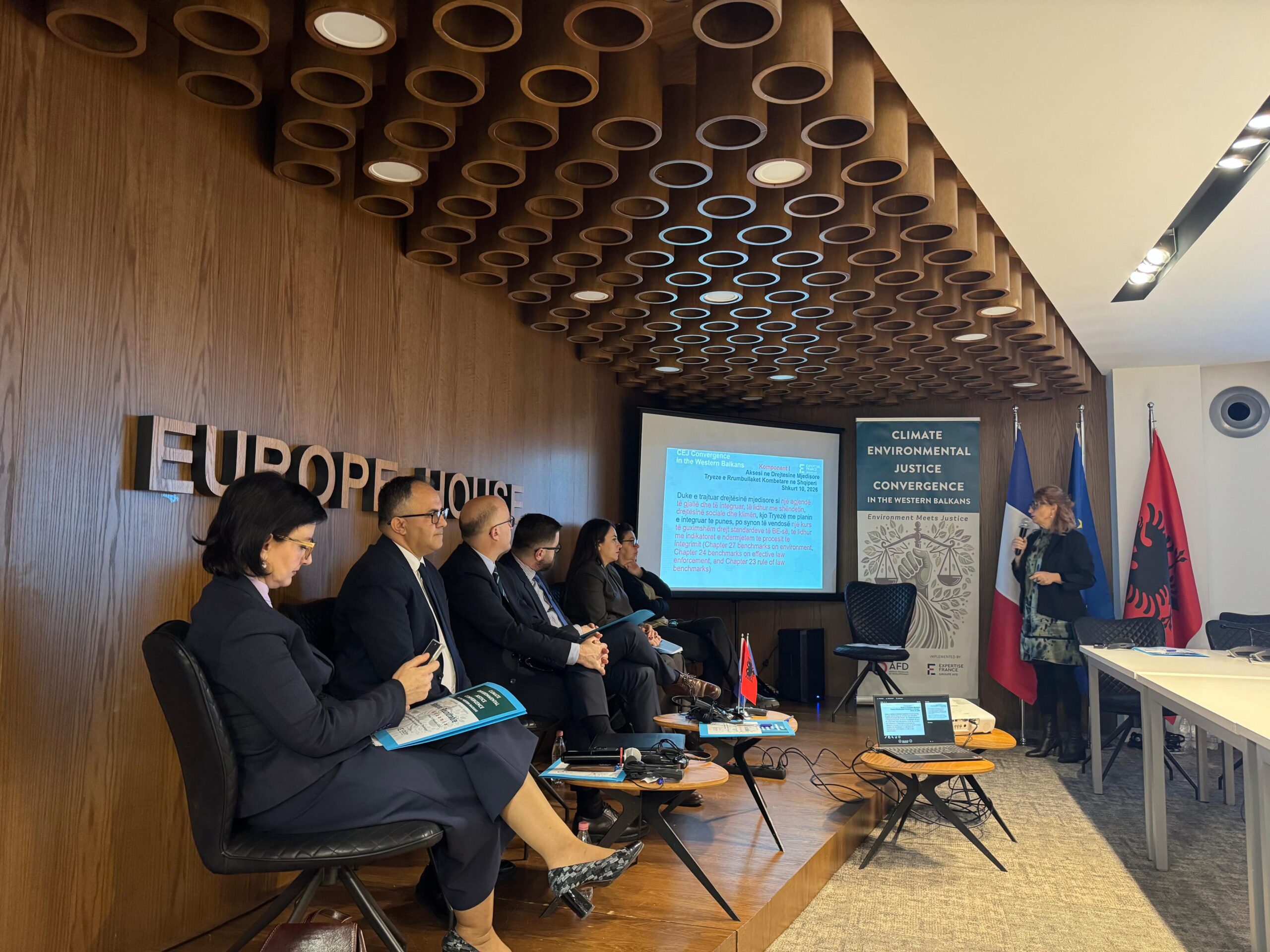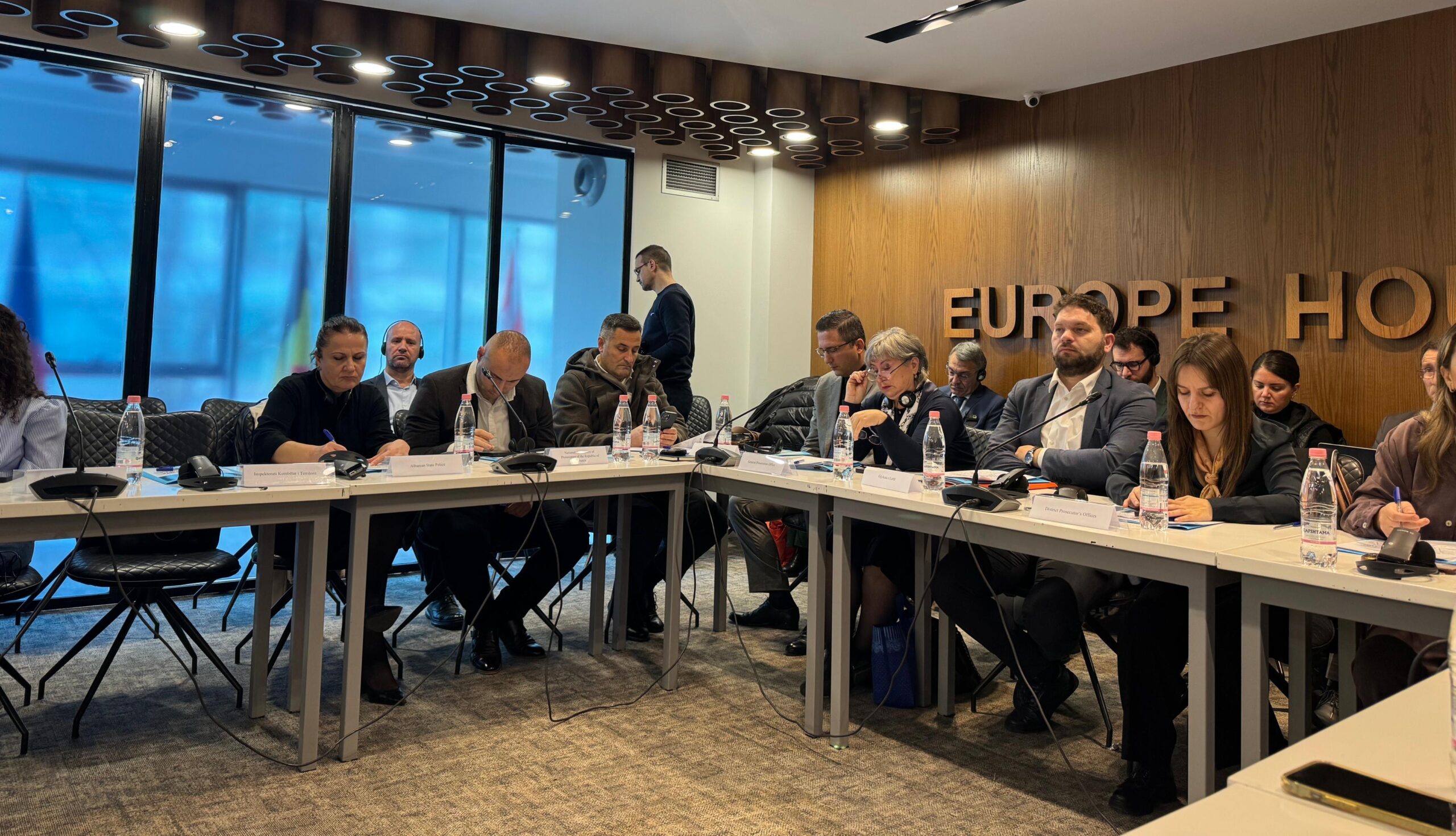
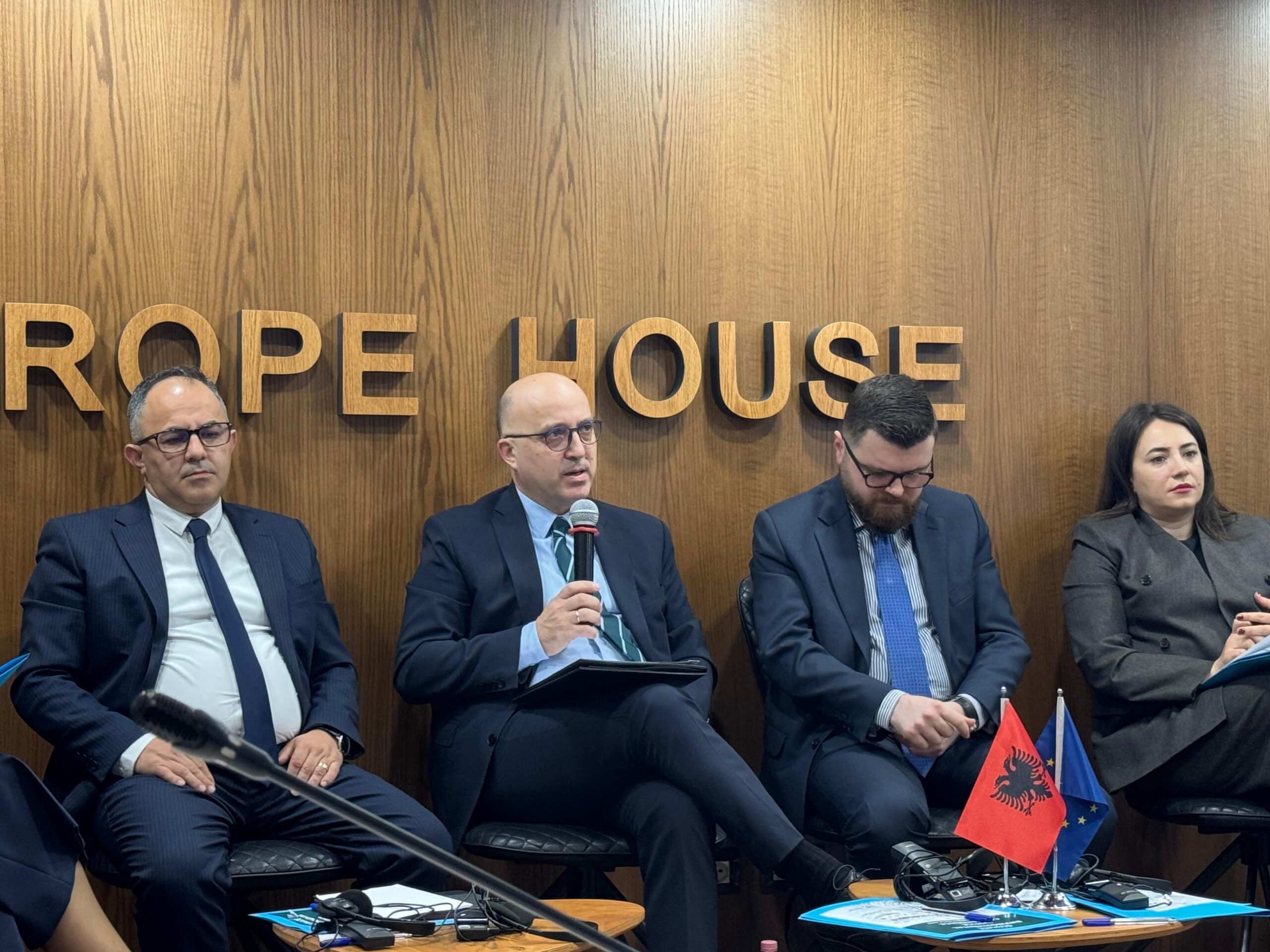
The High Inspector of Justice, Mr. Artur Metani, participated in the National Convergence Roundtable on Climate and Environmental Justice, organised by the French Development Agency and Expertise France, with the participation of heads of public institutions, experts and representatives of civil society from the fields of justice and the environment. The event’s main objective was to strengthen access to climate and environmental justice and to enhance inter-institutional cooperation.
Statement of the High Inspector of Justice, Mr. Artur Metani
Good morning, everyone and thank you for the invitation,
Allow me to express my appreciation and high regard for this inter-institutional roundtable on Climate and Environmental Justice in Albania, organised by the Expertise France Project, which also presented a draft action plan with concrete objectives.
I feel particularly comfortable at this roundtable, firstly due to my professional background and personal interest in environmental law, and secondly because of the institution I represent and the work we have carried out in relation to this issue. I must note that over six years of activity, the Office of the High Inspector of Justice has not received a single complaint against judges or prosecutors concerning environmental matters. Likewise, no institution has submitted any request or referral for a thematic or institutional inspection by the High Inspector of Justice regarding the handling of environmental crime by courts or prosecution offices. The underuse of these constitutional referral mechanisms by institutions or other actors is regrettable.
The High Inspector of Justice has gone further than that. It has been an active participant in the European Commission project “Cooperation in Environmental Protection through National Justice Inspection Authorities” (COPEIJ). This project brought together representatives of the French General Inspectorate of Justice, the General Inspectorate of the Italian Ministry of Justice, the Portuguese Judicial Council, the Romanian Judicial Inspectorate, and the Office of the High Inspector of Justice of Albania, members of the European Network of Justice Inspection Services (RESIJ), under the coordination of Expertise France.
For two consecutive years, from 2022 to 2024, through this project, the national inspection services of five RESIJ member states were engaged in the framework of the new European Union Directive of 11 April 2024 on the protection of the environment through criminal law. The project encouraged reflection on ways to improve environmental justice, develop resources, particularly procedural ones, promote convergence of national strategies to combat environmental crime and enhance coordination among competent services at both national and European levels.
I am pleased to note that the draft action plan presented today by Expertise France, with concrete objectives and steps, aligns with the findings and recommendations made by the Office of the High Inspector of Justice in the Albania report produced within the framework of the COPEIJ project.
Environmental justice means the fair treatment and meaningful involvement of all individuals in the development, implementation and enforcement of environmental laws, regulations, and policies, as well as the equitable distribution of environmental benefits.
The Constitution of the Republic of Albania recognises and guarantees the right of every person to be informed about the state of the environment and the measures undertaken by state authorities for its protection. In parallel, the State bears a constitutional obligation to take all necessary measures to ensure a clean and healthy environment, in the interest of society as a whole.
These constitutional obligations are further specified in key legislative acts, including the Criminal Code of the Republic of Albania, which provides criminal-law protection of the environment by criminalising unlawful acts and conduct that cause environmental harm. Albanian criminal legislation has been harmonised with EU Directive 2008/99/EC “On the protection of the environment through criminal law”, serving as a mechanism to raise awareness among stakeholders, punish illegal activities, and prevent the commission of environmental criminal offences.
Furthermore, the regulatory legal framework in the field of environmental protection, largely aligned with the European Union acquis communautaire, together with the ratification of multilateral environmental agreements and accession to international conventions, demonstrates the importance Albania attaches to international cooperation on environmental protection issues.
Nevertheless, despite this normative progress, the main challenges relate to the effective implementation of this framework in practice. A significant number of legal and sub-legal acts are not accompanied by regular monitoring and evaluation reports, making it difficult to accurately measure their real effectiveness.
In many cases, environmental legislation proves to be more advanced than the administrative, financial and institutional capacities of the structures responsible for its implementation. This mismatch is reflected in the lack of sustainable progress in key areas such as environmental liability, environmental inspection and the punishment of environmental crime. As a result, law enforcement often remains formal and reactive rather than preventive and systematic.
The European Union, in its progress reports on Albania, notes an increase in investigations into environmental crimes, while emphasising the need to strengthen environmental protection, particularly in the approval of private investments and in safeguarding the integrity of protected areas and habitats of specific species. This assessment indicates that progress remains partial and fragile.
The current criminal policy, focused primarily on fines, often proves ineffective, especially when offenders belong to socio-economically vulnerable groups. In such cases, fines are not only unaffordable but also incapable of fulfilling their deterrent function. Consequently, criminal policy should be reviewed and oriented not only towards punishment but also towards education, rehabilitation, and the prevention of reoffending.
Albania’s European integration process, particularly the negotiation of (Chapter 23) “Judiciary and Fundamental Rights” and (Chapter 27) “Environment and Climate Change”, requires transformative action based on the rule of law and the protection of environmental rights. However, merely aligning domestic legislation with the EU Directive “On the protection of the environment through criminal law” is not sufficient to protect and promote environmental justice.
The adoption of legislative amendments must be accompanied by the necessary mechanisms to enable: increased awareness among institutions and the general public regarding the range of environmental crimes; initial and continuous training of magistrates on environmental criminal offences and the case-law of the European Court of Human Rights and the Court of Justice of the European Union; strengthened cooperation and information exchange between administrative authorities, the judiciary, and the prosecution service; involvement of subject-matter experts in adjudicating environmental cases; and the use of criminal and administrative policies that not only punish but also prevent and restore environmental damage.
The fundamental objective of environmental legislation must remain prevention, followed by administrative sanctions and, as a last resort, criminal punishment. Achieving this objective requires not only a harmonised legal framework but, above all, functional institutional capacities, effective criminal policies, and a comprehensive approach that combines control, punishment, and education. Only in this way can we speak of effective promotion of environmental justice that serves future generations.
Thank you very much.