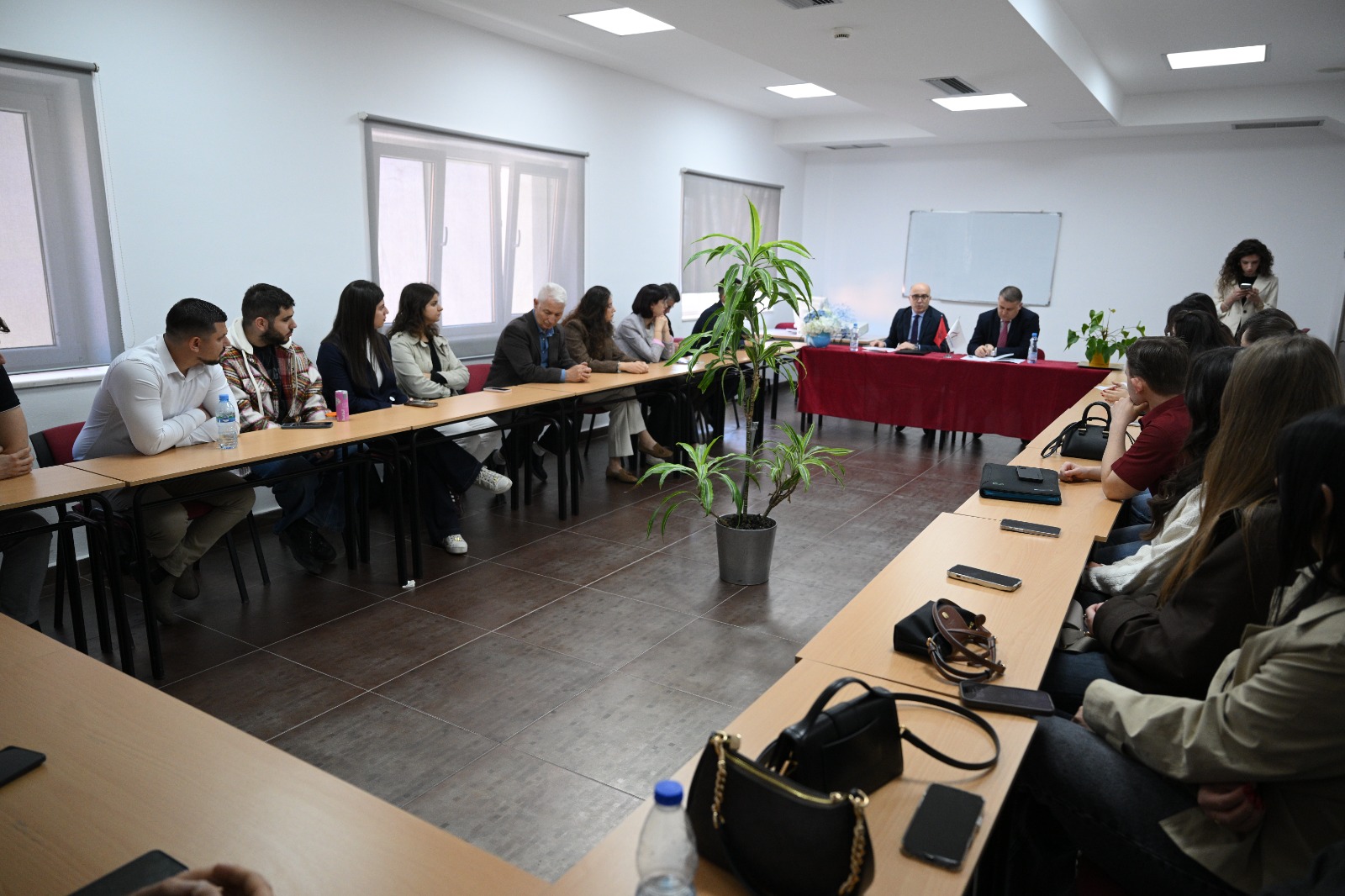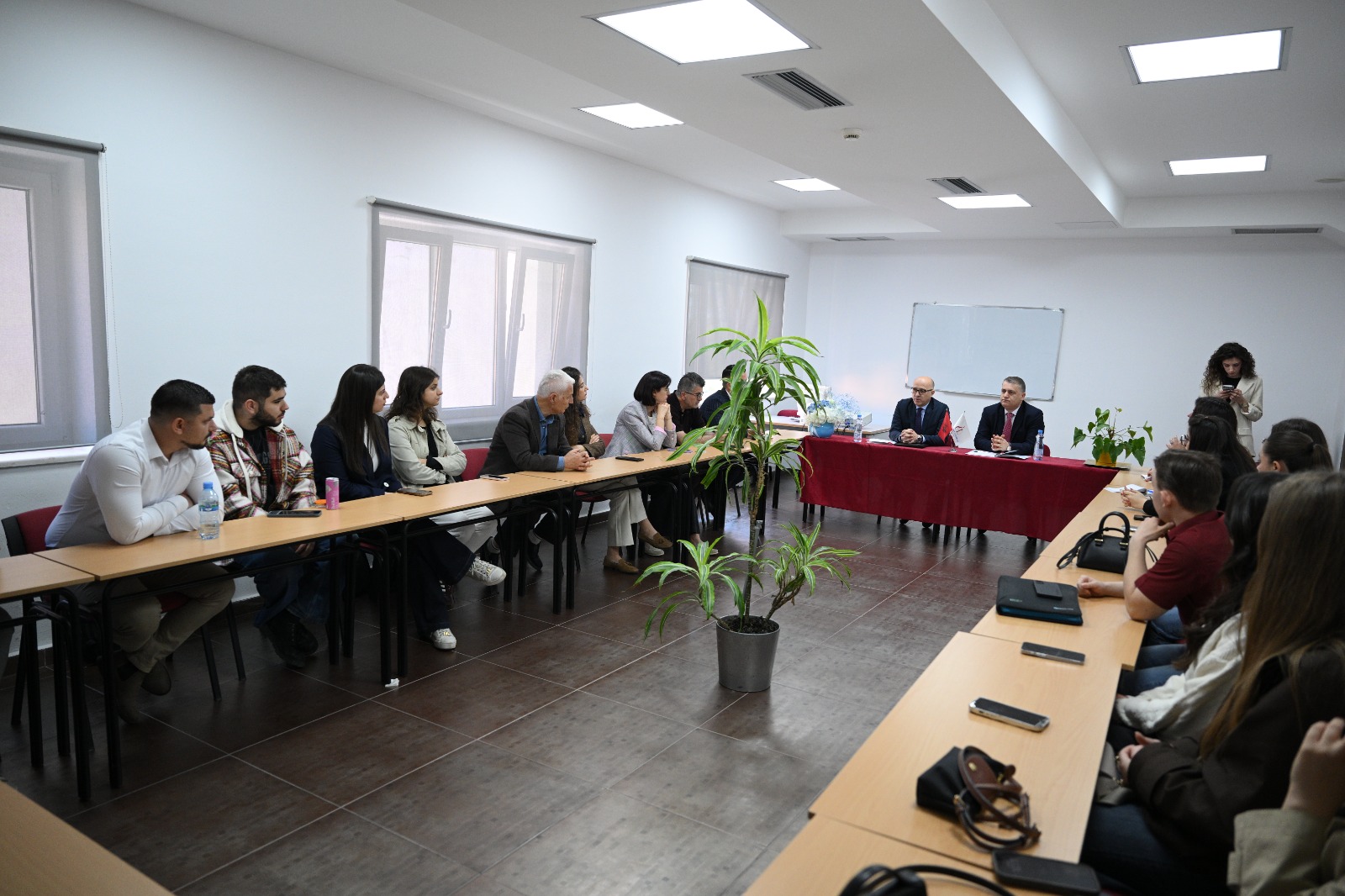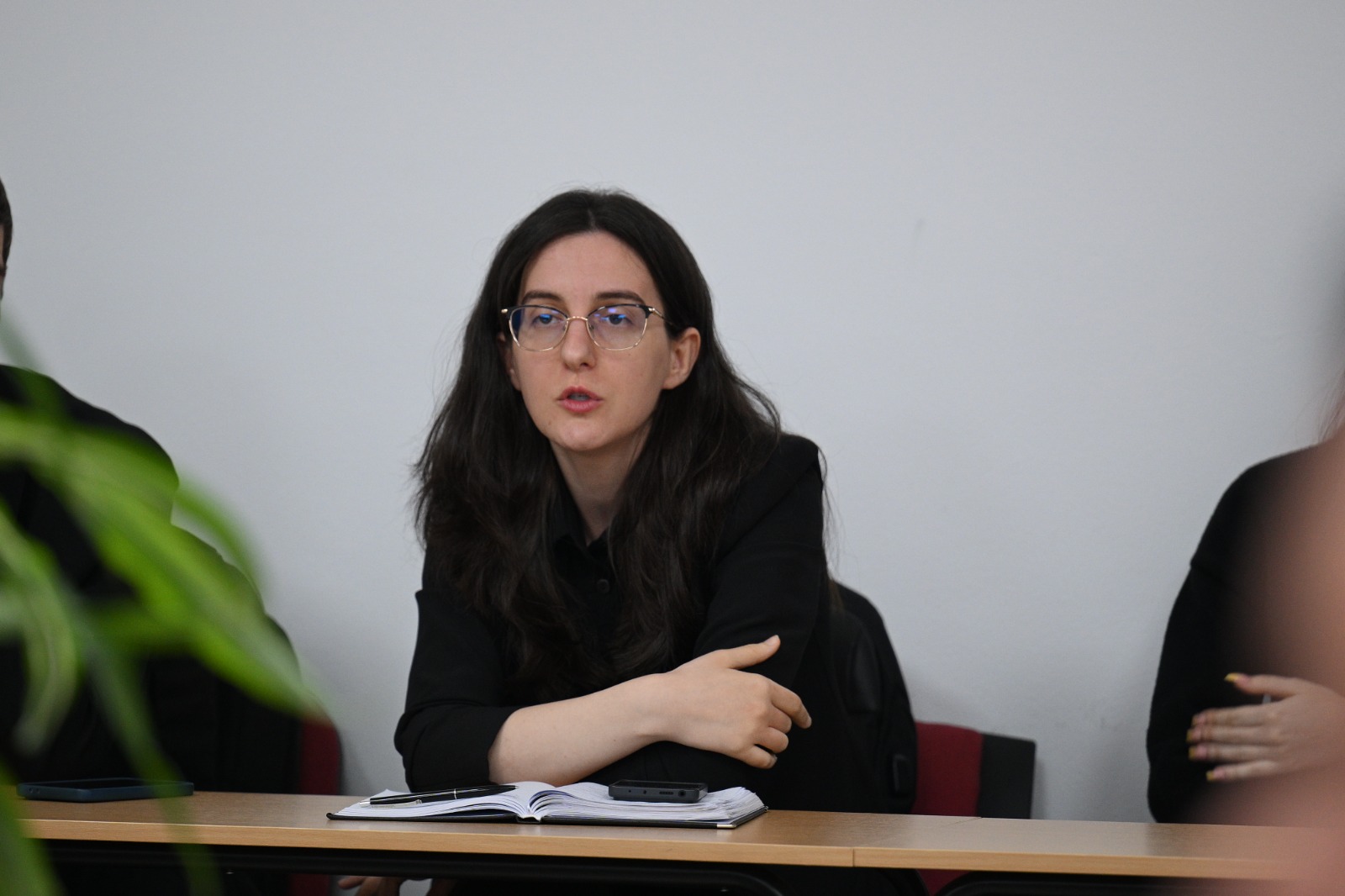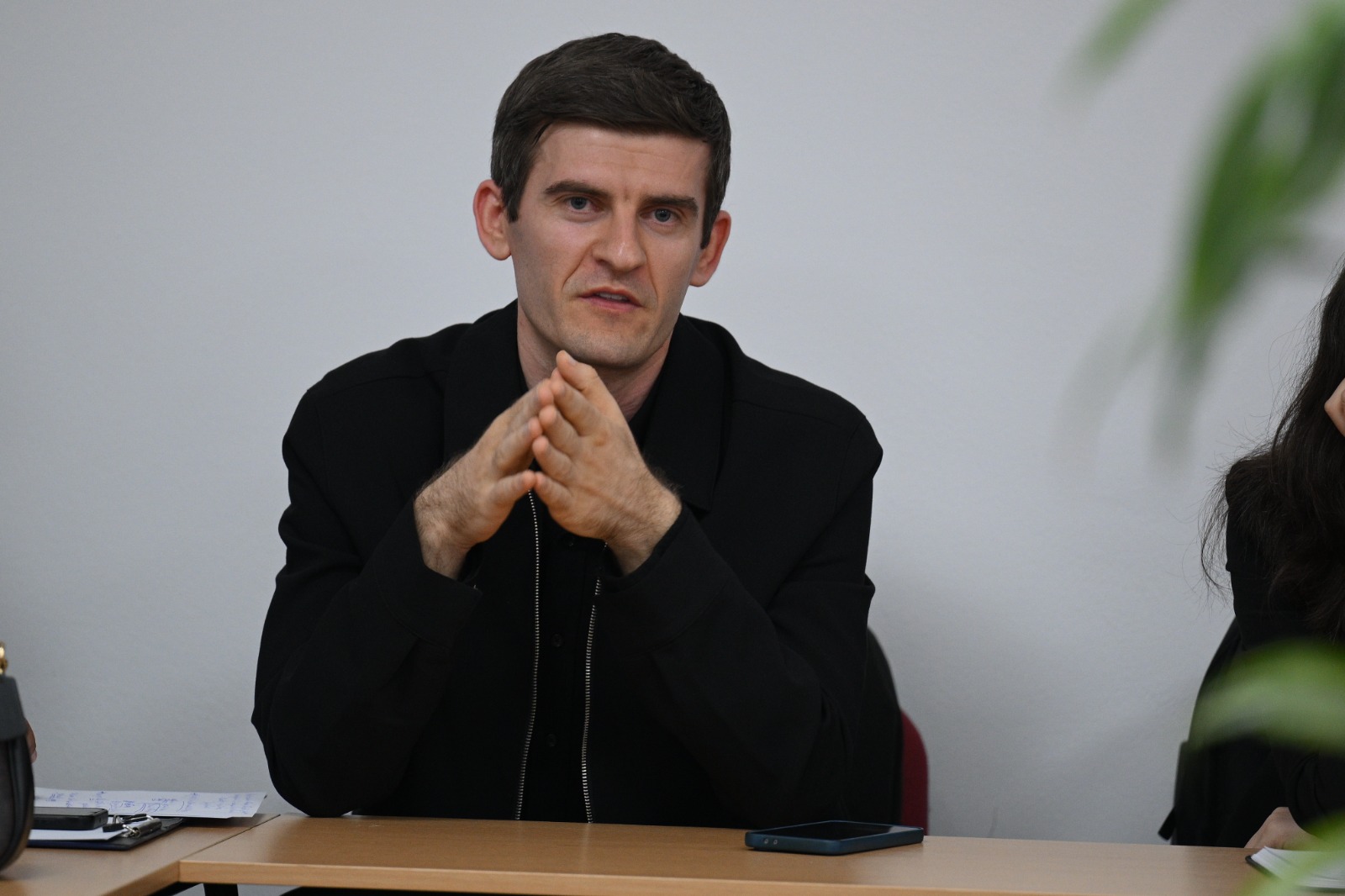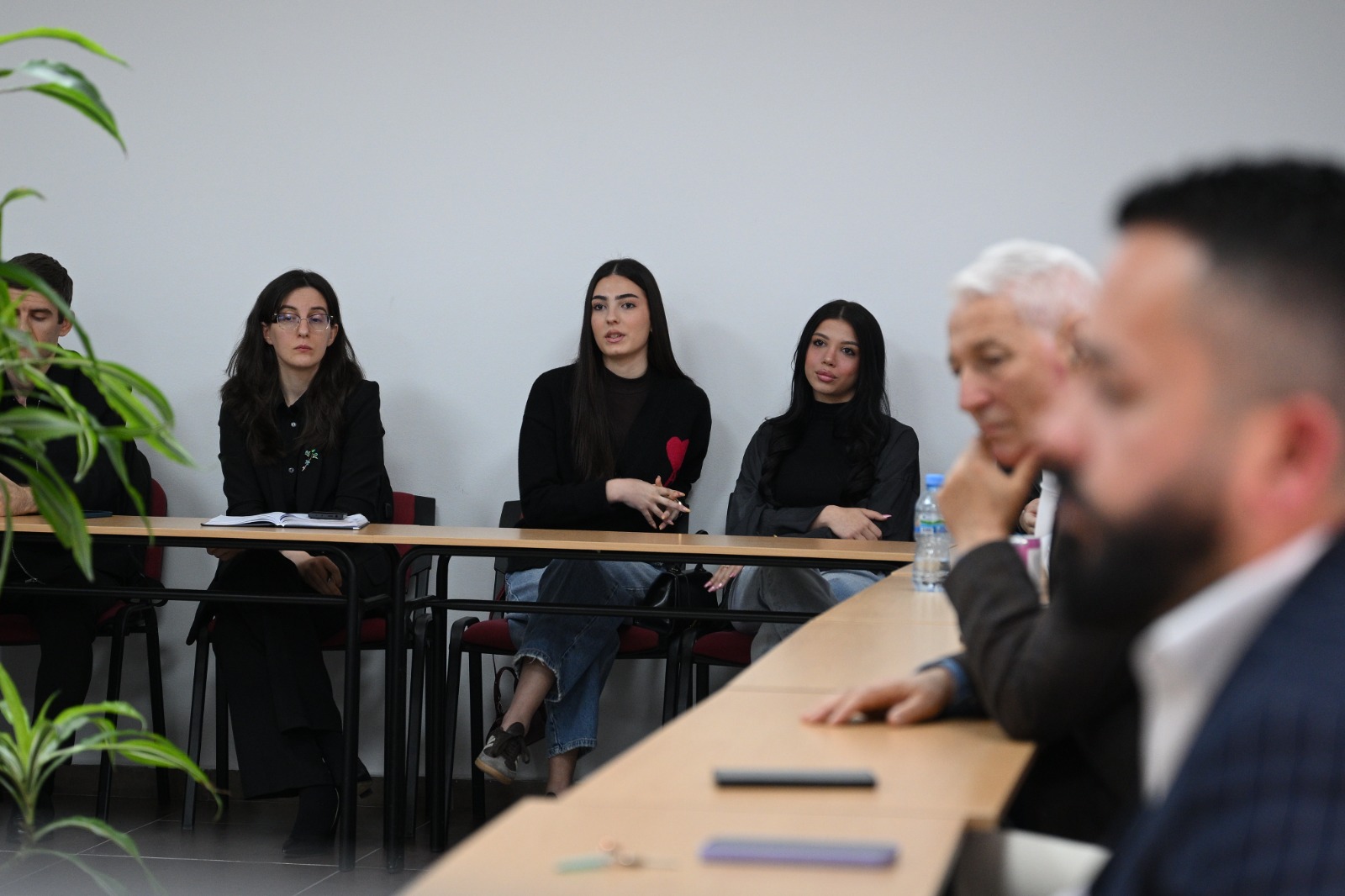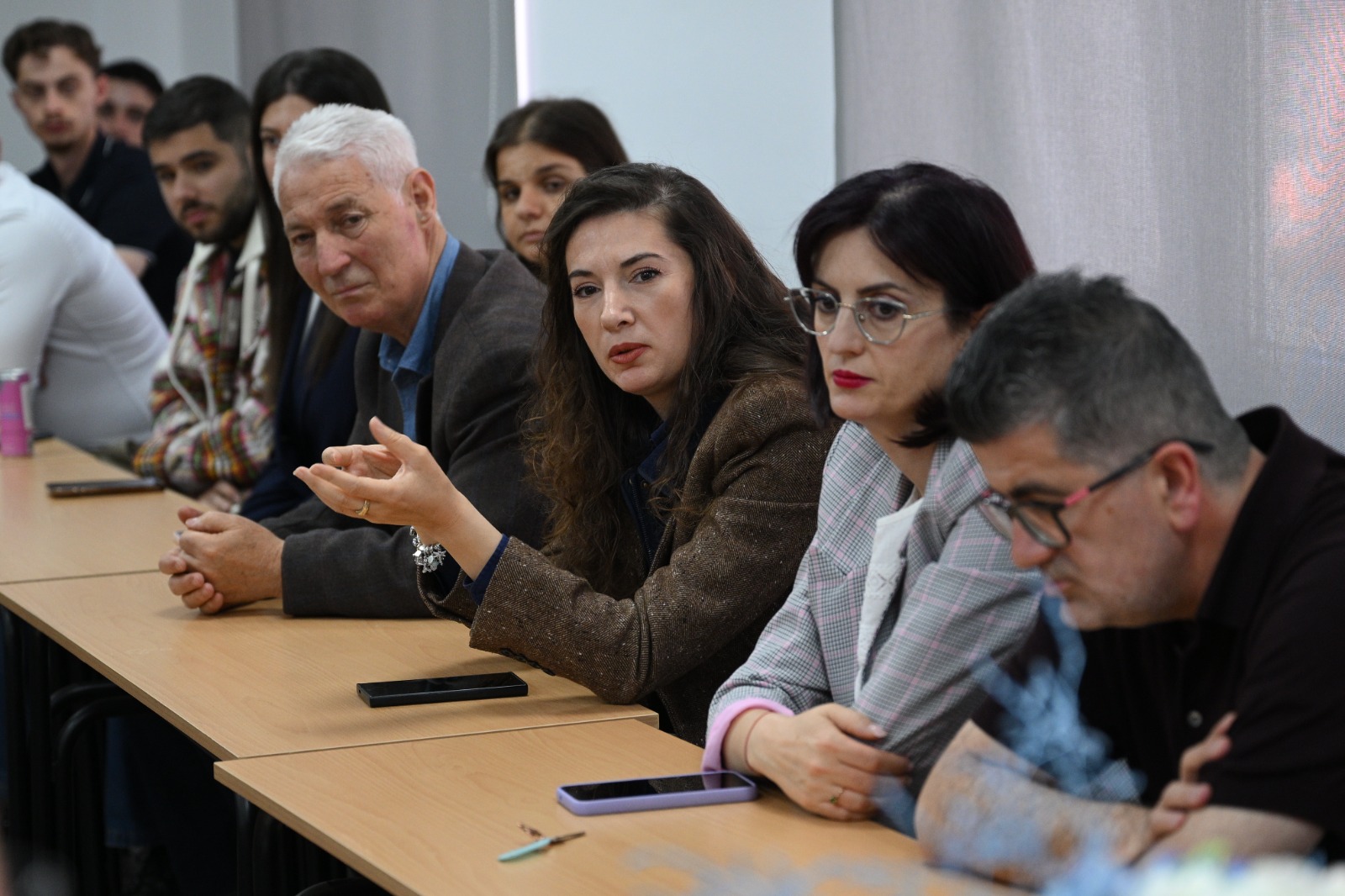

High Inspector of Justice Mr. Artur Metani held an open lecture with students of the law department at “Luarasi” University, where he shared with them reflections on the functioning of the justice system after the reform, focusing on the activity of the High Inspector of Justice, the independence of the judiciary, accountability and the separation of powers.
During his speech, the High Inspector of Justice Mr. Artur Metani said that the justice reform has created a new institutional architecture, which constitutes a stable and functional structure. One of the main achievements of this reform, said Mr. Metani, is the fact that today judges and prosecutors exercise their duties without pressure or coercion, thanks to legal and constitutional mechanisms that guarantee the investigation and punishment of any possible violation.
The High Inspector of Justice explained how the institution he leads is set in motion, emphasizing that “the process starts mainly from complaints from citizens and institutions, but also on the initiative of the HIJ itself, based on information obtained, including from the media, but the complaints must be clear and detailed, including the identity of the judge and a concrete description of the alleged violation”.
An essential element, according to Mr. Metani, remains maintaining the balance between the independence of judges and their accountability, which guarantees an impartial and blackmail-free justice system. The High Inspector of Justice also explained that “the HIJ does not have the authority to change court decisions, as provided for in the law they are overturned or changed by a higher level of the judicial system”.
The High Inspector of Justice then explained the three stages of handling a complaint: “initial verification, investigation based on reasonable suspicion and disciplinary proceedings. Among the most frequent violations found, he mentioned delays in the disclosure of decisions, which are often related to the high workload of the judiciary. The High Inspector of Justice emphasized that citizens have the right to appeal his decisions to the relevant bodies, as control mechanisms, and also noted the importance of inspections in the justice system, which contribute to increasing its performance and credibility”.
During the conversation with the students, special attention was also paid to the impact of the vetting process on the justice system. The High Inspector of Justice emphasized that vetting has halved the number of judges, creating an increased workload on the system, but remaining a necessary process for increasing integrity and public trust.
Students raised questions about the nature of violations in decision-making and cases when these may violate the integrity of the judge, including through corruption. In response, the Inspector explained that each case is reviewed on the basis of facts and legal procedures, respecting the standards of investigation and the balance between independence and accountability.
Regarding the question about the volume of complaints, Mr. Metani announced that approximately 9 thousand complaints have been filed with the institution, of which approximately 6700 have been reviewed. Of these, approximately 150 investigations have been conducted against magistrates and 53 disciplinary proceedings have been initiated.
Finally, the High Inspector of Justice spoke about the inspections, which he said could serve as a basis for institutional reflection and further improvements, including recommendations, while adding that all inspection reports have been addressed to the Assembly.