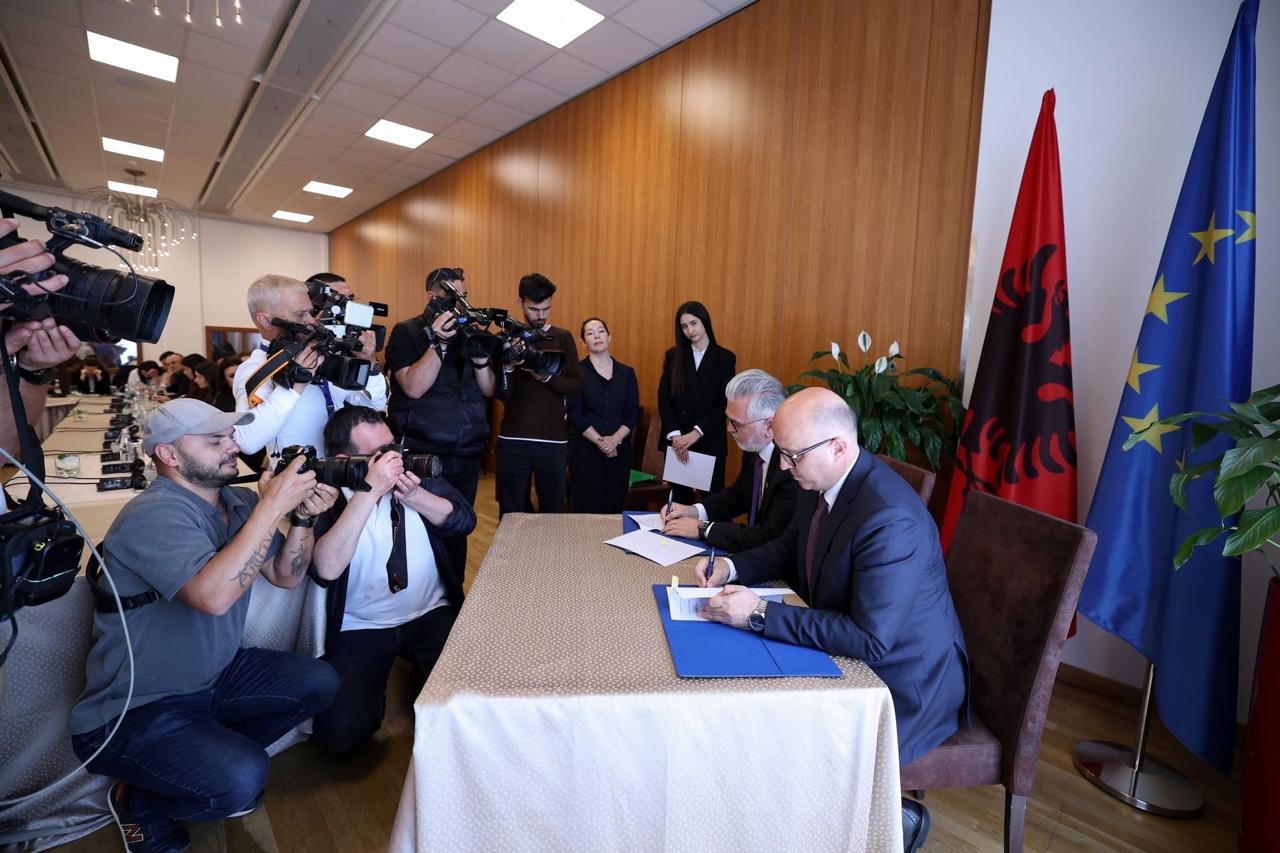
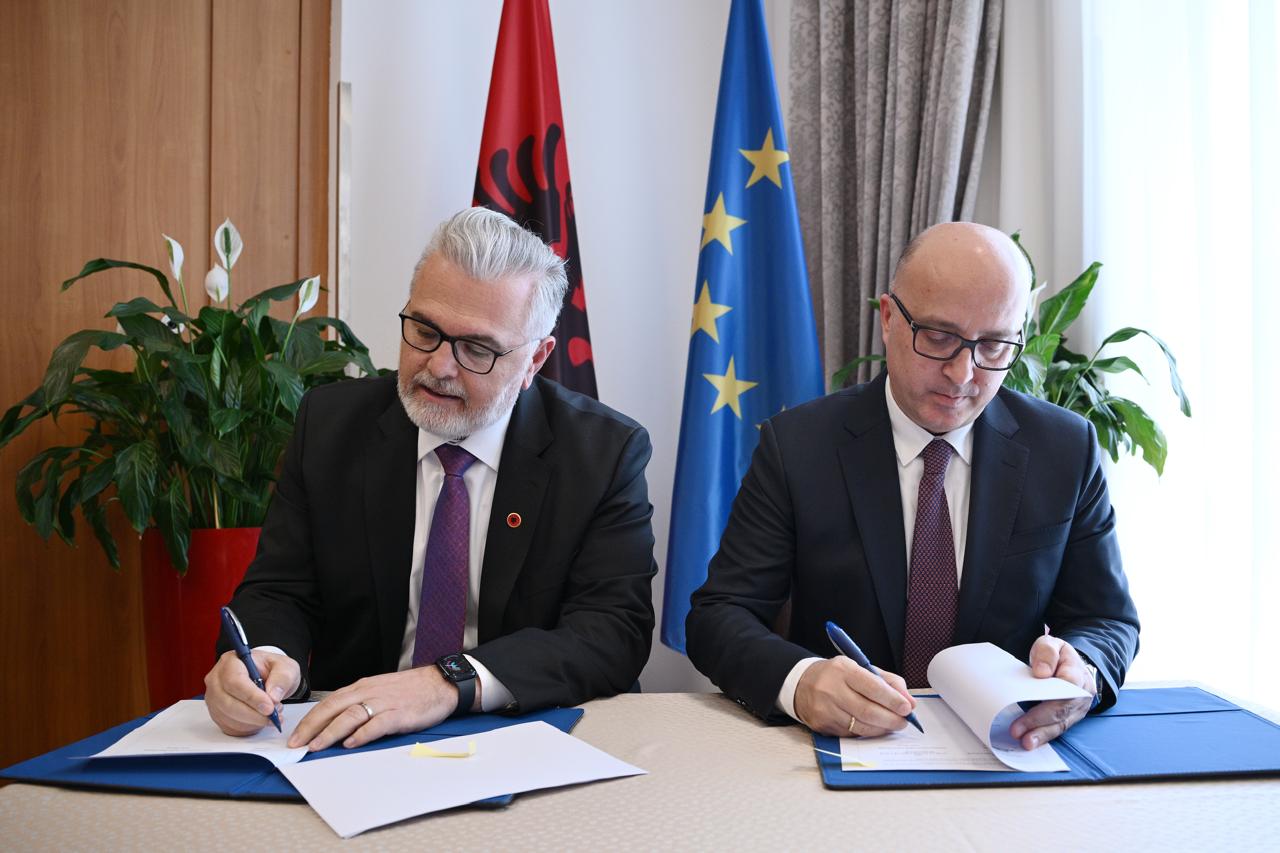
The High Inspector of Justice signed today with the Ministry of Justice an agreement on the harmonization, implementation and publication of national justice system statistical data.
In a special ceremony, the agreement was signed on behalf of the respective institutions by Mr. Artur Metani and Mr. Toni Gogu. It aims to create a framework for inter-institutional cooperation and to regulate the processes of collecting, processing, reporting and publishing justice system statistical data, in accordance with the methodology of the European Commission for the Efficiency of Justice (CEPEJ) and the national legislation in force.
In his speech, Mr. Metani emphasized that building a system with accurate and accessible statistical data serves not only to measure the performance and efficiency of courts and prosecutors’ offices, but is also essential for increasing transparency, strengthening accountability and identifying the needs for continuous improvement in the functioning of the justice system. “Only if we manage to create and realize a complete and accurate picture of the state of the justice system (regarding the average time a magistrate needs for judicial review, the progress and completion of backlog cases in the courts, their workload) can we manage to identify concrete measures, accurate assessments and effective strategies that fulfill the goal of increasing the quality and efficiency of the justice system.“, said Mr. Metani.
On the other hand, the High Inspector of Justice also underlined the impact of statistics on the work processes of the institution he leads. “Justice system statistics also have a significant impact on the planning of thematic inspections that address the most fundamental issues of the justice system, increasing the effectiveness of recommendations. The clarity, comprehensibility and accuracy of statistical data also contribute to the assessment of the impact of completed thematic and institutional inspections. By comparing justice system statistics before and after each inspection, the impact of recommendations on improving the efficiency of the justice system and public trust in this system can be assessed more effectively. In this sense, it is necessary to ensure the standardization of data collection and processing, as well as the construction of integrated systems that guarantee transparency, traceability and controlled access to information. Only through such an infrastructure can statistical data be transformed into a real decision-making instrument, which supports a fair assessment based on accurate data. At the same time, this process cannot be understood in isolation from the infrastructure, material and functional conditions in which it is exercised the activity of courts and prosecutor’s offices. For this reason, the improvement of the infrastructure and systems of courts and prosecutor’s offices constitutes an essential component, which directly affects the efficiency of work, the quality of data.”
In the presence of the Ambassador of the European Union to Albania, Mr. Silvio Gonzato, similar agreements were signed today with the Ministry of Justice by other institutions of the justice system, such as the High Judicial Council, the High Prosecutorial Council, the Prosecutor General and the School of Magistrates.
These agreements are part of the National Reform Agenda and are directly related to the objective of increasing the efficiency of the justice system at all levels. They contribute in a concrete way to the European integration process, guaranteeing comparable and reliable data for reporting to the European Commission.