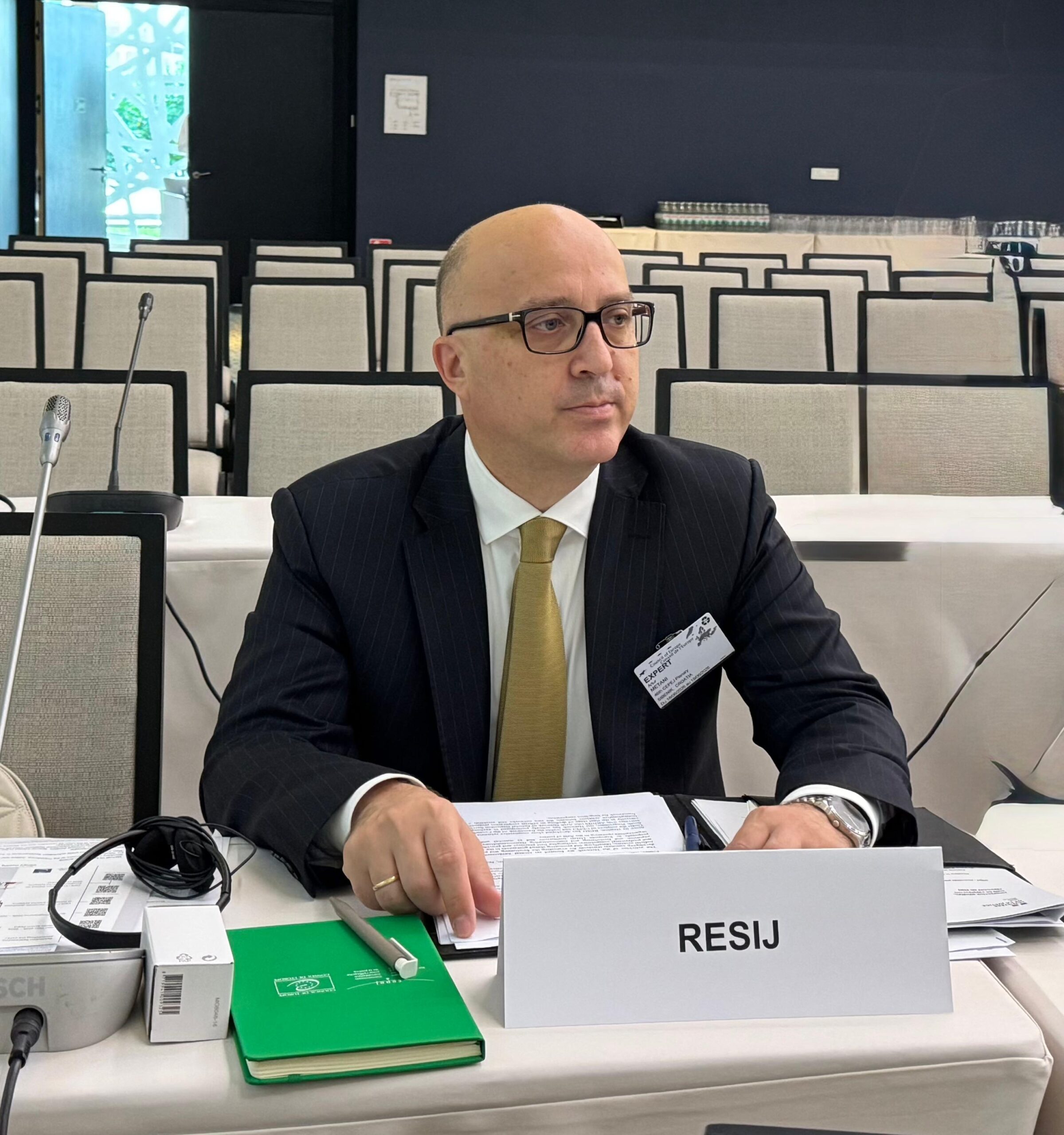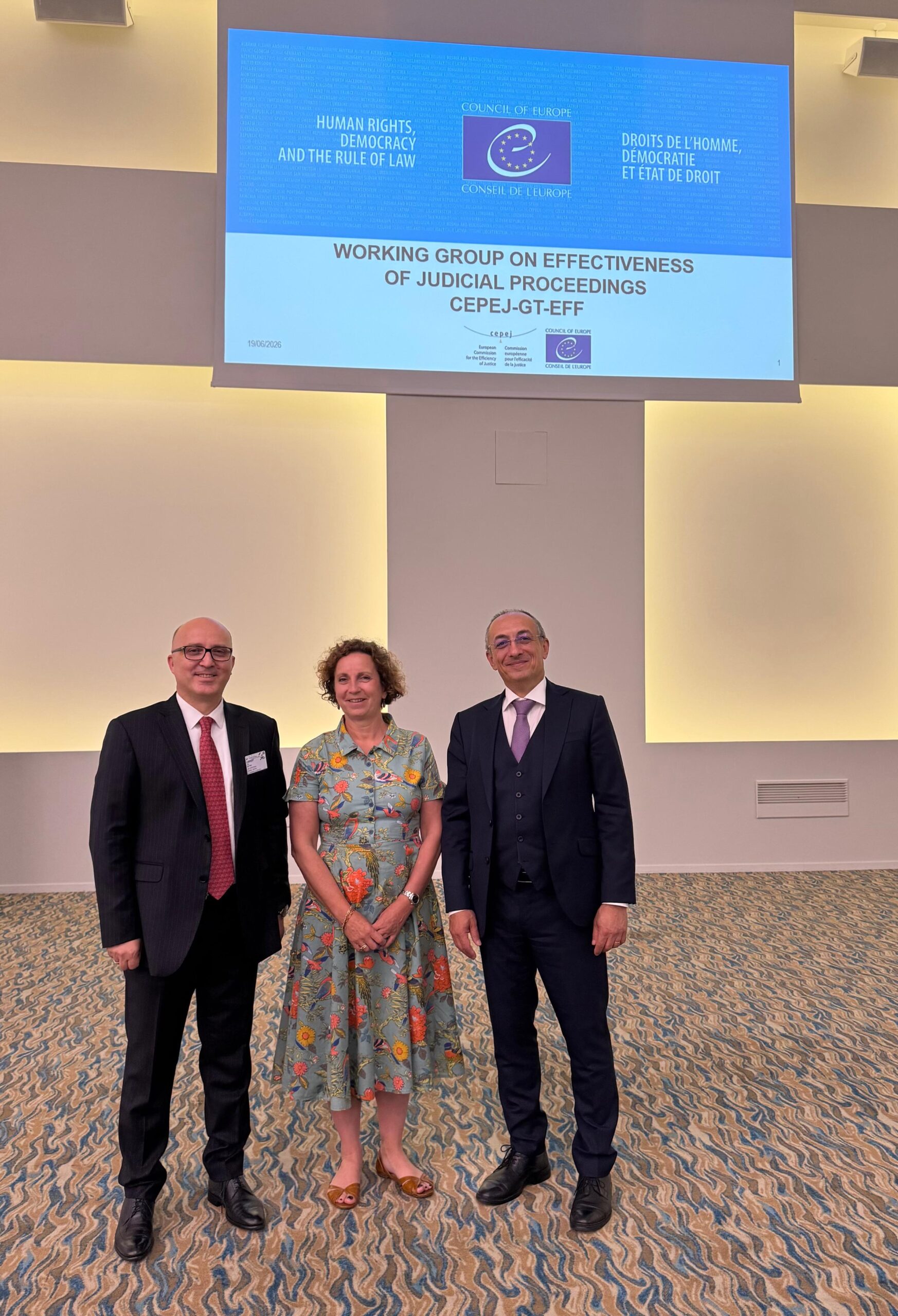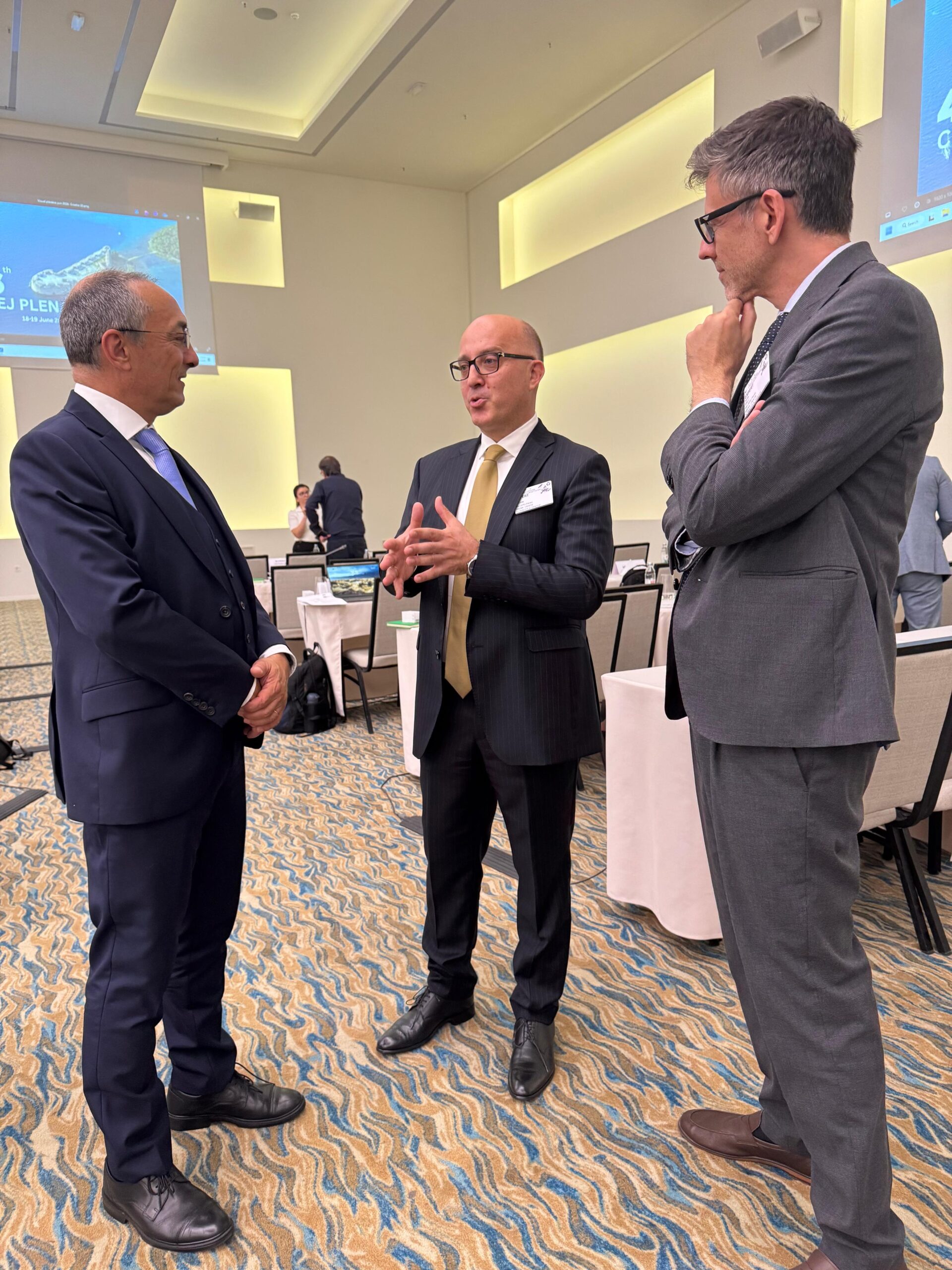
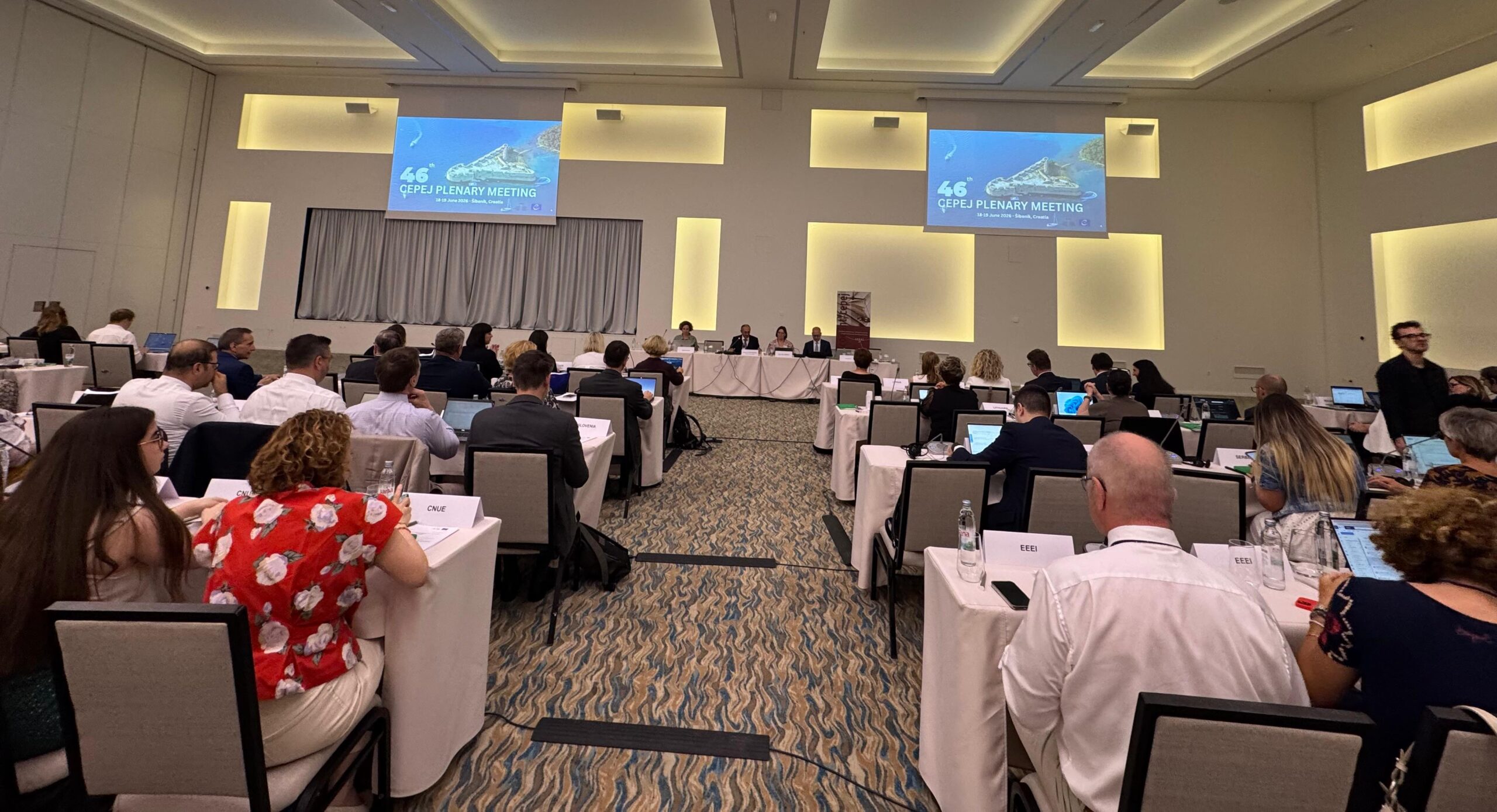
High Inspector of Justice, Artur Metani, participated in the proceedings of the 46th Assembly of the European Commission for the Efficiency of Justice (CEPEJ), held in Šibenik, Croatia.
Mandated by the European Network of Justice Inspection Services (RESIJ) to officially present the application for obtaining observer status with CEPEJ, Mr. Metani addressed the Assembly, highlighting the expertise and contribution that the Network has provided thus far in the field of justice inspection.
“In the capacity as the High Inspector of Justice of Albania, thanks to the continuous cooperation with the Council of Europe and CEPEJ since 2020, I have had the opportunity to become closely acquainted with the high level of expertise that this commission provides in various fields of the administration and evaluation of justice. At the same time, I believe that RESIJ can bring added value in a highly specific and specialized field within CEPEJ,” he stated.
Mr. Metani emphasized that the inspection services that constitute RESIJ, place at the center of their activity the evaluation of the functioning of courts and prosecution offices, the inspection of the professional activity of judges and prosecutors, as well as the identification of mechanisms that contribute to the integrity, efficiency, and quality of the judicial system. He noted that an efficient justice system cannot be assessed solely through statistics, productivity indicators, or the duration of judicial proceedings, because these indicators, although important, do not always succeed in revealing the real causes of problems affecting the functioning of the judiciary, nor do they fully reflect the quality of justice provided to citizens.
“In our respective countries, inspection structures play an irreplaceable role. They help identify systemic deficiencies, procedural delays, organizational challenges, and risks that may undermine the functioning of the judiciary. Particularly in countries undergoing profound reforms in the justice system, inspection services can play a key role in ensuring institutional stability, coherence, and the continuity of professional standards,” he declared.
During his speech, High Inspector of Justice also shared a personal moment related to the support that CEPEJ and the Council of Europe have provided to the institution he leads.
“The first contact of the Office of the High Inspector of Justice of Albania with RESIJ was made possible precisely thanks to the support of CEPEJ. In June 2021, CEPEJ facilitated the establishment of contact between the HIJ and the French Inspectorate, which at that time held the presidency of RESIJ, and also conveyed the HIJ’s interest in becoming part of this network,” he said.
Mr. Metani recalled that in December 2021 RESIJ admitted the HIJ with observer status, while in October 2023, recognizing Albania’s active engagement and contribution within the framework of the network, it granted the High Inspector of Justice the status of a full member with full rights.
“Today I stand before you on behalf of RESIJ and have the privilege of presenting before this Assembly the request to grant the European Network of Justice Inspection Services observer status with CEPEJ, with the conviction that this cooperation will bring added value to both institutions and to the European justice community as a whole,” said Mr. Metani.
RESIJ’s application for obtaining observer status was unanimously approved by the 46th Assembly of CEPEJ.
“Congratulations, Mr. Metani! Congratulations to the European Network of Justice Inspection Services on obtaining observer status. Welcome to the great CEPEJ family. We are pleased to continue working with you with great satisfaction,” declared the President of CEPEJ, Francesco Depascale, at the conclusion of the vote.
ADDRESS OF THE HIGH INSPECTOR OF JUSTICE, ARTUR METANI
AT THE 46TH CEPEJ PLENARY ASSEMBLY
18-19 June 2026
Šibenik, Croatia
Dear Mr. President Depasquale,
Dear Ms. Decot,
Distinguished participants,
First of all, I want to thank you for the invitation and for organizing such a nice event. My name is Artur Metani and I am the High Inspector of Justice of Albania.Its a pleasure and an honour to be part of this Assembly and to address you on behalf of the European Network of Justice Inspection Services (RESIJ). I bring you the greetings of the President of RESIJ, Mr. Stéphane Noël, who was unfortunately unable to be here today, as well as the greetings of my colleagues within RESIJ.
RESIJ is an international association established in 2017. Its primary mission is to bring together the Judicial Inspection Services of the Member States and Candidate Countries of the European Union, with the aim of mutually enriching their methodologies and practices, as well as developing joint studies and missions in the interest of improving justice systems.
At present, RESIJ consists of nine members: Albania, Belgium, Bulgaria, Spain, France, Italy, Moldova, Portugal and Romania.
The activities of the Network are focused on several fundamental objectives: developing common standards for evaluating the functioning and performance of judicial systems; identifying and promoting shared guarantees in the fields of ethics and professional competence; exchanging best practices and providing specialized expertise; and formulating and communicating recommendations and concrete proposals to European Union institutions and to national and international organizations operating in the field of justice.
Since its creation, RESIJ has developed close cooperative relations with CEPEJ. Under the auspices of CEPEJ and within the framework of the Council of Europe’s South Programme, our Network has actively participated in exchanges and joint activities with ARNJIS (the Arab Network of Judicial Inspection Services). We are currently in the final stage of drafting an official cooperation protocol, which will institutionalize relations between the two networks and establish a sustainable framework for long-term cooperation.
RESIJ has also successfully carried out joint missions with several European judicial inspection services, contributing to important international initiatives. These include projects on the evaluation of European civil justice, the protection of vulnerable adults, and the most recent project funded by the European Commission, COPEIJ “Cooperation in Environmental Protection through National Justice Inspection Authorities.” This project engaged, over a two-year period, five inspection services from RESIJ member countries: France, Italy, Portugal, Romania, and Albania.
In December 2023, RESIJ published its first Comparative Study on the organization and functioning of the judicial inspection services of its member countries. This study is continuously updated and expanded to reflect the new challenges and priorities facing justice systems. Among the topics currently being addressed are the use of artificial intelligence in the administration of justice, strengthening institutional integrity and preventing corruption within the judiciary.
These initiatives demonstrate RESIJ’s ongoing commitment to contributing to the modernization, transparency and effectiveness of judicial systems, while strengthening European cooperation in the service of higher-quality and more trustworthy justice for citizens.
On a personal note, I am very pleased to be here today, addressing you on behalf of RESIJ. The first contact between the Office of the High Inspector of Justice of Albania and RESIJ was made possible precisely thanks to the support of CEPEJ. In June 2021, CEPEJ facilitated contact between the High Inspector of Justice and the French Inspectorate, which at that time held the presidency of RESIJ, and conveyed the Albanian institution’s interest in becoming part of the Network.
Today, in my capacity as the High Inspector of Justice of Albania, I have the privilege of presenting before this distinguished Assembly, on behalf of RESIJ, the request to grant the European Network of Justice Inspection Services observer status with CEPEJ, expressing our conviction that this cooperation will bring added value to both institutions and to the European justice community as a whole.
Considering CEPEJ’s valuable contribution over many years to improving the quality, efficiency, and functioning of judicial systems across Europe, and given our full willingness to share in a structured manner our studies, experience, and professional expertise, RESIJ would consider it a great honor to be granted official observer status with CEPEJ. We are convinced that this status would constitute an important bridge for institutional cooperation in pursuit of the objectives we share: a justice system that is more efficient, more transparent, of higher quality and more accountable to citizens.
As the High Inspector of Justice of Albania, thanks to the continuous cooperation since 2020 with the Council of Europe and CEPEJ, I have had the opportunity to become closely acquainted with the high level of expertise that this Commission offers in many areas of justice administration and evaluation. At the same time, I believe that RESIJ can bring complementary added value in a highly specific and specialized field that is currently absent within CEPEJ’s framework: justice inspection.
This is because the Inspection Services that make up our Network place at the center of their daily activities the assessment of the functioning of courts and prosecution offices, the inspection of the professional activities of judges and prosecutors, and the identification of mechanisms that contribute to the integrity, efficiency and quality of the judicial system. This expertise is continuously enriched through regular exchanges among Network members, as well as through cooperation with European counterparts and other international partners.
An efficient justice system cannot be measured solely through statistics, productivity indicators, or the duration of judicial proceedings. Although these indicators are essential for assessing performance, they do not always reveal the true causes of the problems affecting the functioning of the judiciary, nor do they fully reflect the quality of justice delivered to citizens.
It is precisely at this point that justice inspection services play an irreplaceable role. Within our respective jurisdictions, inspection structures perform an important function. They help identify systemic deficiencies, procedural delays, organizational challenges and risks, that may undermine the functioning of the judiciary. Particularly in countries undergoing profound justice reforms, inspection services can play a key role in ensuring institutional stability, coherence, and continuity of professional standards.
At the same time, they contribute to safeguarding judicial independence by ensuring that accountability mechanisms are fair, objective and consistent with European standards. For RESIJ, maintaining this balance between accountability and independence remains a fundamental priority. Our mission is not limited to monitoring performance; it also aims to promote a culture of continuous institutional improvement, grounded in professionalism, transparency and public trust. The ongoing expansion and consolidation of our Network reflects the growing importance of this mission.
With this I conclude my presentation and official request for RESIJ application and wish you a good rest of the day.
Thank you.