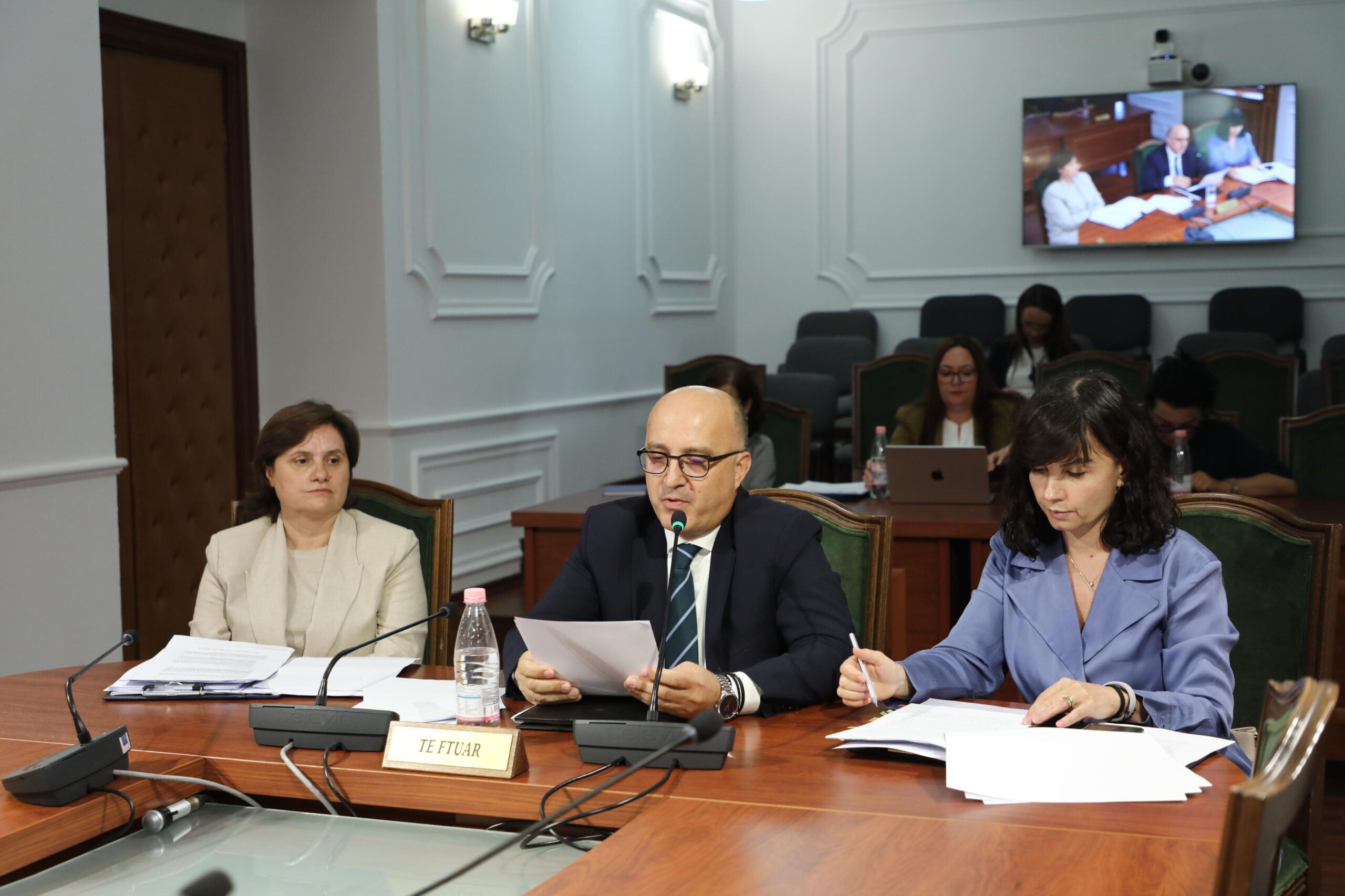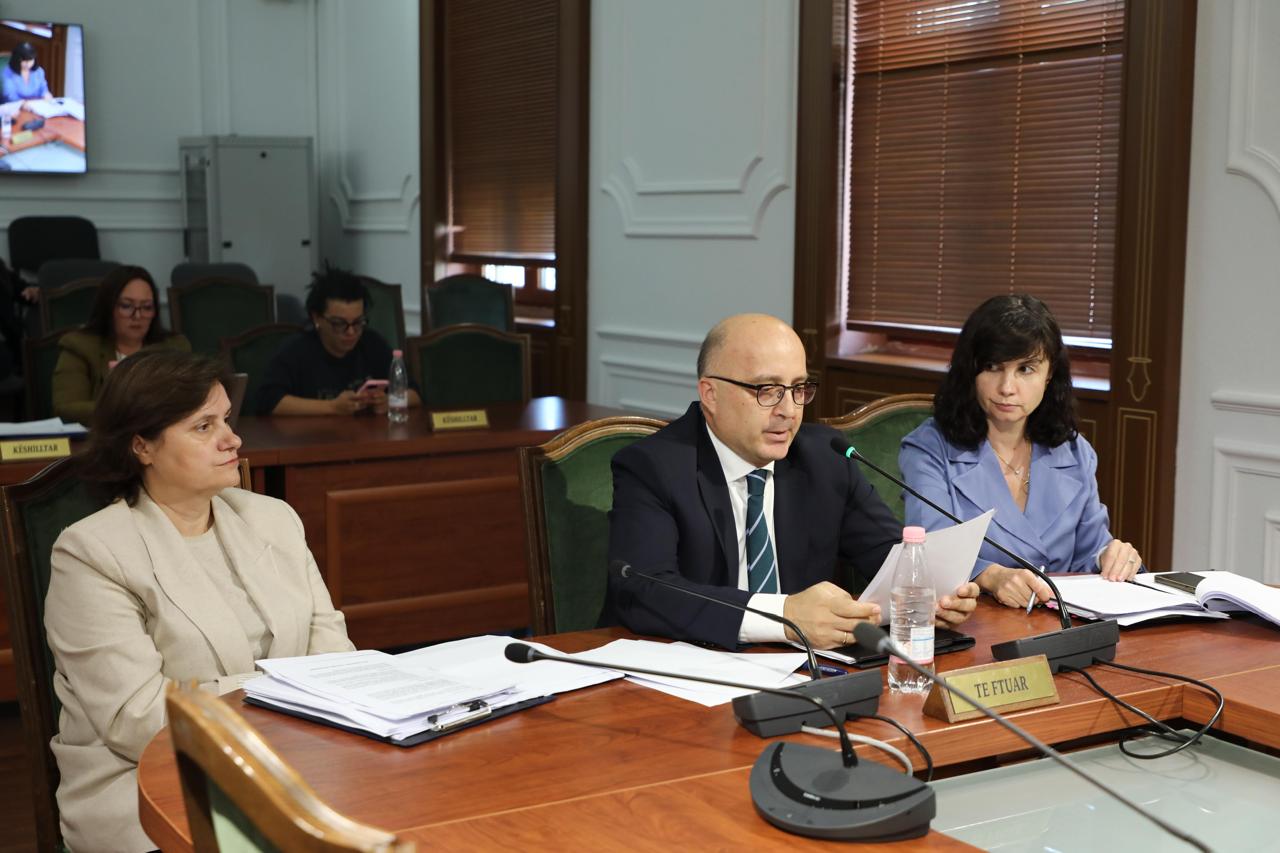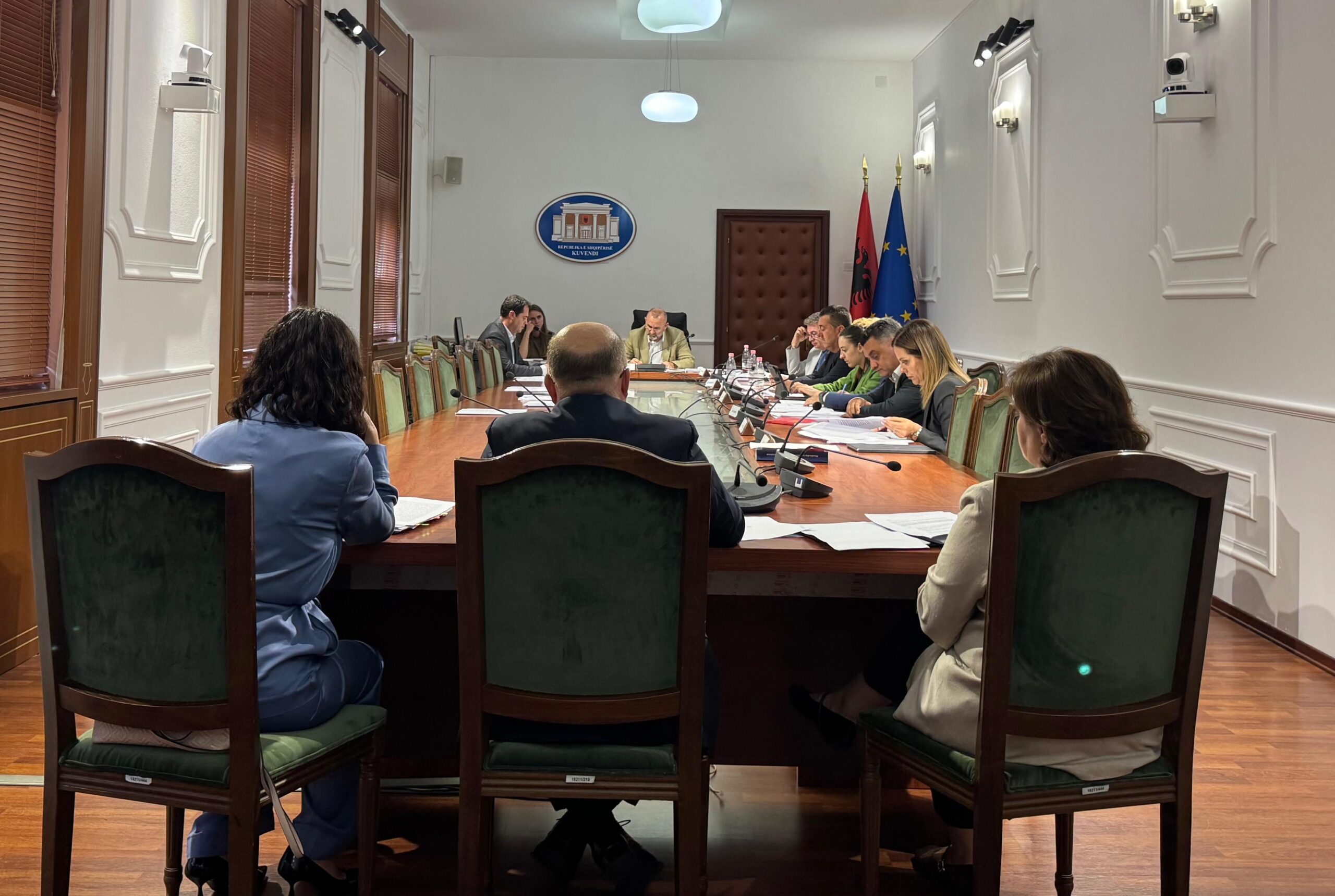

The High Inspector of Justice, Mr. Artur Metani, presented the 2025 annual activity report of the institution before the Committee on Legal Affairs, Public Administration and Human Rights of the Parliament of Albania. During the presentation, he outlined the institution’s main achievements, the challenges and issues encountered in carrying out the functions of the High Inspector of Justice and responded to the questions and inquiries of the Members of Parliament.
Full remarks of the High Inspector of Justice, Mr. Artur Metani:
Honourable Chairman Manja,
Honourable Members of Parliament,
It is a pleasure to present the report to the committee, not only as an elegance of a constitutional obligation of the High Inspector of Justice, but also as a very good opportunity, as it has been these 6 years, (whenever the High Inspector of Justice has reported), to also exchange views with the honorable members of parliament, but also to share suggestions or remarks regarding the work done by the justice institutions. Even though 15 minutes is the speaking limit, I think it is an opportunity and it is the only opportunity to express also the opinions we have in relation to each other’s work, the trust we have in each other’s work and the respect we have for each other’s work. Secondly, you made the presentation. I am accompanied in this reporting by the Secretary General Dëshira Pasko, but also Ms. Pelushi, who was recently elected as the Deputy High Inspector of Justice. After 6 years, the office now has a Deputy High Inspector of Justice, as a legal obligation that follows after the fulfillment of certain criteria that the candidate had to meet, so I wanted to introduce to you the Deputy High Inspector of Justice in this capacity
In presenting the report, I have decided to focus on two main aspects: first, the level of implementation of the recommendations of the Assembly Resolution for the year 2025 and the measures undertaken by the Office of the High Inspector of Justice in order to fulfil them; and second, several issues identified during the exercise of the institutional activity, identified through citizens’ complaints, disciplinary investigations and thematic and institutional inspections carried out by the Office of the High Inspector of Justice throughout 2025.
For the Office of the High Inspector of Justice, the Assembly addressed 8 (eight) recommendations for the year 2025, which relate to strengthening the effectiveness of inspections, monitoring the implementation of recommendations, inter-institutional cooperation, the digitalization of processes, the analysis of citizens’ complaints, public communication, and the assessment of the impact of the inspection activity carried out by the institution of the High Inspector of Justice.
An analysis regarding their level of implementation shows that all recommendations have been fulfilled, accompanied by concrete administrative, organizational and regulatory measures. In this context, throughout 2025, High Inspector of Justice approved internal acts for the monitoring of recommendations and reporting through measurable indicators, provided for and planned the calendar for follow-up inspections, and strengthened the mechanisms for analyzing the issues identified through citizens’ complaints.
Particular attention has also been devoted to the recommendation concerning inter-institutional cooperation with the governance bodies of the justice system and other institutions, especially with regard to access to electronic systems and the development of digitalization processes, by participating actively and proactively in cooperation with the Councils and with the Prosecutor General concerning the identification of needs and the provision of data regarding access to the electronic systems of the courts and prosecution offices. Concrete steps have also been taken towards establishing the electronic case management system of the High Inspector of Justice, with the aim of increasing the efficiency, transparency and traceability of the complaint review, investigation and inspection processes.
It is important to emphasize that, in implementing the Assembly’s recommendations, the analytical dimension of the institution’s activity has also been strengthened through the drafting of reports on the themes of complaints, while the public communication and legal education activities have been expanded. At the same time, a comprehensive analysis of the inspections carried out during the period 2020–2025 has been completed, providing an assessment of the issues identified, the impact of the recommendations, and the needs for the further development of the activity of the Office of the High Inspector of Justice, in accordance with the state of organisation and functioning of the judicial power during this period.
Therefore, the recommendations made by the Assembly have not only been fulfilled by the institution of the High Inspector of Justice, but have also produced improvements in work processes that further highlight the activity of the High Inspector of Justice.
From the perspective of the High Inspector of Justice, this report does not merely constitute an overview of the quantitative indicators of the institution’s activity, but also an opportunity to assess the functioning not only of the mechanisms of accountability and responsibility of magistrates, but also the effectiveness and quality of the functioning of the judiciary in Albania today. In this regard, I believe that the assessment of the activity of the High Inspector of Justice during 2025 can and should go beyond the number of processed complaints , inspections carried out, investigations conducted, disciplinary proceedings initiated, or disciplinary measures imposed on magistrates. Although, even in this aspect, the work of the High Inspector of Justice has produced results this year as well.
During 2025, a total of 3,272 complaints were administered (1,792 new complaints and 1,480 carried over), half of which were reviewed during the reporting year 2025. During 2025 alone, 1,635 complaints were processed. The number of complaints processed is high, showing that the mechanism for verifying complaints and for verifying the work of judges and prosecutors functions properly. Here, there may also be a question or concern that the number of complaints processed is very high compared to the number of initiated disciplinary investigations conducted or requests for disciplinary proceedings. However, as I have also emphasized on previous occasions before this Committee, the ratio between the number of processed complaints reviewed and the investigations (12), or disciplinary proceedings (8), does not in itself constitute an indicator that the disciplinary process for magistrates is not functioning. On the contrary, this ratio clearly demonstrates that the complaint-reviewing process functions very well as a filtering mechanism, or preliminary stage for examining allegations against the activity of magistrates, aiming to distinguish unfounded complaints from those containing sufficient factual and legal elements to initiate an investigation or disciplinary proceedings.
The examination and verification of allegations concerning approximately 1,650 work files of judges and prosecutors, through the issuance of full and reasoned decisions regarding those allegations, demonstrate that magistrates feel the weight of the verification of their work, in accordance with the constitutional protocol and the law. It is important to emphasize here that investigation and disciplinary proceedings are not “emotions” of the Office of the High Inspector of Justice, but standards that have been followed since the very first day of work, maintaining the same working principle in verifying allegations concerning the work of judges and prosecutors. It should also be emphasized in this regard that the standards established by law for investigations and the evidentiary requirements during disciplinary investigations and proceedings are very high, with the aim of guaranteeing the rights and independence of magistrates.
Therefore, for the High Inspector of Justice, what is important is that every judge and prosecutor of the Republic clearly understands and feels that their work is subject to review, that allegations concerning their work are verified one by one, and that no one has evaded investigation or disciplinary proceedings when they have deserved them. At the same time, however, High Inspector of Justice respects the constitutional protocol, not as an inability or a desire to shield magistrates from responsibility, but as a standard established by the Albanian legislator, as well as by legislators throughout the democratic world, in order to preserve a proper balance between independence and accountability.
The data show that today, after six years since the establishment of this Office, for approximately 8,000 complaints handled by the High Inspector of Justice, the institutions reviewing the decisions of the High Inspector of Justice, such as the Councils, Appeal Chamber, and even the European Court of Human Rights, have not found in any case that the verification of complaints or the investigations conducted by the High Inspector of Justice were incomplete, unprofessional, or based on double standards because, from the perspective of the High Inspector of Justice, the rigorous application of constitutional standards, rather than the personal professional opinions of the Office of the High Inspector of Justice, is the only way to build an independent justice system. I believe this is the greatest contribution that an institution such as the High Inspector of Justice can make.
At the same time, in this regard, it should also be emphasized that the analysis concerning the disciplinary measures proposed by the High Inspector of Justice, or imposed by the Councils, should be analyzed and assessed in the spirit of the principle of proportionality. Disciplinary measures against magistrates are intended, first and foremost, to prevent and educate magistrates, and not necessarily to impose the maximum punishment. The proposal of a disciplinary measure by the High Inspector of Justice is based not only on objective criteria relating to the seriousness of the disciplinary violation, but also on the principles of individualization and proportionality, namely that the magistrate should receive the measure that is necessary and appropriate to achieve the purpose of the disciplinary proceedings against him or her, in accordance with the disciplinary violation committed. For this reason, the application of the most severe disciplinary measures is not an indicator that the disciplinary mechanism functions more fairly or more effectively.
An analysis of the subject matter of the complaints shows that citizens’ main concerns relate to the excessive duration of court proceedings beyond reasonable time limits, delays in investigative actions, and delays in the reasoning of judicial decisions. Allegations concerning unfair decision-making by judges or prosecutors continued to constitute a considerable number of the complaints submitted by citizens throughout 2025.
During 2025, 1,792 complaints were submitted to the Office of the High Inspector of Justice. Of these: (i) 255 complaints regarding delays in court proceedings, or 14% of the total complaints received in 2025; (ii) 159 complaints regarding delays in investigations, or 9% of the total complaints received in 2025; (iii) 462 complaints related to the unfair decision-making, or 26% of the total complaints received in 2025; and (iv) 110 complaints regarding delays in the reasoning of judicial decisions, or 6% of the total complaints received in 2025.
Another issue currently faced by citizens concerns the way in which court hearings are conducted, in conditions where the necessary infrastructure is lacking, not only in terms of physical infrastructure, but also with regard to compliance with procedural requirements for conducting hearings with audio recording.
Meanwhile, prompted by several complaints that were subjected to verification during 2025, as well as by the information submitted by the courts of first instance of the general jurisdiction themselves, one of the issues facing the judicial system today concerns the productivity and effectiveness of magistrates in planning and conducting court hearings, as well as carrying out the necessary procedural actions to avoid unproductive court hearings. At the same time, compliance with the rules of ethics and solemnity also remains at the core of the work of the Office of the High Inspector of Justice.
These data are of particular importance because they demonstrate that the public perception of the justice system is not related solely to the individual conduct of magistrates, but also to broader issues concerning the functioning of the justice system. A considerable portion of these issues is structural in nature and goes beyond the individual disciplinary responsibility of magistrates. For this reason, I believe that the disciplinary mechanism cannot replace the general policies for the administration of the judiciary, the management of human resources, the financing of the justice system, or interventions of a systemic nature. In this aspect, High Inspector of Justice has continued to play an important role, not only as a mechanism for reviewing citizens’ complaints, but also as an institution identifying issues of a systemic nature within the judiciary.
Furthermore, in pursuit of this strategic vision, during 2025 thematic and institutional inspections of courts and prosecution offices occupied an important place in the exercise of the constitutional powers of the High Inspector of Justice. The selection of the topics for these inspections was carried out on the basis of a careful analysis of various sources of information, which served to identify the issues and priorities within the justice system. In this context, consideration was given to the subject matter of complaints submitted to the Office of the High Inspector of Justice, the periodic information transmitted by the courts and prosecution offices, as well as proposals or information received from other public institutions.
These inspections have played an important role not only in identifying and analyzing issues relating to the functioning of justice institutions, but also in strengthening the mechanisms of accountability and responsibility and in cases where elements of disciplinary violations were identified during the inspection process, the corresponding disciplinary investigations were initiated and, if the legal conditions were met, disciplinary proceedings were also commenced against magistrates. In this way, thematic and institutional inspections have served as an important instrument for ensuring compliance with professional and ethical standards, as well as for increasing the integrity and efficiency of the justice system.
For the seven (7) inspections carried out during 2025, a total of 75 recommendations were issued, of which 14 relate to the need for legislative or regulatory interventions, 46 are administrative in nature, and 15 are addressed to the institution itself. This structure of recommendations clearly demonstrates that the inspection function of the High Inspector of Justice is gradually evolving from a traditional model of individual oversight of magistrates towards a broader analytical function addressing systemic issues within the justice system.
Nevertheless, I wish to share with you that the analysis of the effectiveness of these recommendations is a process that requires continuous improvement. Within the Office of the High Inspector of Justice, this is an issue that is discussed on a daily basis with the unit of inspectors and the legal services, as well as with international partners assisting the Office of the High Inspector of Justice, in order to make this essential competence of the High Inspector of Justice as functional and effective as possible.
However, I believe that the analysis of the effectiveness of the recommendations of the High Inspector of Justice is also related to other factors and actors.
First, reforms in the justice sector and structural interventions are, and should be regarded as, long-term processes requiring considerable time to be implemented effectively and sustainably.
Second, the process of monitoring the implementation of the recommendations issued by the High Inspector of Justice requires time, while their effectiveness depends on the level of implementation by the responsible institutions, including the High Judicial Council, the High Prosecutorial Council, the Prosecutor General, the School of Magistrates, the heads of institutions, and the judicial administration.
Third, there is an essential need for a coordinated approach and inter-institutional cooperation, a long-term vision, and strategic planning among the new institutions of the justice system.
Fourth, in a justice system that is developing day by day and where systemic issues remain numerous, measurable quantitative and qualitative indicators are still lacking in enabling the assessment of the concrete impact of recommendations in reducing delays, improving performance, or reducing recurring issues concerning the organization and functioning of the judiciary.
However, despite the existence of these factors, a considerable part of the assessment of results is carried out through continuous monitoring and analysis by the institution of the High Inspector of Justice, through follow-up inspections aimed at monitoring the implementation of the recommendations issued. In this regard, the High Inspector of Justice is working on drafting a specific methodology concerning the monitoring and follow-up of the implementation process of the recommendations issued within the framework of thematic and institutional inspections.
Honourable Members of Parliament,
In continuing this report, I wish to present some of the main issues, or matters of importance, which throughout 2025 have continued to affect the functioning and efficiency of the justice system. These issues include structural, procedural and institutional aspects that require particular attention and coordinated action among the responsible institutions, with the aim of improving the standards of justice and increasing public confidence in the institutions.
First, one of the measures that has had a direct impact on individuals’ access to the justice system is the reorganization of the courts within the framework of the judicial map. The High Judicial Council has the duty to continuously monitor the consequences and effects of this reorganization, by analyzing whether this judicial map has achieved the objectives for which it was approved and, in particular, to what extent the right of access to justice has been guaranteed, to what extent the efficiency of the services provided to the parties has increased, and what effect it has had on the judiciary. Only such an analysis can constitute the necessary basis for the possibility of reconfiguring the judicial map within a shorter timeframe, should this be considered necessary and indispensable. In addition to such an analysis, any further reorganization should be accompanied by a prior assessment and the guarantee of the necessary infrastructural, administrative and functional conditions before it takes effect.
Second, compliance with the rules of solemnity, communication and conduct of magistrates in their relations with their superiors, the parties to proceedings and their colleagues constitutes another issue identified both in the content of complaints and through verifications initiated ex officio by the High Inspector of Justice. In these cases, regardless of the differing positions regarding whether or not to impose the disciplinary measures proposed by the High Inspector of Justice concerning compliance with ethics and solemnity in judicial proceedings or investigative activity, the Councils should play a more active role by taking concrete measures to analyze these cases through the Ethics Counsellor and by providing guidance on the manner of conduct and behavior that magistrates should follow in similar situations.
In particular, it is considered that the High Prosecutorial Council should adopt the necessary instruments to guide the model of conduct that magistrates should follow in cases of ethical dilemmas, through the issuance of the relevant opinions in order to prevent possible ethical violations by prosecutors. It is important to emphasize that disciplinary proceedings should constitute the last corrective mechanism for ensuring compliance with ethics by magistrates. At the same time, cooperation with the School of Magistrates should be strengthened in the context of the continuous training of magistrates, particularly those with fewer years of experience within the system, through the organization of more frequent training sessions and their individualization for cases referred by the High Inspector of Justice. Simultaneously, attention should also be devoted to the continuing training of other magistrates through the preparation of topics with an awareness-raising and preventive effect aimed at avoiding conduct that may seriously affect the public’s perception of the justice system.
Third, alongside citizens, allegations concerning incorrect decision-making by magistrates are also continuously submitted by state institutions. It is also worth focusing on those institutions which, by virtue of the powers granted to them by the legal framework, are required to submit complaints setting out reliable information regarding the commission of a disciplinary violation, such as the Minister of Justice, the Prosecutor General, the heads of prosecution offices or the presidents of courts. In many cases, the facts submitted by these institutions have served as grounds for initiating disciplinary investigations and, after being subjected to the disciplinary investigation process, have resulted in proposals for disciplinary measures against magistrates.
In the disciplinary proceedings conducted, the High Inspector of Justice has relied on the standard according to which not every amendment or overturning of a judicial decision by a higher court may constitute, a priori, sufficient legal grounds for disciplinary proceedings against the magistrate, unless it is established that the decision was in manifest and flagrant contradiction with the law or with the unifying case law of the High Court, resulting in damage to the standing and reputation of the magistrate. In cases where complaints submitted by institutions have been archived, High Inspector of Justice, following their verification, has concluded that the institutional allegations should be resolved through the internal mechanisms of judicial review and that, in the exercise of their discretion in the application and interpretation of the legal framework, magistrates had not committed elements constituting disciplinary violations.
At the same time, in this regard, the High Court, as a court of law, should take measures to resolve conflicts, avoid divergences and ensure consistency in the interpretation and application of the law. The process of modifying and unifying judicial practice, on the one hand, and the obligation of the ordinary courts to apply the nomophylactic decisions, on the other, serve the values of uniformity and predictability in the application of the law. Within this framework, the High Court, by assessing the differing positions or interpretations adopted by the lower courts, should address the need for legal certainty by exercising its constitutional function in ensuring the harmonization of the law and the coherence of jurisprudential guidance.
Fourth, in conclusion, I wish to emphasize that strengthening the justice system cannot be achieved without sustainable and functional coordination among all the responsible institutions. Cooperation and coordination between the High Judicial Council, the High Prosecutorial Council and the High Inspector of Justice are necessary in areas affecting the activity of magistrates and, in particular, in the submission of proposals for the conduct of thematic inspections. The institution of the High Inspector of Justice has been committed, and continues to provide its maximum commitment, to developing a culture of institutional cooperation and coordination, whereby all institutions of the justice system, such as the High Judicial Council, the High Prosecutorial Council, the High Court, the School of Magistrates, as well as other institutions such as the Assembly and the Ministry of Justice, work on joint strategic action plans aimed at improving the quality of justice and strengthening citizens’ trust. This process requires a long-term vision, a structured implementation plan and continuous evaluation of results, so that every recommendation is transformed into an institutional reality. Only through cooperation and shared commitment can we guarantee a justice system that serves the citizen and functions on the solid foundations of professionalism, integrity and credibility.
In conclusion of this report, I wish to draw the attention of the Assembly of Albania to the fact that all the issues addressed show that the justice system is facing important structural and systemic challenges which require an integrated and coordinated inter-institutional approach. Shortening the duration of judicial proceedings, increasing the efficiency of investigations, strengthening institutional infrastructure, guaranteeing human rights standards, and unifying judicial practice constitute essential elements of a functioning justice system that is trustworthy for Albanian citizens. In this context, balancing the independence and accountability of magistrates, as well as strengthening professional ethics, are indispensable pillars for the consolidation of the rule of law. Only through sustainable inter-institutional cooperation and a shared reform vision can a more efficient, more transparent justice system be guaranteed, one that is closer to European standards and to the expectations of citizens.
Thank you for your attention, and I remain at your disposal for any questions or discussion regarding the activity of the institution during 2025.