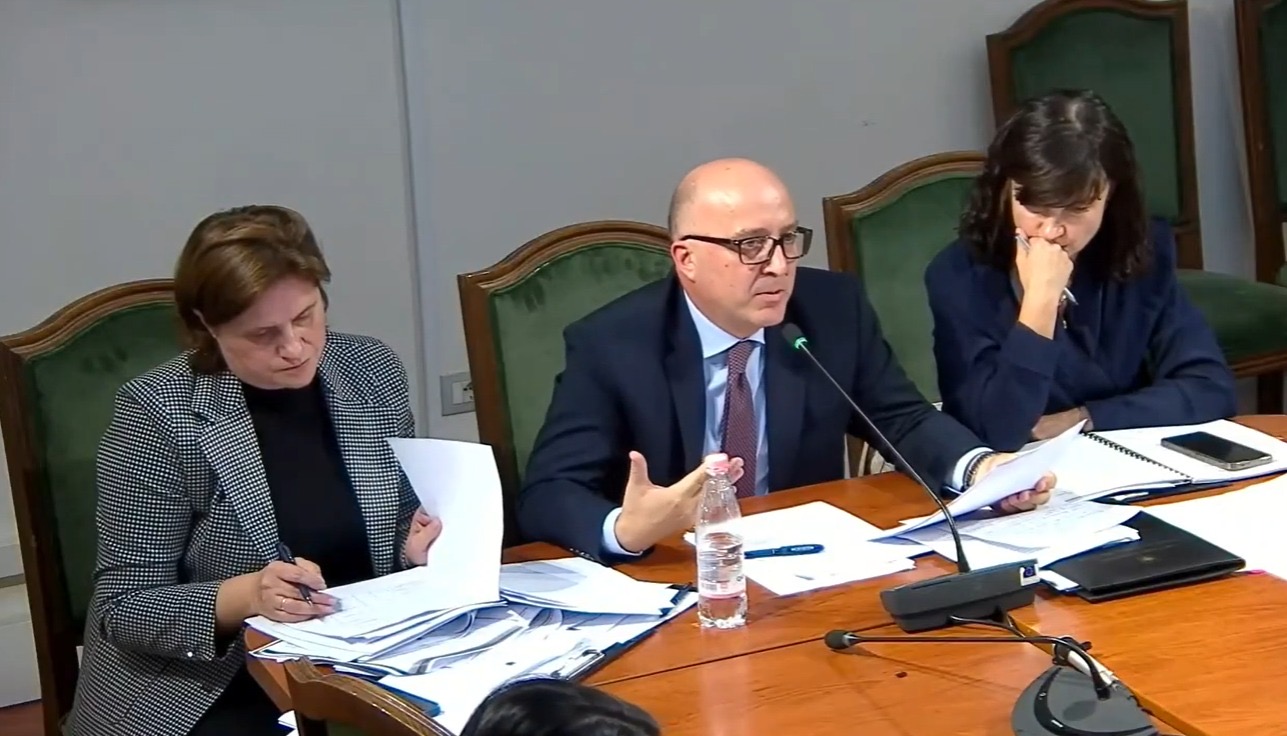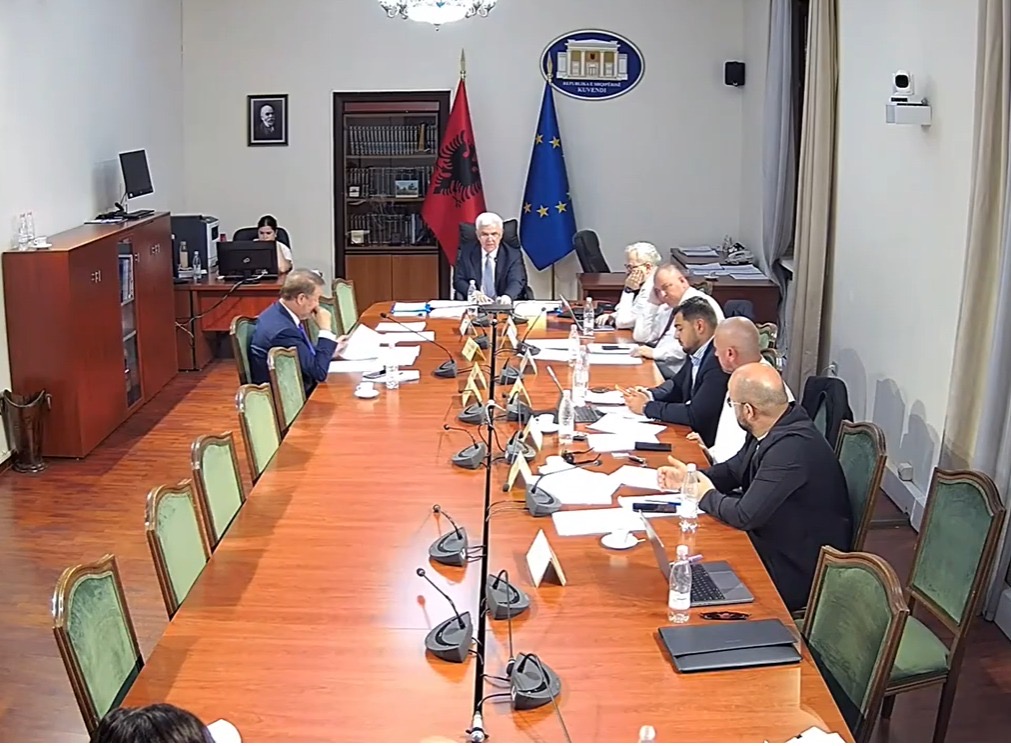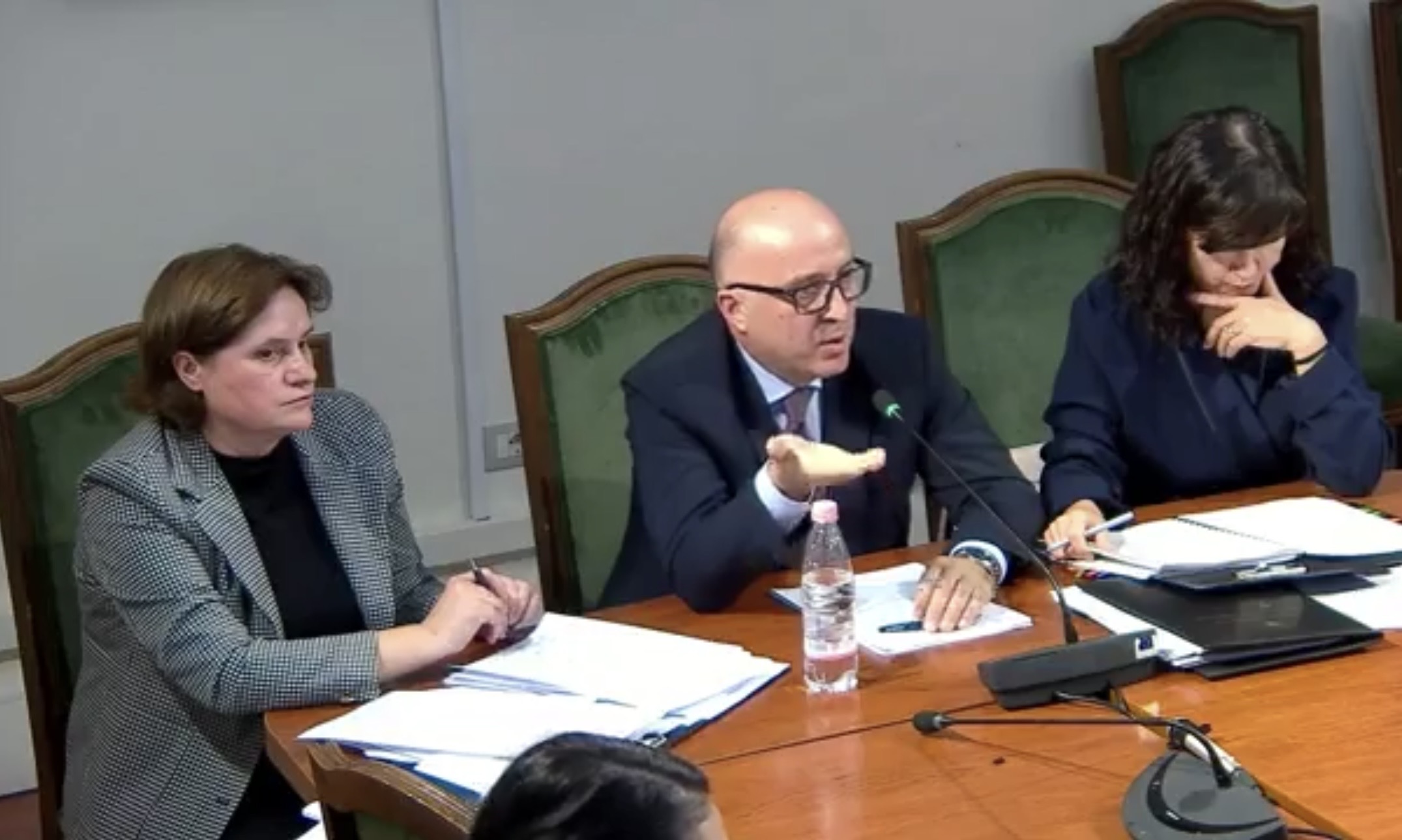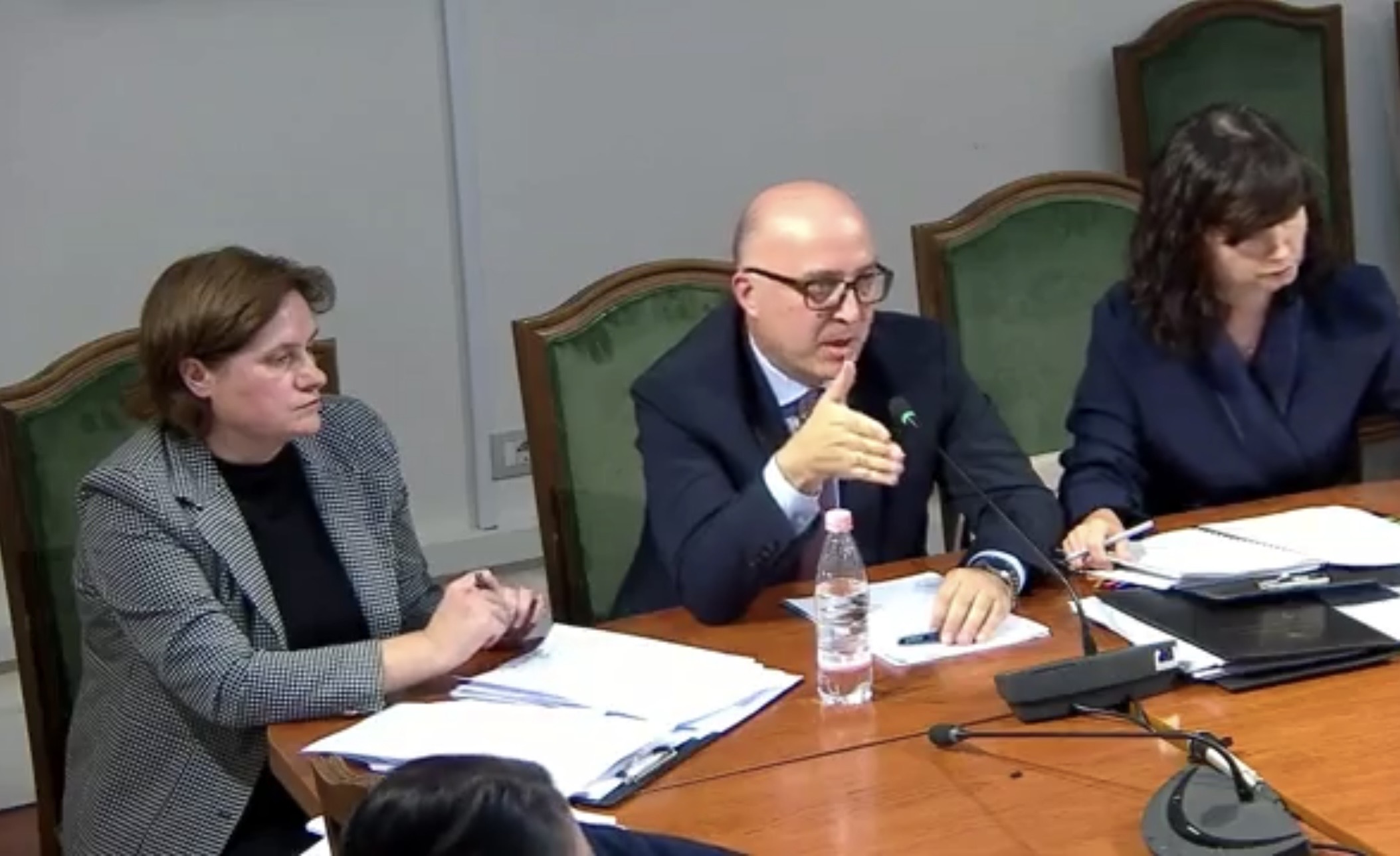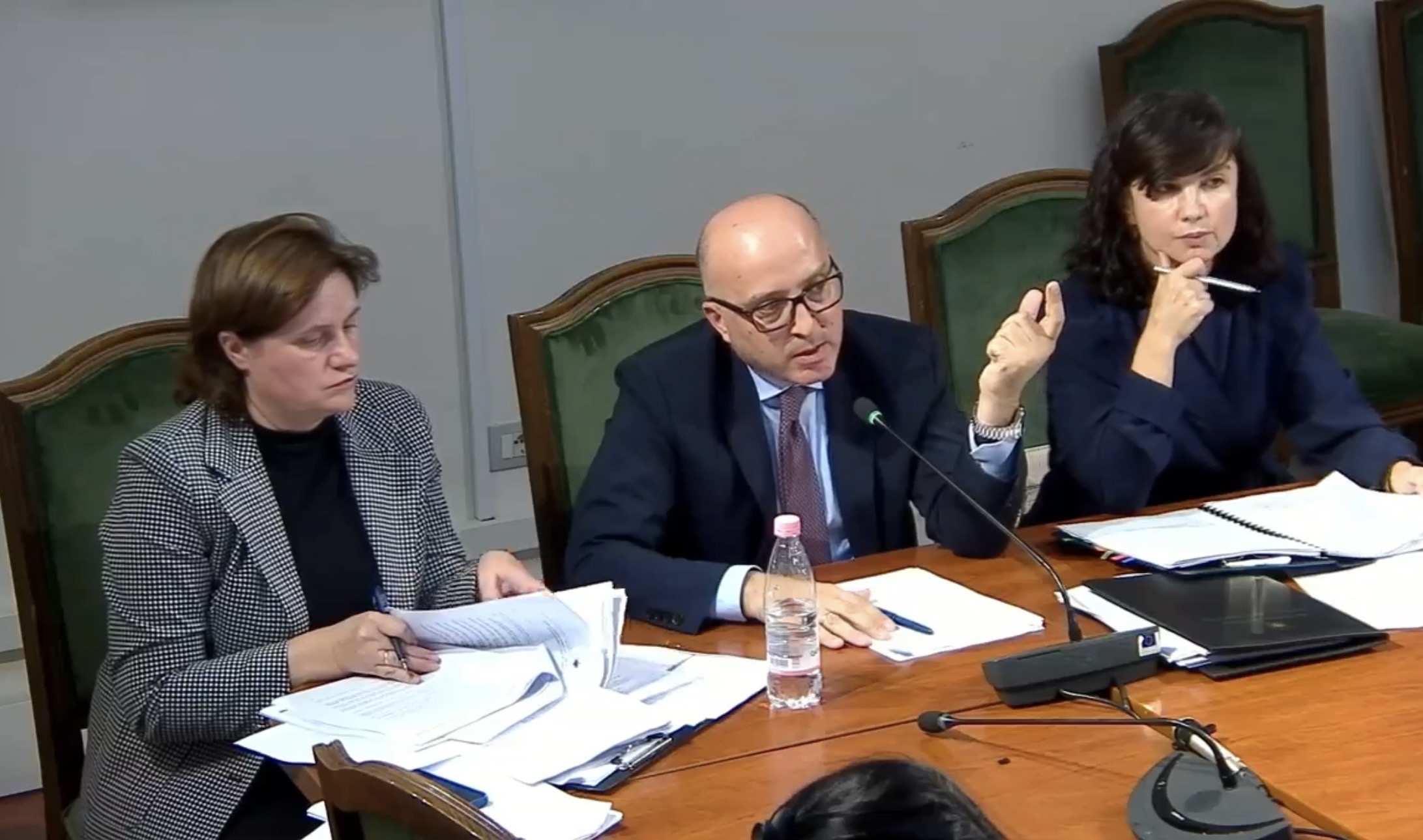
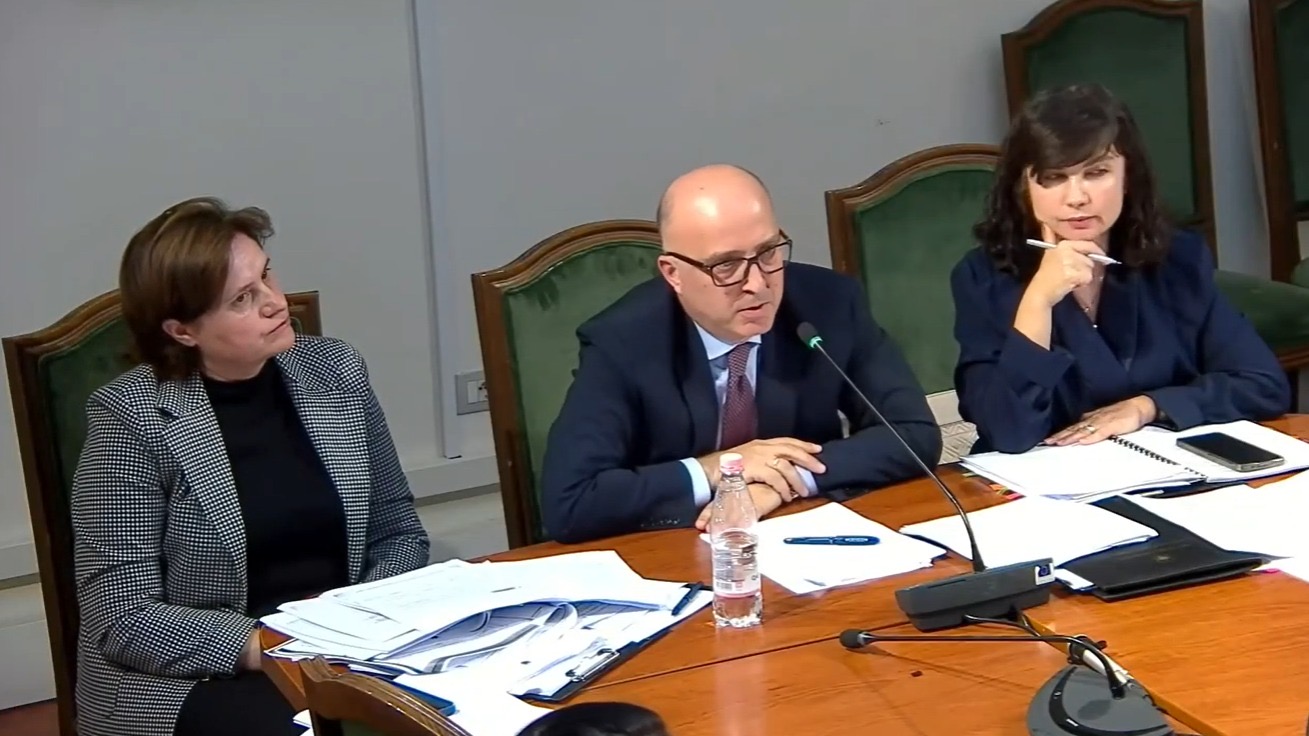
Q&A session with the HIJ before the Committee on Citizens’ Initiatives, Institutional Cooperation and Oversight
Committee Chairman Fatmir Xhafaj: As we said, Mr. Inspector, the MPs have the right to ask questions; you have the right to respond. We have set one minute as the rule, to be clear, for each of the questions. And at the end, after your remarks, only then may the MPs intervene. That means you are free to continue answering, but at the very end they may make a comment regarding the answers received. This is the methodology we have applied throughout this process. Yes, Mr. Hasalla, you have the floor, please.
MP Saimir Hasalla: Yes. I have grouped my questions into three sets, let’s say, concerning the growth in the stock of complaints and the real capacity to handle them. What are the concrete reasons why, during 2025, the HIJ handled fewer complaints than the number of new complaints filed? How many complaints have been pending for more than 1, 2, or 3 years? And what is the average time for handling a complaint? Regarding inspector vacancies and the impact on performance: how many recruitment or secondment procedures have been carried out, and why have they not led to the staffing structure being filled? And second, what measures are required from the HJC and the HPC for the secondment of magistrates? And one more thing: regarding the justice reform, this reform was not carried out specifically to protect judges or prosecutors, but to make them more accountable before the law and before citizens. In the law, in the law on the HIJ as well, the article, specifically Article 194, point 3, states: “The HIJ investigates suspected violations, mainly based on public data or data obtained in the context of institutional and thematic inspections, according to the conditions and procedures set out in the law on the status of judges and prosecutors in the Republic of Albania.” In the context of this article, my question is: how many of the investigations into violations has the HIJ initiated mainly on this basis, under this article? That was all I had. Thank you.
Committee Chairman Fatmir Xhafaj: Thank you, Mr. Hasalla. Mr. Metani, you have the floor for the answers.
High Inspector of Justice Artur Metani: My apologies, I didn’t turn on my microphone. So, there is no application at all from judges. This is as far as judges are concerned, for magistrate inspectors. As for non-magistrate inspectors, four calls for applications have been made. In three of the calls, there are processes that are taking longer, because it is a vetting process carried out during recruitment, and it does not depend on the HIJ’s work, it depends on the response of other institutions.
MP Saimir Hasalla: Have they been closed? Is the fourth one in progress?
High Inspector of Justice Artur Metani: In three of the calls, the verifications have been carried out, and the fourth is in progress. In the first two calls, a number of inspectors were recruited; in the third, none were recruited because the candidates were not found to meet the criteria set out by law, or the professional assessment made by the Justice Inspectorial Commission regarding the candidacies. We are waiting for the announcement to be closed by the High Judicial Council, but I do not believe there will be applications from judges. In fairness, I also link this to the matter of the law. Five years ago I already asked that the relationship between the law and the matter of employing, or seconding, inspectors to the High Inspector of Justice should at the very least be the subject of debate, because we had requested legal amendments, I have said this several times, including in the Law Committee, when we gave our reports. I understand there has been a discussion, because what is being asked for is a systemic change and it is not simply a matter of lowering the criteria for magistrates who would be seconded or would apply to be inspectors at the Office of the High Inspector of Justice. But in any case, it is a concern that the Office of the HIJ has, or had, in the proposals we sent before the legal amendments were made. Being multi-dimensional, they were not all approved in the Assembly; some of them were approved. Let’s see whether these changes have been effective, but the first call showed that there has not been increased interest from judge-magistrates in the position of inspector at the Office of the High Inspector of Justice. Second, regarding the fact whether or not it is related to the complaints, no, then, regarding the complaints. Regarding, there were three questions, on fewer complaints. On average, the same number have been handled as last year, if not more. Secondly, rather, the number of thematic inspections has increased, and taking this ratio into account, and assessing it also against the number of inspectors at the Office of the High Inspector of Justice, I think this is the assessment that should be made of the figures. Third, the number of complaints increases a great deal in certain periods. I don’t know why. It happens that over a quarter, the number of complaints reaching the Office of the High Inspector of Justice almost doubles. So, speaking in figures, in 2024 we handled 1,374, while in 2025 we handled 1,635. So the number of complaints handled by the Office of the High Inspector of Justice has increased, and this is my assessment of this ratio between incoming complaints and those handled. It is difficult to measure the time it takes to handle a complaint, because it depends on many factors: the complexity of the case, the number of magistrates against whom the citizen or institution is complaining, and the stage the case is at when the citizen files the complaint. So it is difficult to give a… it can range from a day to a week, depending also on the response we receive from institutions regarding the verification of the complaints we carry out. I do want to point out here that a major convenience for the rapid verification of complaints has been the access to the system, that is, following the Assembly’s recommendation for HIJ access to the courts’ system. This greatly speeds up obtaining information, and there is no longer a need for written requests; we get it directly from the system, and so we are able to respond to citizens’ complaints more quickly, and the next question, again linked to the complaints… The number of complaints, at the moment I was elected High Inspector of Justice — that is, on 1 February 2020, when the institution was established, inherited from the other institutions was around 2,200 complaints. By the end of the first year it reached 3,300 or 3,400, while at work there was only the High Inspector of Justice and one other inspector. And for this reason, when the other inspectors who were seconded arrived, the prosecutor-inspectors, the need arose to approve a methodology for handling the backlog of complaints and those that were coming in. The methodology was approved, giving priority to the timing and nature of the case, and so on, and after this methodology and after the work done, the backlog was also cleared within a good time, and now we are handling, I believe in September we will begin handling the complaints from 2025 — that is, 2023 and 2024 are being finished; I am confident even by July, but I don’t want to say that; so in September we will begin handling the complaints from 2025 and 2026. Regarding investigations, how many investigations have been opened, how many were opened on our own initiative? Well, for 2025, two were opened on the initiative of the High Inspector of Justice. Two. I want to point out one thing here: that this is one of the issues we consider most delicate for the Office of the High Inspector of Justice; not individually, but institutionally — because we must maintain a fair balance between what is reported in the media and what may actually constitute a disciplinary violation by a magistrate, and what may actually constitute activity of the Office of the High Inspector of Justice, and of course the balance with the independence of magistrates, because naturally this institution was not designed or conceived to protect the independence of judges, perhaps as your words suggested, but the Office of the High Inspector of Justice has, over six years, rigorously respected the constitutional and legal protocol regarding the accountability and responsibility of magistrates, in relation to their independence. There is not a single case, neither among the proceedings carried out nor among the complaints handled, in which the High Prosecutorial Council, the High Judicial Council, the Special Appeal Chamber, or, in those cases where it has been involved, the European Court of Human Rights, has returned an act or a decision to the High Inspector of Justice as incomplete, unprofessional, or not in compliance with the law. These were the answers to the questions.
Committee Chairman Fatmir Xhafaj: Yes, do you have time? Yes.
MP Saimir Hasalla: When I spoke, I did not mean the HIJ specifically alone, I meant the justice reform as a whole, in general. And regarding that, I described it as having been done to make prosecutors and judges more accountable, first and foremost before the law, but also before citizens. That was all I had. Thank you.
Committee Chairman Fatmir Xhafaj: Thank you. I am confident that the High Inspector is also aware of the extraordinary role he has in this respect. So, I believe you both share the same view; that the High Inspector, the High Inspectorate of Justice, was created precisely to serve the other side of the coin of accountability, while protecting and respecting their independence, of course.
MP Saimir Hasalla: Yes.
Committee Chairman Fatmir Xhafaj: No, no, there’s no need. It isn’t a question.
MP Saimir Hasalla: No, this is a comment.
Committee Chairman Fatmir Xhafaj: No, don’t make a comment. You can make your comment at the end. Yes, Mr. Gjoni?
MP Gjin Gjoni: Thank you, Mr. Xhafaj. Thank you, Mr. High Inspector. My questions relate to what the European Commission has normally identified. The problems of vacancies and lack of capacity persist. Strengthening of the integrity and inspection mechanism is needed, and an increase in the efficiency of disciplinary procedures is called for. These are three of the findings that normally exist. In relation to this, I have a few questions concerning: the record volume of complaints versus human capacity. And in this specific case, it turns out that we are facing a large influx of complaints from citizens; 3,200 complaints handled for review, and a limited number of inspectors, for which, in this specific case, you gave an explanation that in the case of magistrate-inspectors it is very difficult, and in the case of non-magistrates there are no applications, even though you issued the announcement.
MP Saimir Hasalla: There have been applications.
High Inspector of Justice Artur Metani: There have been, but they do not meet the criteria. Some of them, to be…
Committee Chairman Fatmir Xhafaj: Let’s finish with the questions. As for the questions, you will answer at the end.
MP Gjin Gjoni: And my question is: apart from the legislative changes, do you, as High Inspector of Justice, have any other mechanism to make it more attractive for these people to get involved, and to reduce the number of complaints? Second is the large gap between complaints and disciplinary proceedings. And this is another point that is commonly encountered. And I understand that you have archived 1,200 complaints because they concern the merits of the case, which is not within your competence, as that falls to the higher courts. But of the other complaints, which are individual complaints, in every instance, what are the problems we encounter most often? Is it most often the protraction of trials, the delayed reasoning of a court decision, or is it matters of ethics and professional integrity? The next question concerns resistance to, or rejection of, requests by the HJC and the HPC, which is a problem that is encountered. In this specific case, shouldn’t the work and the way the High Inspector or the responsible inspectors operate be improved, to increase the efficiency and the manner of procedural investigation, or the other steps, so that requests become acceptable to the High Judicial Council and the High Prosecutorial Council? And regarding the cases of disputes that have become public at the Inspectorate, excuse me, at the High Prosecutorial Council — is there room for the High Inspector of Justice to open a disciplinary investigation in that specific case? Because these are events which, normally, and up to the present moment, over a six-year period, we have not seen even a single member of the High Judicial Council or the High Prosecutorial Council brought before such an inspection. And the last question concerns thematic inspections. Have you carried out thematic inspections regarding the courts’ stance on criminal offences of corruption, money laundering, and matters that have an effect on public trust in justice, which are the most sensitive issues today? And do we have cases of disciplinary proceedings being brought against judges who endlessly drag out the adjudication of cases and the reasoning of their decisions, which I believe is one of the very great cancers today in the matter of the backlog and of the reasoning of decisions in the justice system? And the last question: have we lost any procedural deadlines because of the protraction of complaints? Because there is a procedural deadline. When it starts, when it ends, and how it proceeds, so that it does not become time-barred. Thank you.
Committee Chairman Fatmir Xhafaj: Yes, thank you, Mr. Gjoni. Mr. Inspector, your answers please; one minute for each of our colleague’s questions.
High Inspector of Justice Artur Metani: Well, starting from the last question: there are no procedural deadlines being missed with regard to disciplinary investigations and disciplinary proceedings, in no case. Regarding the first question: there is no other mechanism by which the low number could influence the number of complaints. The mechanism we have found is, first, a methodology to shorten the timeframes within which complaints are handled; such as this access to the system, for example — or repeated complaints, or matters that have nothing to do with the work of the High Inspector of Justice, that is, matters that perhaps fall to other bodies, or matters that are in ongoing judicial proceedings. And I think it has worked, because the very increase in the number of complaints handled, from around 1,300-something to around 1,600-something, undoubtedly shows greater work by the inspectors, limited in number as you said, and this is also accompanied by an increase in the number of thematic inspections. And I believe we agree that thematic inspection is excellent work. And this is excellent work carried out by the inspectors, both on the basis of the findings the inspection produces and on the basis of the recommendations it makes, in order to address the problems the justice system has, in a systemic way. And I think this is one of the greatest efforts brought by the group of prosecutor and non-magistrate inspectors of the Office of the High Inspector of Justice. Regarding the gap between disciplinary proceedings and the number of complaints — that is, the high number of complaints, perhaps seen this way from the outside, I too would agree with you, but I hold a different view, to tell the truth. First, the accountability system for magistrates has two major components. The first is the system of answerability, and the second is the system of responsibility. The system of answerability concerns appointment, or entry into the School of Magistrates, appointment by the councils, training by the School of Magistrates, promotion, ethical-professional evaluation by the councils, the promotion of judges according to criteria, of prosecutors according to criteria, the internal reporting within the system — that is, the role that the High Court has and must play in unifying judicial practice, the role of international jurisprudence in unifying the standards that the judiciary, the judicial power, and Albania’s justice system must have — and then, of course, these are accompanied by asset verification, or the other background checks carried out by other institutions. After that comes the system of responsibility. The system of responsibility, which comprises: first, criminal liability; second, civil liability in the cases it provides for; and third, disciplinary liability. So, I think the entire system has to function, and it cannot be demanded of the system, or of certain bodies, that the last link function without all the links before it functioning. Because this turns the system into exhaustion and overstrain, not only a major one, but, ultimately, one with an unconstitutional effect too, because disciplinary proceedings cannot solve the troubles the system has today, or disciplinary proceedings alone. It is a complex of factors. That’s the first point. Second, a disciplinary investigation is not a matter of emotions. That is, it does not depend on the emotion of the High Inspector of Justice, or of the responsible inspector who has handled the case. It depends on the criteria set out by law, and on the standards also set by the Councils, in the reports we have submitted when we have brought proceedings against magistrates. The handling, the very handling of the 1,600-odd complaints shows…
MP Gjin Gjoni: 1,200 are reasoned.
High Inspector of Justice Artur Metani: Yes, yes, all of them, if you’d like. The point is, this isn’t the discussion. The discussion is…
Committee Chairman Fatmir Xhafaj: Mr. Inspector, I believe you should answer our colleague in an ethical manner.
High Inspector of Justice Artur Metani: Forgive me if…
Committee Chairman Fatmir Xhafaj: This isn’t a matter of “if you’d like.” This isn’t…
High Inspector of Justice Artur Metani: It was simply a manner of speaking…
Committee Chairman Fatmir Xhafaj: No, no. Well, fine, agreed. You will need to watch your manner of speaking. Just as we are careful with you.
High Inspector of Justice Artur Metani: Well, I have never questioned it, but neither has anyone ever questioned my ethics… OK. 1,650 complaints have been handled. That means 1,650 case files have been handled. They have been taken up with the courts and prosecution offices. 1,650 decisions have been issued, which have reached the hands of the complainant, but also of the magistrate, who has had the complaint and the position of the High Inspector of Justice explained to him in accordance with the law. Which means the magistrate, every magistrate among these 1,600-odd who were reviewed, has felt that the accountability system toward them works. And not necessarily through a disciplinary investigation or disciplinary proceeding. This, in my view, is more important: that judges feel that the system which monitors their work in a constitutional manner functions at its best. There is not a single case that has come before the Office of the High Inspector of Justice in which someone has escaped disciplinary responsibility when they deserved it. Not a single case. This is verified, or also supported, by the complaints citizens have made against the rulings of the High Inspector of Justice, which have gone to the relevant Council. And in no case have the Councils ruled that the rulings of the High Inspector of Justice were incomplete in the investigation carried out, or in the verification carried out, or unprofessional. And for me, this is the standard I would personally judge by. Resistance from the Councils in relation to the proceedings carried out. To tell the truth, we undoubtedly discuss with the inspectors every decision taken by the Councils, in the sense of identifying a standard that we may not have assessed correctly. In no case have we assessed any shortcoming in our own work, and we base this not only on the analysis we carry out on ourselves, but also on the fact that all the disciplinary proceedings that the High Inspector of Justice has sent to the Councils have been subjected to a review by inspectors of the Spanish High Judicial Council. And the report they produced is on file. And of all the disciplinary reports we have sent to the Council, according to the assessment of these inspectors from outside Albanian institutions, there have been only two remarks concerning the High Inspector of Justice. The first, that the disciplinary investigation report, that is, the request for proceedings, is too long. And the second concerns a measure that the High Inspector of Justice requests, for the reduction of salary. According to the Spanish inspectors, this is a measure that perhaps affects not only the judges but also affects the judges’ families. So on this point, the inspector should be more careful in seeking this measure. And third, in no case, when the Councils have rejected a request from the High Inspector of Justice, has it been sent back to the High Inspector of Justice on the grounds that the investigation was incomplete. It is a matter of assessment and discretion by the Councils in relation to the measure generally, and not in relation to the findings made by the High Inspector of Justice, or the investigation carried out by the High Inspector of Justice.
MP Gjin Gjoni: About the corruption inspection in…!
High Inspector of Justice Artur Metani: The thematic inspection regarding corruption, or money laundering? I may have said this in other reports as well, in the other committee, last year too. But the way we draw up our inspections, the calendar of thematic inspections, is as follows. First, we do an analysis of all incoming complaints. That is, we compile a summary of what citizens complain about most, so as to address it also through thematic inspections. Second, we seek the opinion of justice institutions, such as the Councils, the Prosecutor General, and the Minister of Justice. Not in every case have the institutions responded, but in any case, in the cases where they have responded, we have generally made it part of the inspection calendar, of course also balancing it against requests coming from other institutions, and against the number of inspectors we have, with the resources we have, so as to carry out a number of inspections that we can complete on time. Up to now, the number of thematic inspections has been increasing. Each year we started with 5 or 6; today we have 9 thematic inspections, which we hope to complete by the end of the year.
MP Gjin Gjoni: What are the proceedings for?
High Inspector of Justice Artur Metani: As for the request for… that specific request you asked about has not been part of any proposal received, either from the institutions we consulted for their opinion, or as a phenomenon arising from citizens’ complaints. As I said, citizens generally complain about the protraction of judicial proceedings, the delayed issuing of the reasoned decision, and unjust rulings. There have also been ethics matters, and we have intervened there, or conflict-of-interest matters, and so on. So there has not been a phenomenon that we would need to address arising from complaints about corruption or money-laundering matters.
MP Gjin Gjoni: You mentioned protraction?
High Inspector of Justice Artur Metani: Yes, proceedings for protraction, yes. We have also carried out thematic inspections that have also resulted in disciplinary proceedings, but also individual inspections, that is, of citizens’ complaints, which have undoubtedly also led to disciplinary proceedings. For repeated delays, we have brought 5 cases. For unjustified or repeated failures to perform duties during adjudication, there are 4 cases. For acts or omissions committed by a magistrate that bring about unjust benefits or damages for the parties in judicial proceedings, there are 3 cases. And so on. But for repeated delays, we have proposed severe measures indeed, even last year we proposed severe measures. The Council did not find the proposal made by the High Inspector of Justice appropriate, in two cases we brought for protraction, or for the delayed issuing of the reasoning of court decisions. Nevertheless, this is a matter for the Council’s assessment, in relation to… the message that the institutions must jointly send, in relation to citizens, or to citizens and prosecutors. But this is a matter of discretion, and it is not a matter that can be subject to any further assessment on our part.
Committee Chairman Fatmir Xhafaj: Excuse me. Yes, Mr. Gjoni, you have the right to comment on the answers to the questions…!
MP Gjin Gjoni: Thank you, Mr. Chairman. Thank you, Mr. High Inspector of Justice. Starting from the constitutional framework, today you are the institution which is the nerve center of the justice system. And normally, today you are the strongest institution that Albania’s justice system should have today, at least according to the constitutional framework. And all the other institutions, starting with the High Council of Justice, the High Judicial Council, the High Prosecutorial Council, and the other institutions, normally including the special courts and SPAK as well, should today be subject to even greater oversight on the part of the inspector. All the answers you have given me, up to this present moment, were answers more or less of a theoretical character, a legal and constitutional explanation. And as for the matters that go to the heart of the problem, it is not that they were touched upon, for a very simple reason: today, to shorten by 15 days the adjudication deadline for a case from the Court of First Instance up to the High Court, I believe, is a problem that relates to the public’s perception of trust in the justice system. And this is one of the main elements. The matters relating to the failure to give reasons for a decision; because Mr. Xhafaj has been Minister of Justice, and I have been a judge and a member of the High Council of Justice, there was no judge who could avoid it: if the reasoning of a decision took longer than 6 months, that judge would be sent for dismissal. And today you have judges who take even 1 year, even 1 year and more, and when the problem arises, today they remain in the system. And this creates this perception among people. Because I agree that on matters that go to the substance of the adjudication, it is not within your competence. But procedural matters, matters concerning the way the backlog drags on, which is one of the main problems and at the meeting we also had with the High Judicial Council and with the High Prosecutorial Council, one of the main points raised there; and Mr. Xhafaj rightly said that the issue for the European Union will be the issue of the protraction and the volume of the heavy caseload and the delays; which today the European Court of Justice will impose very heavy penalties in relation to the citizens who will have complaints. Another matter, regarding this verification by the Spanish inspector you mentioned to me, on what basis do you have it? Do you have any agreement, do you have any legal framework, do you have any mechanism, whereby you, before sending cases to the High Inspectorate of… excuse me, to the Council?
High Inspector of Justice Artur Metani: Yes.
MP Gjin Gjoni: Because it seems to me, under what legal framework do you receive this from an institution of another country, when you have no regulation for this? You simply have…!
High Inspector of Justice Artur Metani: No, no, no.
MP Gjin Gjoni: No, because it seems a bit little to have only 5 proceedings, and what matters most is that up to the present moment you have not given an answer regarding the members of the High Judicial Council, the members of the High Prosecutorial Council, in relation to inspections. Or regarding topics that concern the way they conduct themselves in relation to… Thank you.
Committee Chairman Fatmir Xhafaj: Thank you, Mr. Gjoni. Do you have a clarification as to why a misunderstanding arose regarding this matter of the Spanish Inspectorate?
High Inspector of Justice Artur Metani: Yes, thank you, Chairman. A misunderstanding, since it could have been a normal question and not a comment. In any case, there is a project between the Albanian Government and the European Union, a support project for the justice system, called “EU4Justice.” And this project, and this exchange of information, has been carried out within the framework of this project. So there is no agreement of the HIJ to send data back and forth, or to obtain confirmations from others, bypassing the confirmation of Albanian institutions. I said this as a professional argument. Second, I did not at any point speak in theory, I spoke to the standard. When you were a judge, it was a different situation, and now it is a different situation. And the assessment the HIJ must make is to gauge the workload judges have, not solely through their own fault, but also through negligence. And that is what we are doing. We have sent magistrates forward for dismissal to the Councils, and the Councils have not found the proposal made by the High Inspector of Justice to be well-founded. And I think this is something we need to discuss. (Interruption without microphone.) One second, just a second, please, let me finish. Regarding the ethical breach that occurred at the HPC meeting, which happened once, as I saw in the media; every matter that falls within the jurisdiction, or within the powers, of the High Inspector of Justice, we follow closely. And naturally we intervene when we judge that it is the role of the High Inspector of Justice to intervene in the work of another constitutional body, including on a matter of ethics. Of course, it should be said in parenthesis here that there has been no complaint from any member of the High Prosecutorial Council concerning ethics matters within the Council. And I think that accountability begins here, first and foremost, but this is an individual matter, it is personal. And this is, in the end, a matter of discretion. After consulting with the inspectors, at the general meeting of inspectors, in accordance with the law, we assessed when it is necessary to intervene and when it is not. We intervened over an ethical breach in one case involving a member of the High Prosecutorial Council, and we referred it for disciplinary measures to the responsible body, and we are awaiting a response on the progress of securing the procedure. That was it.
Committee Chairman Fatmir Xhafaj: Thank you. Any other questions? Are there other questions from colleagues? OK, I have a few questions. The first question is: How many of the inspections and disciplinary proceedings initiated by you reflect the findings of rulings by the High Court, the Constitutional Court, and the European Court of Human Rights regarding rulings that found open violations of the law, or professional incompetence on the part of prosecutors and judges? Some examples have even become public in the media, and these are flagrant violations. Is there a final ruling regarding them? To what extent have these served as leads for your inspections? Do you have concrete examples? Also, there are several unifying decisions of the High Court, of the Constitutional Court, and several rulings of the European Court of Human Rights, or, if you wish, including here also the general instructions that are not applied by prosecutors or judges, and their decisions are repeatedly overturned for this reason, which is not simply a misunderstanding, nor solely a matter of the independence of prosecutors and judges, but a misapplication of the law, whether intentional or not, and naturally also evident professional incompetence. Some examples of this nature were also presented here today by the Prosecutor General in his submission. The next thing I have relates to the efficiency and quality of the HIJ’s decision-making. What percentage do the inspectors and assistant inspectors who deal directly with inspection make up within your staffing structure? Since I have seen that you have also given a historical overview of inspection in Albania, how comparable is this to the Inspectorate that the Ministry of Justice used to have? And in my view, you have a staff several times larger than they had, but my question is: how does the number of disciplinary measures compare with the past? What is it that the High Inspector of Justice has changed, compared with the predecessor structures? Because it is true that the Inspector is an entirely new structure from the standpoint of its constitutional position, but inspection activity itself is not new in Albania. It doesn’t start in year… there is no year zero in this case. So it should allow us to make a comparison, I believe. How many inspectors did we have, how many people did we have who once did this work at the Ministry of Justice and at the High Council of Justice, how many disciplinary measures, and how many judges were subjected to disciplinary measures and rulings; compared with today, when we have perhaps 5 times more, 6 times more inspectors than those bodies had, taken together, in one perception, or perhaps due to a lack of information. Perhaps there may be some lack of information, but that is how I see this matter. Next: what effect have your inspections had on the matter, on the length of investigations and trials, and especially on the timely issuing of the reasoning of court decisions? So, I want to know, as a lawmaker, as a representative of my constituents, what the effect of this, of this constitutional institution, is on this problem which today concerns citizens, which relates to the length of investigations and trials beyond the legal deadlines, and especially also to the timely issuing of the reasoning of court decisions, which many times exceed any possible legal deadline. What is the effect? How do you measure this? Do you have a measuring indicator? And can you tell us, for example, for 2025, 2024, what this effect is, so that we understand it? The next thing I have: what is the geography of the thematic inspections during 2025 as well? Where are you present? Are you present in Tirana, at the Court of Appeal, or in peripheral courts and prosecution offices? Another thing: you said, regarding the filling of vacancies, that there are calls but no applications, while at the same time… the European Union, on the basis of this real concern, and also of your repeated complaints, continues to regard this as one of the main findings and recommendations. Meanwhile, the inspection process itself is in vital need of it. What is the solution, in your view? Is it a matter of law? Is it a matter that judges and prosecutors do not see, do not begin their career with the inspector’s office, or is there a need to… to adopt, to set certain criteria that, without undermining the criteria and the quality of their representation? For example, let’s say, I also raised this with the Prosecutor General. We have many judges and prosecutors today who are of retirement age, or past it, who are very capable physically and mentally, who, precisely because of their experience, would be a very good contribution if they were, even as advisors to the inspector. They would be given the opportunity to both draw their pension and receive an additional contribution as inspectors. Their experience allows for it, even with one-year contracts, given their physical condition, in order to take up and fill this vacancy. And, I believe, it would also make it even more… it would also help, from the standpoint of quality, it would help your institution. That is the perspective. Another thing I have: what is the level of use of information technology, and specifically of artificial intelligence, in the handling — in the collection of complaints, the handling of complaints, the creation of the case file around complaints, and the traceability of their implementation? Personally, I have had occasion to see, from some young men and women, some applications relating to justice, and I am convinced that 70-80% of the work you do, if information technology were introduced more broadly, would be shortened, and there would be no need at all for inspectors, because the answer would be obtained automatically for those causes, at least, that you mentioned, which are legally graspable causes, especially through artificial intelligence. And finally, I have two more concrete questions. What is the average duration of completed disciplinary investigations and those in progress? Do you have a measuring unit for this? Because I see there are only 12 decisions to open a disciplinary investigation for 2025, whereas for 9, the procedures remained in progress at the end of the year, they were carried over. And another thing: what is the average time from the submission of the HIJ’s request to the Councils’ ruling? When the Councils’ ruling differs from your request, what are the main reasons? Is it the standard of proof? Is it the legal characterization of the violation? Is it the proportionality of the measure? Or procedural matters that constitute grounds for a different position? And lastly, I have a question that I think is a question… it is early, conceptually early, but it is one of my dilemmas as a lawmaker. Is it the right solution to have built the Inspector as a one-person body, or does it need to be a collegial body? Thank you.
High Inspector of Justice Artur Metani: Yes, thank you for the questions, Chairman. I’ll start with the last ones I noted down. First, regarding the deadlines for disciplinary investigations: the law provides that the deadline for carrying out an investigation is 6 months, but due to the heavy workload and complexity of cases, it may be extended by a further 3 months. So the maximum deadline is 9 months. The figures we mentioned are investigation procedures that may have started, let’s say, in October, and have been completed, or are currently being completed. In no case is there any missed deadline for a disciplinary investigation, because otherwise it would lapse. No case in the hands of the High Inspector of Justice has become time-barred due to a deadline being missed within the HIJ’s office. Regarding the second question, which perhaps will… the last question you asked it is, in fact, a very interesting question, one I think about myself as well. And yes, as you said, it is early to give an answer, because a very important balance needs to be struck, both with the nature of the institution, the nature of the balances it must maintain, the nature of being in an environment with many challenges — both because of the problems the justice system faces, and because of the problems society has today. And undoubtedly there will need to be very strong consistency, based on standards and not on emotions, at the Office of the High Inspector of Justice, in my view. But as you also said, it is early, and perhaps this could be part of a discussion I would like to continue at a later point. Regarding the question… about the level of use of AI: without doubt I agree with you that the development of technology… without doubt, it must be a reflected part of the activity of our institutions, especially in offices, which as you said, may be simpler things for artificial intelligence to identify. We, both in implementing the Assembly’s recommendation and as part of the institution’s strategic development, have also incorporated artificial intelligence technology into the new project we are working on. So, the project we have drawn up regarding the digitalization of every work process at the Office of the High Inspector of Justice will be put out to public procurement. Naturally, this also includes the use of artificial intelligence within whatever limits the law may allow, because it is undoubtedly a new challenge in the legal sense as well. From the information I have, there are even magistrates outside Albania who have been dismissed for using artificial intelligence beyond what the law provides for. So it is a challenge that needs to be addressed every day, including within the legal framework we have. But in any case, it is part of the project, which we will be putting out to procurement very soon. Regarding the geography of the thematic inspections: I am not aware of any court or prosecution office in Albania that we have not touched with an inspection. To tell the truth, I am 99% certain, because every year we try to reach every court and every prosecution office in the country, so as to make the Office of the High Inspector of Justice present in every court and prosecution office, naturally with different themes, because we cannot cover all courts and prosecution offices with one single theme. So that is the answer to this. The geography of the High Inspector of Justice’s activity in courts and prosecution offices is broad.
Committee Chairman Fatmir Xhafaj: Here, forgive me, sorry, I will interject. For example, do you have thematic inspections at the Tirana Court of Appeal, at the Administrative Court of Appeal, at the Administrative Court, and at the Tirana Court of First Instance?
High Inspector of Justice Artur Metani: Yes.
Committee Chairman Fatmir Xhafaj: In the last two years?
High Inspector of Justice Artur Metani: Now, in terms of years I don’t know, but at the Administrative Court and at the Court of First Instance we have carried out inspections for protraction of proceedings and delayed issuing of the reasoning of court decisions. At the Tirana Court of Appeal we started this year. At the Administrative Court of Appeal, let me confirm… At the Administrative Court of Appeal, we have not. But it could be part of a future discussion, since no problem has emerged for us from complaints, nor from recommendations passed on to us by institutions. So, so to speak, the choice of inspection topic is also dynamic. As for the failure to fill vacancies… it is a very complex matter. Filling vacancies with magistrates, mainly judges. I deeply believe that office needs judge-inspectors, because of their professional training; also, the output of material, or the challenges they encounter every day, would do the Office of the High Inspector of Justice good, so that in that position, judges would address not only questions but also solutions that could ease things for them and their colleagues in their work as judges, or would also identify problems. The fact that judges do not come forward relates to many factors: vacancies within the system, or perhaps that they are more interested in professionally carrying out their activity at the Court of Appeal or at the High Court, if they meet the criteria. Generally, the Office of the High Inspector of Justice has historically been seen as an office where you would handle your colleagues’ work, and not everyone finds that agreeable. But I think the greatest challenge and achievement the Inspector has had regarding this matter has been giving magistrates the confidence that this institution is not an institution of blackmail, nor an institution misused for personal reasons, or for reasons other than those provided for by the Constitution and the law. Precisely in order to give them the confidence that, if they came in as inspectors, they would do the job according to the provisions of the law and not according to emotions, outside or inside the institution. Naturally, this is also linked to other matters perhaps, which we cannot address here, but in any case the fact is this: that there are no judges applying for the position of inspector. The opposite happens with prosecutors. There are many requests from prosecutors who want to come… yes, there are requests from prosecutors to come to the Office of the High Inspector of Justice as inspectors. Even within the High Prosecutorial Council we had a long-running debate among ourselves as to whether they would continue to fill the vacancies at the Office of the Inspector of Justice with inspectors, because undoubtedly the prosecution system also needs prosecutors, not only inspectors. So, in this respect, today the office has 5 inspectors, and I am very pleased with the work of the magistrates, the prosecutor-inspectors, because over time they are carrying out even more thematic inspections, more recommendations for the system, even within the prosecution system itself. So, so to speak, it is a work experience that has served them well, and the fact that they have asked to continue their secondment for a second term at the High Inspector of Justice is an assessment of their work, but naturally also of the institution of the High Inspector of Justice. I have tried to compensate for the lack of judge-inspectors by bringing in two judge-magistrates to the cabinet of the High Inspector of Justice. Today we have two judge-advisors in the Office of the High Inspector of Justice, who are an important part of the assistance, or of the work carried out at the Office of the High Inspector of Justice. As for staffing, today we have 10 inspectors and 23 assistant inspectors, which makes 33, including the legal directorate, which should have 6 or 7 lawyers working within the legal directorate. So, around 40 individuals at the Office of the Justice Inspectorate deal with inspection matters, the follow-up of recommendations, the legal acts issued by the High Inspector of Justice, with every….
Committee Chairman Fatmir Xhafaj: Around 40 who serve that purpose?
High Inspector of Justice Artur Metani: Around 40 who serve the purpose…
Committee Chairman Fatmir Xhafaj: 35%?
High Inspector of Justice Artur Metani: Around 40 individuals. Undoubtedly, the rest are part of the obligations the institution has, as a public institution. There is a finance office, a public procurement office, a services office, and so on. But in any case, the structure has gone, two or three times, through the relevant committees in the Assembly, and has also been approved by the Assembly with the relevant analysis. Regarding the work done previously by the earlier inspectorates, I think it is difficult to compare them, both because of the nature of the work, because of the workload, and because of the state the system is in today. The system was different before; it has different challenges today, in my view. So it is difficult to make a comparison. I do not know how many inspections were carried out by the Ministries of Justice before; I do not have that data. What I have focused on, together with the inspectors, is carrying out the duty I have, in accordance with the laws and in accordance with the Constitution. Naturally, the emotions and challenges the system faces may be many, but I think what we must agree on is that these are challenges that cannot be, or are not, resolved by the Office of the High Inspector of Justice alone. It is a very complex matter. I stress this once again: there is not a single case on the desk of the High Inspector of Justice, no magistrate, prosecutor, or judge who deserved to be made subject to disciplinary proceedings and was not made subject to disciplinary proceedings. And these are not my own findings, but complaints that have also been verified by those who monitor the work of the High Inspector of Justice. The effect of the inspections on the length of the delays. In fact, this is a very fair question, to tell the truth. We try to balance it both against our workload and against the number of inspectors we have, because measuring the effectiveness of the recommendations you have left requires carrying out a second inspection, or a second verification process, of the things that were found or recommended. And naturally, this requires time, it also requires human resources, and it also requires a methodology, which we are developing in cooperation with international partners as well. This year we have planned two follow-up inspections, to measure two thematic inspections we carried out some time ago, and to see, first, to understand for ourselves how this kind of follow-up inspection can be carried out more quickly or better, and naturally to arrive at a methodology that can shorten both the time, and perhaps also the work processes, which do not need to be lengthy, perhaps by way of a thematic inspection. Second, measuring the effectiveness of the recommendations, I think, depends on many factors. First, it relates to the reforms, the reforms of the justice system are long-term processes, which require considerable time to be implemented effectively and sustainably. Second, the process of following up on the implementation of the recommendations left by the HIJ takes time, because their effectiveness also depends on the recommendations being implemented by other institutions that is, on the interaction of other institutions, such as the Councils, the Prosecutor General, the School of Magistrates, the courts, the prosecution offices, the administrations, and the prosecution offices’ administrations, and so on. Third, I think the need for a coordinated approach and inter-institutional cooperation is essential, also through the Councils, the Prosecutor General, and the HIJ, so that in identifying the problems the system needs addressed, they can be tackled through thematic and institutional inspection, which is just as important as thematic inspection. Fourth, in a justice system which has major challenges, ranging from infrastructure to security matters, it is difficult to measure the effectiveness of the HIJ’s recommendation against a much larger challenge, as regards the work judges must do and the conditions in which they must do that work. That is why I say that measuring the effectiveness of the body, in this case, the High Inspector of Justice — is a complex process, a difficult process, and a long process. But in any case, we are verifying this and taking measures so that every recommendation given is, first of all, tracked, so that we understand why it has not been implemented, in the cases where it has not been implemented, or how it has been implemented, in the cases where it has been implemented. Yes, one very important question, I think, is: to what extent have the findings of the High Court, the Constitutional Court, or the European Court of Human Rights been reflected in the inspections carried out by the High Inspector of Justice? The relationship with the High Court is very professional, I think, because in every case the High Court has notified the High Inspector of Justice. In those cases where it has encountered, or identified, breaches of the reasonable time-limit for the conduct of judicial proceedings, or for the issuing of the reasoning of decisions, we have verified them; that is, they are verification processes. In those cases where we have assessed that they could be part of a disciplinary investigation, we have acted. In those cases where we have judged that the time-limit was reasonable given their workload, and no instances of negligence appeared on the part of the magistrate regarding the breach of the time-limit for the proceedings, or for the issuing of the reasoning of the court decision, we have proceeded to archive the case.
Committee Chairman Fatmir Xhafaj: Has there been a case where the court told a magistrate that they had misapplied the law, openly, that they had violated the law.
High Inspector of Justice Artur Metani: Clearly, yes. We have one such case in hand, for example, one such case. So it is a dynamic of reporting, including through those rulings that come to us from the High Court, or also those we identify ourselves. We have had cases of proceedings against a magistrate where there was such a ruling; the first case was of that kind. There have been cases of judges who were in conflict with a unifying decision of the High Court, for example. So, there is also a case we have now, a magistrate who will be leaving through disciplinary proceedings, precisely for this reason he will be leaving, since his ruling was in conflict with the decision of the High Court, in relation to the case he handled. So, so to speak, it is dynamic. I cannot say how many cases there are right now, but in any case it is a process that we follow rigorously, at every stage of the work we are engaged in. We also follow the rulings of the ECtHR closely, in those cases which, in our view, warrant and justify the intervention of the High Inspector of Justice. But naturally we assess this in light of the obligation we have, also in relation to the ambiguities the system itself displays. So it is a process that we consult on thoroughly, and of course all of this that you have said could be part of another discussion, which we will hold at the general meeting of inspectors, but this is my answer to this question.
Regarding the instruction, or the general instructions issued by the Prosecutor General, we have had two cases of proceedings against prosecutors. In both cases, the High Prosecutorial Council decided to overturn the High Inspector of Justice. And to link this with the other question you asked: in all the cases where the proposals made by the High Inspector of Justice were overturned, they were not overturned because of shortcomings in the investigation, or an incomplete investigation, or an unprofessional or non-procedural investigation, but it was simply a matter of proportionality, or of the Council’s discretion regarding the measure, mainly regarding the measure. Indeed, even as we speak today, there is one such case where we are awaiting the ruling of the High Prosecutorial Council, concerning a case involving a magistrate. I believe these were the questions, as we noted them down. My apologies if I have overlooked anyone…
Committee Chairman Fatmir Xhafaj: It is not a deliberate omission; I trust the staff, Dëshira, have kept good notes for you, so… OK. Do we have anything else from our colleagues? OK, good. We will close here, then. I believe this was a useful discussion, in keeping with the purpose of this hearing, which concerns the implementation of the 2025 resolution and the recommendations for 2026. We will vote on the recommendations in principle — only in principle, Mr. Hasalla. We will give the necessary time for reflection, and on the basis of the discussion held here, including the objections and disputes, but of course also in order to reach agreement, as far as we can, and also to agree with the opposition; part of which, for objective reasons, is not here today, due to another international engagement. So we will vote on them in principle, while leaving it for a second moment to reflect on the objections. Who is in favour, in principle? Against, none! Abstention, none, agreed? We will close this committee meeting here. Thank you, Mr. High Inspector of Justice. Thank you, Madam Deputy Inspector and Secretary General. Good day to all.